How to Get a Fair Trade-In Offer for Your Car in Singapore: 2026 Guide
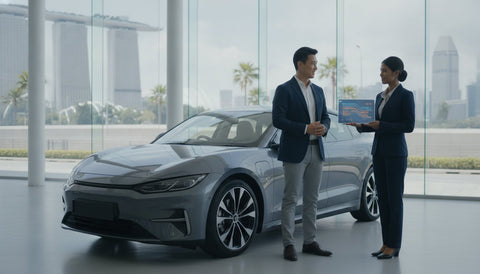
Does the quote you just received for your vehicle actually reflect its true worth, or are you simply paying a high price for convenience? Most Singaporean car owners feel a sense of unease when handing over their keys. It's difficult to feel confident when you're balancing complex PARF rebate caps and record-high Category A COE prices of $129,000. You want a transaction that feels honest and efficient, but the fear of losing money often gets in the way. This guide simplifies the process of getting a fair trade-in offer by breaking down the exact variables that drive vehicle valuation in 2026.
We promise to help you master the art of negotiation and valuation so you can walk away with the maximum possible value. We'll explain how the $30,000 PARF rebate cap affects your bottom line and how to present your car to attract the best bids. By the end of this article, you'll have a clear roadmap for a transparent valuation and a seamless transition into your next vehicle.
Key Takeaways
- Learn how to differentiate between retail asking prices and wholesale values to set realistic financial expectations for your vehicle.
- Master the calculation of your car's "Paper Value" to ensure you never accept an offer below the absolute minimum of your tax rebates and COE balance.
- Discover the specific research steps required for getting a fair trade-in offer by analyzing current market listings and accounting for dealer reconditioning costs.
- Understand the long-term benefits of a professional dealership transaction, such as secure loan settlements and immediate, hassle-free LTA ownership transfers.
- Identify how professional grooming and honest defect disclosure can build trust with buyers and prevent last-minute price reductions during negotiation.
Defining a "Fair" Trade-In Offer in the 2026 Singapore Market
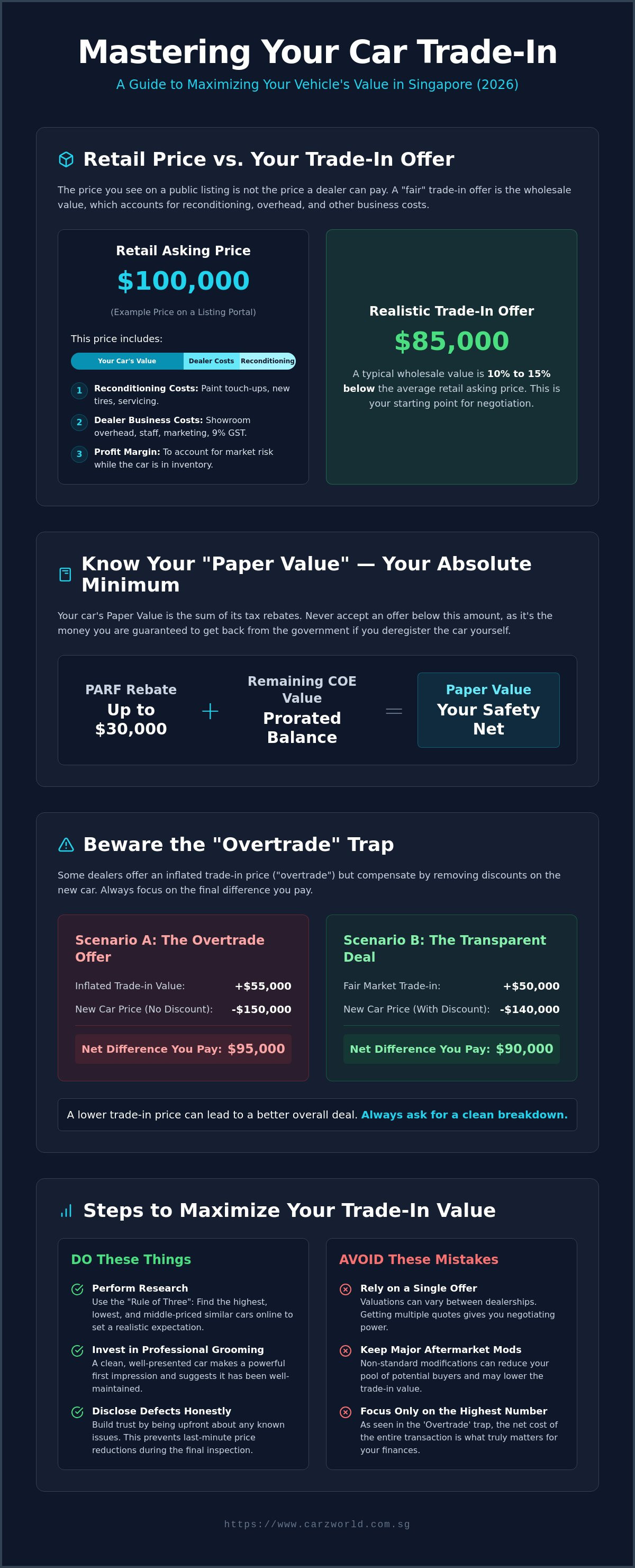
Many drivers begin the process of getting a fair trade-in offer by browsing public listing portals. It's a natural starting point, but it's often misleading. Seeing a car similar to yours listed for $100,000 doesn't mean a dealer will pay you that amount. A fair trade-in offer is the wholesale market value plus the prorated PARF/COE rebates minus a transparent dealer margin. This figure represents the actual cash value of your vehicle before it's refurbished, marketed, and sold to a new owner.
Wholesale vs. Retail: Why the Difference Matters
Dealers operate on margins that cover essential business costs. When you see a retail price, that number includes several layers of expense that don't apply to your trade-in. These include:
- 9% GST on the gross margin
- Showroom overheads and staffing costs
- Marketing and listing fees on major portals
- Mandatory mechanical inspections and grooming
Understanding car valuation helps you realize that your vehicle is currently in "as-is" condition. It might need new tires, paint touch-ups, or a major service before it's showroom-ready. Dealers use internal auction data and recent transaction history to set floor prices. With Category A COE prices sitting at $129,000 in July 2026, dealers are particularly careful. They must account for the risk of the market shifting while your car sits in their inventory. A fair offer acknowledges these risks while still respecting the equity you've built in your vehicle.
The "Overtrade" Trap: What You Need to Know
In the current market, you'll frequently encounter the "overtrade" strategy. This is a common marketing tool used to make an offer look more attractive than it is. A dealer might offer you $5,000 above the actual market value for your car. However, they usually recover this amount by reducing the discount on the new car you're buying. It's essentially a shell game with numbers, but it serves a specific purpose for your cash flow. Because the trade-in value acts as part of your down payment, an overtrade can help you meet the MAS loan-to-value limits without using as much cash upfront.
To succeed in getting a fair trade-in offer, you should always request a "clean" breakdown. Ask for the price of the new car as a straight purchase first. Then, ask for the trade-in valuation separately. This transparency allows you to see if the dealer is giving you a genuine market price or simply moving numbers around to fit a loan profile. Don't be distracted by the highest headline number. Instead, focus on the net difference you'll pay to switch cars. A lower trade-in price paired with a significantly cheaper new car is often the better financial move.
Essential Research: Valuing Your Car Before Visiting the Showroom
Knowledge is your strongest asset when preparing for a showroom visit. Without a clear understanding of the current market, you're at a disadvantage during negotiations. To maximize your car's trade-in value, you need to gather specific data points that prove your vehicle's worth. Researching these variables is the most effective way of getting a fair trade-in offer that reflects the 2026 climate.
Start by browsing various online listing portals to find cars with the same make, model, and year as yours. Checking a smart car marketplace like AutoDream can also help you understand how your specific model is valued across different regions. These "asking prices" represent what dealers hope to achieve at retail. To find a realistic wholesale floor, you should subtract 10% to 15% from the average asking price. This margin accounts for the dealer's business costs and the reconditioning risks we discussed earlier. If the average listing you see is $100,000, expect a trade-in floor closer to $85,000 before specific adjustments for your car's unique condition.
The "Rule of Three" in Car Valuations
Don't rely on a single listing to set your expectations. Instead, identify three similar cars: the highest priced, the lowest priced, and one in the middle. This range helps you understand the volatility for your specific model. Be honest about where your car sits within this spectrum. A vehicle with 10,000km less than the average will command a premium. Conversely, significant modifications might actually lower your offer. In the current market, many buyers prefer original factory specifications over aftermarket body kits that can complicate future inspections or LTA compliance.
Digital Tools and Real-Time Data
Digital valuation tools provide instant baselines, but they can't see the condition of your leather or hear the engine. Use these tools to get a ballpark figure, then verify your PARF and COE rebates via the LTA OneMotoring portal. This "paper value" is your absolute safety net. In 2026, certain models like Japanese SUVs are seeing higher demand due to their reliability and fuel efficiency. Keeping a tidy log of your service history will further validate your car's condition. Gather these documents to support your valuation:
- Full service history from authorized or reputable workshops
- Authentic mileage records to prove usage patterns
- The number of previous owners, as fewer owners typically increases value
- A recent LTA rebate summary printout showing the $30,000 PARF cap if applicable
Before you step into a dealership, ensure all your documents are organized. Having your service booklets and ownership history ready demonstrates that you are a meticulous owner. If you want a professional assessment based on real-time market movements, you can request a valuation from Carz World Pte Ltd to see how your research aligns with current trade-in trends.
Navigating Singapore-Specific Factors: COE, PARF, and OMV
The math behind a vehicle transaction in Singapore is unlike anywhere else in the world. When you're focused on getting a fair trade-in offer, you aren't just selling a piece of machinery; you're trading a bundle of tax rebates and entitlements. To secure the best deal, you must understand how your "Paper Value" serves as the foundation of any valuation. This value is the combined sum of your remaining COE balance and your PARF rebate. It's the absolute minimum any dealer should offer because it's the amount they can recover immediately from the government if the car is deregistered.
Dealers generally look at two figures: the Paper Value and the "Body Value." While the paper value is fixed by LTA, the Body Value represents what the actual physical car is worth in the current market. If your car is a popular model with low mileage, the dealer will pay you a premium for the body on top of the paper floor. However, if the car is in poor condition, the offer might sit right at the paper value. The record-high COE prices seen in July 2026 have significantly inflated the Body Value of well-maintained vehicles. Buyers are increasingly looking for pre-owned alternatives to avoid the high cost of new registrations, which increases the leverage you have during an appraisal.
Understanding PARF and OMV Rebates
Your Open Market Value (OMV) is the most critical number on your log card after the COE. It dictates your Additional Registration Fee (ARF), which in turn determines your PARF rebate percentage. For cars registered from February 2026 onwards, remember that the PARF rebate is now capped at $30,000. If your car was registered before this change, your rebate structure might be more generous based on its age. High OMV cars often command better trade-in prices because their tax scrap value remains high, providing a safety net for the dealer's investment. This is why a luxury sedan with a high OMV often retains its value better than a budget model with the same age and mileage.
Export Value: The Secret Third Option
Sometimes, the local market isn't the best place for your vehicle. If your car is nearing the 10-year mark, its local resale value might drop as buyers fear the upcoming COE renewal. This is where export value becomes a game-changer. Certain "export-friendly" models from brands like Toyota and Honda, as well as various commercial vehicles, are highly sought after in overseas markets. These buyers care less about Singapore's tax structure and more about the vehicle's mechanical durability. Utilizing Carz World Pte Ltd’s export services can often provide a significantly higher floor price than a local scrap yard. By tapping into global demand, you ensure that you aren't leaving money on the table just because the local COE cycle is ending.
In other regions, the principle of direct-to-buyer sales remains a popular alternative for those with older or damaged vehicles; for instance, Cash For Junk Cars Michigan offers a streamlined way for owners to receive immediate value for vehicles that might not fit the traditional showroom model.
Strategic Negotiation: Maximising Your Offer
Negotiation is often the most stressful part of the process, but it doesn't have to be. When you're focused on getting a fair trade-in offer, your goal is to present a vehicle that requires minimal work from the dealer. A professional grooming session is a small investment that offers a high return. A clean, well-presented car suggests that you've cared for the mechanical components just as much as the aesthetics. This builds immediate confidence in the valuer's mind and sets a positive tone for the rest of the discussion.
Transparency is another powerful tool in your arsenal. Don't hide known defects. If there's a minor scratch or a sensor issue, disclose it early. When a dealer discovers an undisclosed fault during their final inspection, they'll often drop the price significantly to cover the "surprise" risk. By being upfront, you establish a relationship of trust. This prevents last-minute price reductions and keeps the transaction moving smoothly. Having a written quote from another dealer also provides a concrete baseline for your discussions. Dealers are more likely to match or beat a competitor's offer if they see you've done your homework and have a clear understanding of the market.
Timing can also play a role in your success. Many dealerships have monthly sales targets to meet. Visiting during the final week of the month might result in a slightly more flexible offer as the team works to close their books. If you're ready to move forward with your next vehicle, contact our experienced team to receive a transparent assessment of your vehicle's current market value.
Trade-In vs. Consignment: Which is Better?
A standard trade-in is the fastest route. You hand over your keys and the value is immediately offset against your new purchase. It's efficient and handled entirely by the dealer, which is ideal if you need to clear an existing car loan quickly. However, if you aren't in a rush, consignment is a viable alternative. In a consignment arrangement, the dealer sells the car on your behalf for a small commission. This often results in a higher final price because the car is sold to a retail buyer rather than at wholesale. Choose trade-in for speed and convenience, or consignment if your car is a unique model that deserves a premium retail price.
The "Walk-Away" Strategy and Closing the Deal
If the offer doesn't meet your research-backed expectations, don't be afraid to professionally decline. A calm "I'll need to think about that" can sometimes trigger a dealer's final, best quote. Once you agree on a price, ensure it's locked into the Sales Agreement. This document should clearly state the trade-in value and the handover date. Remember to clarify what happens to your remaining road tax and insurance. Usually, the dealer will help you process the road tax rebate through LTA, while you'll need to contact your insurer to cancel or transfer your policy. This attention to detail ensures getting a fair trade-in offer translates into actual cash in your pocket.
Why a Professional Dealership Experience Leads to the Best Value
The final step in getting a fair trade-in offer isn't just about the dollar amount on the contract. It's about the total value of the transaction. Selling a car privately in Singapore often involves weeks of filtered inquiries, missed appointments, and the significant risk of financial scams. A professional dealership provides a secure environment where the focus remains on efficiency and trust. You aren't just trading a vehicle; you're gaining the security that the transaction is legally sound and financially protected.
Choosing a reputable partner like Carz World allows you to enjoy a true one-stop experience. While our experts appraise your current vehicle, you can spend time browsing brand new cars in our showroom. This simultaneous process turns what is usually a logistical headache into a smooth afternoon. We prioritize a transparent valuation process because we value long-term relationships over one-time gains. This approach ensures you feel confident and respected throughout every stage of the exchange.
Seamless Paperwork and LTA Compliance
The administrative side of vehicle ownership in Singapore is notoriously complex. Professional dealers handle the Transfer of Ownership through the LTA portal immediately upon handover. This protects you from any liability for traffic fines or tolls incurred by the next driver. If you have an outstanding hire-purchase loan, we simplify the math by settling the balance directly with your bank. This eliminates the need for you to coordinate between multiple financial institutions. Our team ensures all documentation is accurate and compliant, providing you with complete peace of mind.
The Carz World Commitment to Fairness
Our business model is built on the dedication of our individual staff members. We don't use high-pressure tactics or confusing jargon. Instead, we provide a methodical breakdown of how we reached your offer. Because we maintain an extensive and diverse pre-owned car inventory, we have the flexibility to offer competitive rates for a wide variety of makes and models. We understand that your car represents a significant investment, and we treat it with the appropriate level of care and professional attention.
A fair offer is one that respects the market, accounts for the tax rebates we've discussed, and rewards the care you've put into your vehicle. We invite you to experience a transaction defined by competence and reliability. If you're ready to move forward with getting a fair trade-in offer, you can get your car valued by our experts today. Let us show you how a professional dealership experience makes the difference in your car-buying journey.
Secure Your Vehicle's Future Value
Success in the 2026 automotive market requires a balance of data and strategy. You've learned how to calculate your car's absolute floor value using PARF and COE rebates. You also understand why professional presentation and honest disclosure are the keys to building trust with a dealer. These steps remove the stress and confusion that often accompany vehicle transactions in Singapore. By focusing on these core principles, getting a fair trade-in offer becomes a transparent and predictable process rather than a guessing game.
At Carz World, we bring over 10 years of experience to every transaction. Our expertise spans both the local market and international car export services, ensuring we find the best possible value for your vehicle. We pride ourselves on a customer-centric approach and a transparent valuation process that focuses on your satisfaction. Our team is ready to guide you through a seamless transition to your next car. Get a transparent and fair trade-in offer from Carz World today. We look forward to helping you move forward with confidence.
Frequently Asked Questions
Is it better to trade in my car or sell it privately in Singapore?
Trading in your car is the superior choice if you prioritize convenience, safety, and speed. While a private sale might result in a slightly higher price, it requires you to manage multiple viewings and handle complex LTA transfer paperwork yourself. A professional dealer manages the entire process, including immediate loan settlements and legal transfers. This eliminates the risk of financial scams or bounced cheques that often plague private transactions.
How is the trade-in value of my car calculated?
Your valuation is a combination of the "Paper Value" and the "Body Value." Dealers calculate the sum of your remaining COE and PARF rebates as the absolute floor price. They then add a premium based on the car's physical condition, mileage, and current market demand. Getting a fair trade-in offer depends on the dealer's ability to accurately assess these components while maintaining a transparent margin for their business costs.
Does a high COE price affect my car trade-in offer?
Yes, high COE prices generally increase the demand and value of used cars. When new car prices rise due to COE hikes, such as the Category A record of $129,000 in July 2026, more buyers shift toward the pre-owned market. This surge in demand allows dealers to offer better trade-in prices for well-maintained inventory. They're often willing to pay a premium for cars they can sell quickly to budget-conscious buyers.
What documents do I need to prepare for a car trade-in?
You need to provide your NRIC, the vehicle log card from the OneMotoring portal, and all available service records. Including your original spare keys and the car's manual can also help improve the offer. Dealers use the service history to verify that the vehicle has been maintained according to manufacturer standards. Having these documents ready demonstrates that you're a meticulous owner and helps justify a higher valuation.
Can I trade in a car that still has an outstanding bank loan?
You can trade in a vehicle with an outstanding hire-purchase loan. The dealer will coordinate with your bank to obtain the full settlement figure and handle the payment on your behalf. This amount is deducted from your car's trade-in value. If your car is worth more than the loan, the surplus acts as a down payment for your next vehicle. If the loan exceeds the car's value, you'll need to pay the difference to clear the debt.
Should I repair my car before trading it in?
Major repairs are usually not worth the investment before a trade-in. Dealers have access to wholesale repair and paint rates that are significantly lower than what you would pay at a retail workshop. It's often more cost-effective to disclose the defects and accept a slightly lower offer. However, minor grooming or a professional wash can provide a high return by making a strong first impression during the appraisal.
How long is a trade-in offer usually valid for?
Most trade-in offers are valid for three to seven days. This short duration is due to the volatility of the Singapore car market and frequent COE bidding exercises. If a bidding exercise occurs, market values can shift overnight, making old quotes obsolete. Always clarify the validity period with your dealer and try to finalize the transaction within that window to lock in the price.
What happens to my PARF and COE rebates during a trade-in?
These rebates are factored into the total price the dealer pays you. When you're focused on getting a fair trade-in offer, ensure the dealer has explicitly included the prorated COE balance and the PARF rebate in their math. The dealer takes over the rights to these rebates upon transfer. They'll either claim the cash from LTA by deregistering the car or pass the value to the next buyer if the car is resold.
Disclaimer
This content is provided for general informational purposes only. Readers are encouraged to independently verify important information.
In Same Category
- Pros and Cons of Buying a High PARF Car in Singapore
- Car Valuation Services in Bukit Merah: A Seller’s Guide
- Scrapping Your Car Before 10 Years in Singapore: What Happens?
- Calculating the Breakeven Point for COE Renewal in Singapore
- Financial Checklist Before Committing to a Car Purchase in Singapore (2026)
Related by Tags
- Used Cars for Sale in Tampines: 2026 Buyer's Guide
- Car Downpayment vs Monthly Instalment in Singapore: The 2026 Budgeting Guide
- Car Loan Singapore: The Complete 2026 Guide to Financing Your Vehicle
- How Much Salary to Afford a Car in Singapore: 2026 Affordability Guide
- Buying a Used Car in Singapore: 2026 Ultimate Guide
- What is PARF? The Ultimate Guide to Singapore’s Car Rebate System
- Mercedes-Benz EQB 250+ Review: The Ultimate 7-Seater Family EV in Singapore
- Long Term Car Rental Singapore: 2026 Definitive Guide
- How to Buy a Car in Singapore: The Ultimate 2026 Step-by-Step Guide
- Second Hand Hybrid Cars Singapore: The 2026 Value & Inspection Guide
- Cheapest Car in Singapore: The 2026 Guide to Affordable Ownership
- Parallel Import Cars Singapore: 2026 Buyer’s Guide
- Honda Civic Singapore: 2026 New & Pre-Owned Guide
- Suzuki Swift Singapore: The Ultimate Smart-Money Hatchback Guide 2026
- The Ultimate Toyota Alphard Singapore Guide: Luxury & Performance in 2026
- Sell My Car in Singapore (2026): Complete Guide
- Nissan Qashqai Singapore: Ultimate Buyer’s Guide 2026
- The Ultimate Used Car Buying Guide for Singapore in 2026
- Why Carz World is Your Trusted Used Car Dealer in Singapore (2026 Guide)
- Honda Odyssey Singapore: 2026 Family Buying Guide