Common Problems with Used Cars: The Singapore Buyer’s Guide to Avoiding Lemons

Would you spend over S$129,000 on a Category B COE just to have your car break down a month later because of Singapore's relentless tropical humidity? It's a nightmare scenario that many local buyers face when they don't know what to look for under the hood. When you're weighing the pros and cons of buying used car from dealer vs owner singapore, the decision often comes down to how much risk you're willing to take with your hard-earned money.
We understand that the high cost of repairs and the complexity of COE transfers can make the process feel overwhelming. You want a vehicle that's reliable, not a "lemon" hiding structural damage or a worn-out cooling system. This guide will help you spot hidden defects and explain how Singapore's Lemon Law protects you for up to six months after your purchase from a dealer. It's about ensuring your investment is sound before you sign any paperwork.
You'll gain a clear understanding of the administrative fees and inspection steps required to secure a high-quality pre-owned vehicle. We'll also provide a practical checklist to help you choose between a private seller and a professional dealership with total confidence. By the end of this article, you'll know exactly how to navigate the market and avoid the most common mechanical pitfalls in our unique driving environment.
Key Takeaways
- Identify the critical difference between expected wear and tear and the deal-breaking structural defects that qualify a vehicle as a "lemon."
- Discover how Singapore's 90% humidity and intense urban driving specifically impact transmission health and the longevity of interior adhesives.
- Compare the financial and legal risks of buying used car from dealer vs owner singapore to ensure you benefit from protections like the Lemon Law.
- Learn a professional step-by-step inspection routine to uncover hidden accident history or engine leaks that a simple car wash can't hide.
- Understand why the 100,000km service milestone is a major turning point for pre-owned vehicles in the local market.
Understanding Used Car Problems: Maintenance vs. Major Defects
Every pre-owned vehicle has a history; the challenge lies in deciding if that history includes manageable maintenance or a looming disaster. A "lemon" is more than just a car with a few scratches. It's a vehicle with significant, recurring defects that compromise its safety or value. Understanding Used car market basics helps you distinguish between a fair deal and a liability. When you're buying used car from dealer vs owner singapore, you must look beyond the shiny exterior to evaluate the car's true condition.
Ignoring a faint smell of burnt oil or a slight steering vibration can lead to massive repair bills later. These symptoms are often early warnings of failing gaskets or suspension components. In Singapore, many cars reach the market just before they hit the 100,000km mark. This is the typical interval for major servicing, including timing belt and water pump replacements. Some owners prefer to sell rather than pay for these essential updates, leaving the next buyer to handle the costs.
To better understand this concept, watch this helpful video:
Wear and Tear: The Expected Costs in Singapore
Singapore's stop-start traffic and high temperatures put extra strain on consumables. You should expect to replace brake pads, tyres, and batteries more frequently than in other climates. It's wise to budget for an immediate "Gold Service" after purchase to reset the maintenance clock. This ensures your pre-owned car starts its new life with fresh fluids and filters. Proactive replacement of the water pump at specific mileage milestones can prevent catastrophic engine overheating during a heavy downpour or traffic jam.
Major Defects: The Red Flags of a Lemon
Major defects are deal-breakers that require immediate attention. Look for mismatched paint or uneven gaps between body panels; these often indicate structural repairs from a major accident. Flood damage is another concern in certain low-lying areas of Singapore. Check for silt in the spare tyre well or a musty cabin smell that won't go away. Finally, inspect the oil cap. A "milky" residue suggests coolant is leaking into the engine. This usually signals a cracked engine block or head gasket failure, requiring a total overhaul that could cost thousands of dollars.
Mechanical Issues: Engine, Transmission, and Suspension
Singapore's stop-start traffic is notoriously hard on a vehicle's drivetrain. Deciding on buying used car from dealer vs owner singapore involves more than just comparing sticker prices; it requires a deep look at the mechanical health of the vehicle. Heavy congestion often leads to transmission shuddering, especially in modern cars with dual-clutch systems. This vibration isn't just a minor comfort issue. It often signals that the clutch packs are nearing the end of their lifespan, which can be a costly fix in a local workshop.
Engine oil leaks are another frequent sight in the pre-owned market. It's vital to differentiate between a simple valve cover gasket replacement and a complex rear main seal leak. The latter requires the entire gearbox to be removed, leading to high labour costs. If you're following a professional guide to buying a used car, you'll know that identifying these leaks early is the key to avoiding a "lemon." A clean engine bay might look appealing, but it could also be a sign that a seller has recently washed away evidence of a persistent leak.
Common Faults in Continental vs. Japanese Cars
Continental brands like BMW, Audi, and Mercedes often face high-pressure cooling system failures due to Singapore's intense heat. Their complex electronic modules can also develop glitches that are expensive to diagnose. In contrast, Japanese and Korean models from Toyota, Honda, or Kia are generally more resilient. However, they aren't immune to gearbox wear or air-con compressor clutch failures. Parts for Japanese cars are typically more accessible and affordable at local stockists compared to their European counterparts.
The Transmission Test: What to Feel for During the Drive
During your test drive, pay close attention to how the car moves from a standstill. There should be no delayed engagement or sudden "jerk" when shifting from Park to Drive. If the engine revs but the car doesn't accelerate immediately, the gears may be slipping. This "hunting" for gears is a major red flag. For vehicles with a Continuously Variable Transmission (CVT), listen for a distinct high-pitched whining sound. This often indicates a worn belt or pulley system that is close to failing.
Singapore's abundance of speed bumps also accelerates the wear of suspension bushings and shock absorbers. Listen for knocking sounds or squeaks when driving over uneven surfaces. Additionally, don't ignore the "Check Engine" light. In our high-heat environment, oxygen and MAP sensors frequently fail, which can significantly impact your fuel economy. Choosing a reliable pre-owned car from a source that performs rigorous mechanical checks can save you from these hidden headaches.
The Singapore Factor: Humidity, Heat, and Urban Driving
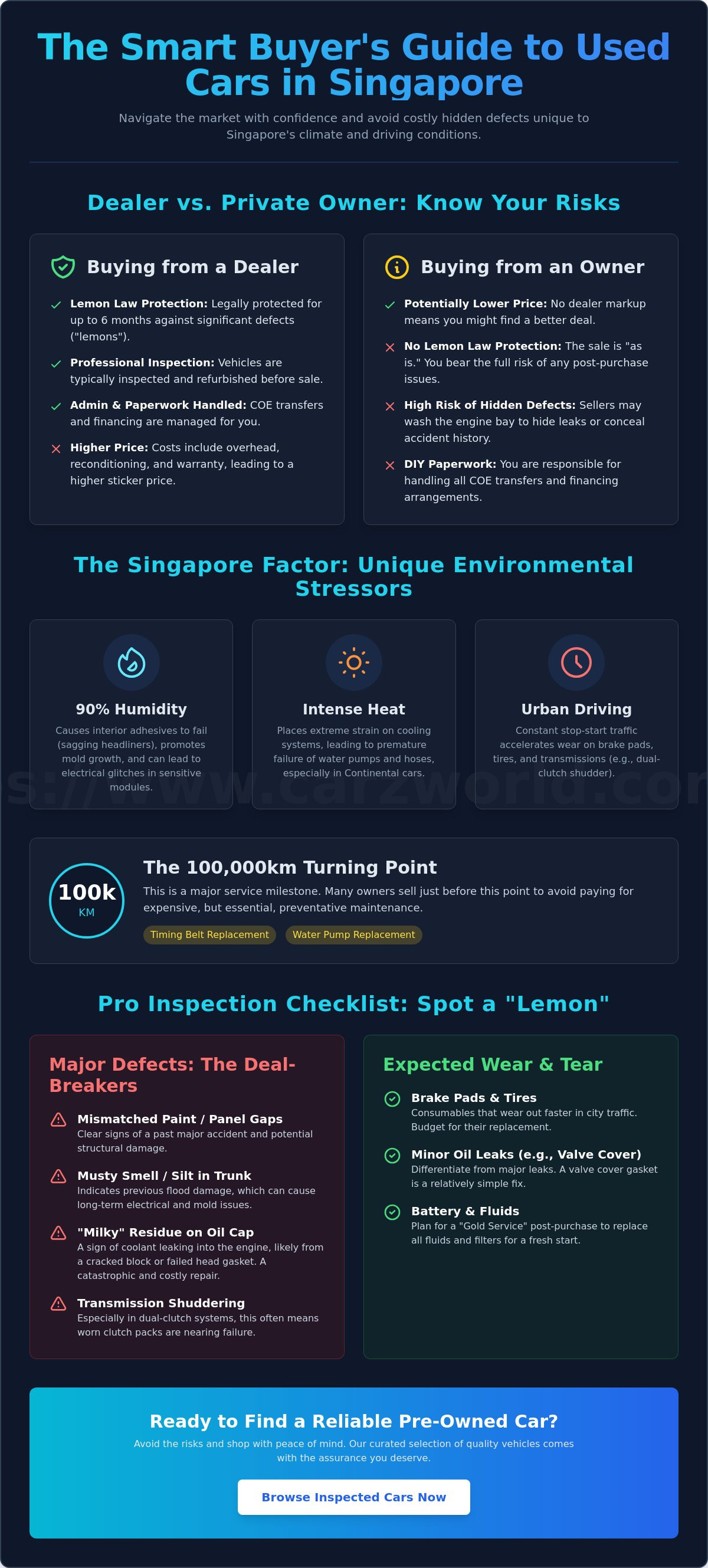
Singapore's tropical environment is uniquely aggressive toward vehicles. When you're considering buying used car from dealer vs owner singapore, you have to account for the physical toll that 90% humidity and 33°C heat take on a car's components. Most global car reviews don't mention that adhesives and plastics fail much faster here than in temperate climates. The constant moisture destroys roof linings over time, causing them to sag and eventually require expensive upholstery work.
The "Air-Con Strain" is a reality for every driver on the island. Because we run our air-conditioning at full blast year-round, evaporator coils accumulate dirt and moisture rapidly. This leads to frequent cleaning requirements and refrigerant top-ups. If these aren't maintained, the compressor works harder, eventually leading to a total system failure. This is why a thorough check of the cooling history is vital in a guide to buying a used car. Reputable sellers will have records of these periodic services to prove the system's health.
Interior Degradation and "Sticky" Plastics
European car owners often face a frustrating phenomenon where interior buttons and dashboard surfaces begin to "melt." This stickiness is caused by the breakdown of soft-touch coatings under constant UV exposure. You should also perform a "mould test" by checking the spare tyre well and under the seats. Humidity often traps moisture in the upholstery, leading to hidden mildew that is difficult to eradicate. Tropical heat also causes rubber window seals to warp. This creates friction that can burn out power window motors, which is a common but annoying repair in older models.
Cooling Systems and Battery Health
In Singapore, the cooling system never gets a day off. There's no winter period for the radiator to rest, making coolant quality non-negotiable. If a previous owner used plain tap water instead of proper coolant, internal corrosion is likely. You should also remember the "2-year rule" for batteries. While batteries in cooler countries might last five years, the heat in Singapore typically limits their lifespan to just 24 months. Heat accelerates the chemical reactions inside the battery, leading to faster degradation.
Stalling while stuck in heavy KPE or CTE traffic is often caused by auxiliary fan failure. These fans are the only things keeping your engine cool when there's no natural airflow from movement. Stop-start traffic also puts immense pressure on alternators and starter motors. Paradoxically, low-mileage cars can be riskier. Short trips prevent the engine from reaching optimal operating temperatures. This causes moisture to mix with oil, creating thick engine sludge that damages internal components. Choosing a pre-owned car that has been professionally inspected ensures these environmental factors haven't compromised the vehicle's integrity.
How to Inspect a Second-Hand Car Like a Pro
Your initial physical inspection is the strongest defense against a bad purchase. When you are buying used car from dealer vs owner singapore, you must approach the viewing with a methodical mindset. Start with the exterior. Run your hand along the body panels to feel for inconsistencies in the paint texture. A rough "orange peel" finish often suggests a low-quality respray, which is a common sign of past accident repairs. Check that the gaps between the doors, bonnet, and fenders are uniform; uneven gaps usually indicate a shifted chassis.
Pop the bonnet and look for a suspiciously clean engine. While it looks nice, a sparkling engine bay in a five-year-old car might be a tactic to hide active fluid leaks. Check the underside of the oil filler cap for a "milky" or frothy residue, which signals that coolant is mixing with the oil. Always insist on a "cold start." This means the engine hasn't been running for several hours before you arrive. Listen closely for any metallic rattles from the timing chain or puff of blue smoke from the exhaust, as these indicate internal engine wear that is expensive to rectify.
Professional Evaluation: VICOM and STA Inspections
A private seller's verbal assurance cannot replace a professional evaluation. In Singapore, third-party inspections from providers like VICOM or STA are the industry standard. These reports use a grading system from Grade A to Grade D. A Grade A report signifies a vehicle in excellent condition, while Grade C or D often highlights significant mechanical faults or structural repairs. You can use these findings as a powerful leverage tool during price negotiations. If a seller refuses to allow an independent inspection, it is usually best to walk away from the deal.
The Ultimate Test Drive Checklist
Take the car for a drive on a high-speed road like the ECP to test its stability at 80km/h. The steering should remain centered without "pulling" to one side, and there should be no vibrations through the wheel. Test the braking performance by applying firm pressure; any pulsation in the pedal suggests warped brake discs. Finally, perform a total electronics audit. Test every single button, including the sunroof, the head unit, and even the USB ports. Replacing a faulty infotainment system or a stuck power window motor can easily cost you hundreds of dollars unexpectedly.
The paperwork audit is your final step. Verify the LTA Log Card to confirm the number of previous owners and ensure the mileage matches the service history records. Discrepancies here are a major red flag for mileage tampering. If you want a vehicle that has already undergone a rigorous multi-point check, browse our certified pre-owned cars to ensure a transparent and secure transaction.
Why Buying from a Trusted Dealer Mitigates These Risks
Choosing between buying used car from dealer vs owner singapore often comes down to your appetite for risk. A private sale is typically conducted on an "as-is" basis. This means once the transaction is complete, any mechanical failure becomes your financial burden. In contrast, reputable dealers provide a layer of security through pre-delivery inspections and after-sales support. This professional backing ensures that the vehicle you drive home has been vetted for the common mechanical and environmental issues we have discussed.
Whether you are in Singapore or elsewhere, finding a dealer that prioritizes these standards is key. For instance, you can learn more about Stone Road Auto to see how a dedicated dealership in the US maintains a high-quality pre-owned inventory through similar vetting processes.
One of the most significant advantages of choosing a dealer is the protection of Singapore's Lemon Law. This legislation allows you to make claims for defects present at the time of delivery for up to six months after purchase. This legal safety net does not apply to private, consumer-to-consumer transactions. Additionally, dealers manage the complex administrative side of the sale. They handle the "floor-stock" debt and ensure a clean title transfer through the LTA, which includes the S$25 transfer fee. This removes the stress of navigating paperwork and COE transfers on your own.
The Carz World Standard: Quality Assurance
We maintain a high standard for every pre-owned car in our inventory. Each vehicle undergoes a rigorous multi-point inspection process to identify and rectify issues before they reach the showroom. We believe in total transparency regarding vehicle history. Our team provides full disclosure on past ownership and maintenance records so you can make an informed choice. Whether you prefer the fuel efficiency of Japanese models or the robust performance of Continental brands, we offer personalised guidance to match your specific budget and lifestyle requirements.
Peace of Mind for Your Next Purchase
Our reputation is built on a foundation of trust and customer satisfaction. The continuous stream of positive testimonials from our clients highlights our commitment to transparency and honesty in every transaction. We don't use high-pressure tactics; instead, we focus on making the logistical process feel like a seamless experience for you. You can also explore flexible financing and insurance options designed to protect your capital and your new investment. If you are ready to upgrade, you can sell your current car to us for a fair and transparent trade-in valuation. This streamlined approach allows you to transition into your next vehicle with total confidence and ease.
Secure Your Next Vehicle with Confidence
Navigating the pre-owned market requires a sharp eye for detail and an understanding of how our tropical climate affects vehicle longevity. Identifying "sticky" interior plastics or recognizing transmission shuddering in heavy city traffic is essential to avoiding a lemon. When you're making the final choice between buying used car from dealer vs owner singapore, remember that professional support offers a level of security that private transactions simply cannot match.
At Carz World, we take the guesswork out of the equation. Every vehicle in our stock undergoes a comprehensive multi-point inspection to ensure it meets our rigorous quality standards. With over 100+ verified customer testimonials, our commitment to transparent service is proven by the satisfaction of our community. Our expert staff, frequently praised by name for their dedicated service, are ready to guide you through a seamless transaction. Browse our certified pre-owned cars with a full inspection report and start your journey with total peace of mind. You deserve a vehicle that is as reliable as it is rewarding to drive.
Frequently Asked Questions
What are the most common mechanical problems with used cars in Singapore?
Transmission shuddering, engine oil leaks, and cooling system failures are the most frequent issues found in the local pre-owned market. Singapore's stop-start traffic and tropical heat accelerate wear on these specific components. You should also listen for suspension knocking or squeaks caused by the high frequency of speed bumps on our roads.
How can I tell if a used car has been in a major accident?
Mismatched paint textures and uneven gaps between body panels are clear indicators of past structural repairs. Look closely at the chassis rails for signs of welding or straightening that shouldn't be there. A professional evaluation report will confirm if the vehicle's integrity was compromised by a major collision that the seller might not disclose.
Is high mileage always a bad sign when buying a second-hand car in Singapore?
High mileage is not always a negative factor if the vehicle has a documented service history and has been maintained well. A car with 120,000km that has completed its major 100,000km servicing is often a more reliable choice than a low-mileage car with engine sludge from frequent short trips. It's about the quality of maintenance rather than just the odometer reading.
What does the "Lemon Law" cover for used car buyers?
The Lemon Law protects you against defects present at the time of delivery for up to six months when purchasing from a registered business. It provides recourse for repair, replacement, or a partial refund if the car is not of satisfactory quality. This legal safety net is a vital consideration when buying used car from dealer vs owner singapore, as it does not cover private consumer-to-consumer transactions.
Why do European cars seem to have more cooling problems in the Singapore climate?
European cars are often designed for temperate climates and use high-pressure cooling systems that struggle with our year-round 33°C heat. Their plastic and rubber cooling components become brittle and crack much faster under constant thermal stress. Without a "winter" rest period, these systems require more frequent inspections and proactive part replacements to prevent stationary overheating in traffic.
Should I pay for an STA or VICOM evaluation before buying from a private owner?
Yes, you should always insist on an independent STA or VICOM evaluation when purchasing from a private individual. Since private sales are conducted on an "as-is" basis and lack Lemon Law protection, this report is your primary way to identify hidden mechanical or structural flaws. The neutral grading system provides the transparency you need to negotiate a fair price or walk away from a bad deal.
How do I check if a used car has hidden flood damage?
Check for silt or sand in the spare tyre well and inspect the seat belt webbing for water stains or a persistent damp smell. You can also look for corrosion on the metal brackets under the dashboard or seats. These areas are rarely reached during a standard car wash and will reveal if the car was submerged during a flash flood in low-lying areas.
What is considered "low mileage" for a 5-year-old car in the Singapore context?
A 5-year-old car with less than 60,000km is generally considered low mileage in the local market. The average Singaporean driver covers approximately 15,000km to 18,000km per year. While low mileage is attractive, you must ensure the car hasn't suffered from "short-trip syndrome." This occurs when the engine never reaches optimal temperature, leading to excessive sludge buildup and faster battery degradation.
In Same Category
- Pros and Cons of Buying a High PARF Car in Singapore
- Car Valuation Services in Bukit Merah: A Seller’s Guide
- Scrapping Your Car Before 10 Years in Singapore: What Happens?
- Calculating the Breakeven Point for COE Renewal in Singapore
- Financial Checklist Before Committing to a Car Purchase in Singapore (2026)
Related by Tags
- Used Cars for Sale in Tampines: 2026 Buyer's Guide
- Car Downpayment vs Monthly Instalment in Singapore: The 2026 Budgeting Guide
- Car Loan Singapore: The Complete 2026 Guide to Financing Your Vehicle
- How Much Salary to Afford a Car in Singapore: 2026 Affordability Guide
- Buying a Used Car in Singapore: 2026 Ultimate Guide
- What is PARF? The Ultimate Guide to Singapore’s Car Rebate System
- Mercedes-Benz EQB 250+ Review: The Ultimate 7-Seater Family EV in Singapore
- Long Term Car Rental Singapore: 2026 Definitive Guide
- How to Buy a Car in Singapore: The Ultimate 2026 Step-by-Step Guide
- Mercedes C-Class Singapore Guide 2026: Specs, COE, and Buying Tips
- Second Hand Hybrid Cars Singapore: The 2026 Value & Inspection Guide
- Cheapest Car in Singapore: The 2026 Guide to Affordable Ownership
- Parallel Import Cars Singapore: 2026 Buyer’s Guide
- Honda Civic Singapore: 2026 New & Pre-Owned Guide
- Suzuki Swift Singapore: The Ultimate Smart-Money Hatchback Guide 2026
- Mazda 3 Singapore Guide 2026: Specs, Prices, and Buying Tips
- The Ultimate Toyota Alphard Singapore Guide: Luxury & Performance in 2026
- Hyundai Ioniq 5 Singapore: The Definitive 2026 Buying & Ownership Guide
- Sell My Car in Singapore (2026): Complete Guide
- Nissan Qashqai Singapore: Ultimate Buyer’s Guide 2026
- The Ultimate Used Car Buying Guide for Singapore in 2026
- Why Carz World is Your Trusted Used Car Dealer in Singapore (2026 Guide)
- Honda Odyssey Singapore: 2026 Family Buying Guide