Common Problems with Used Cars: A Singapore Buyer’s Guide to Avoiding Lemons
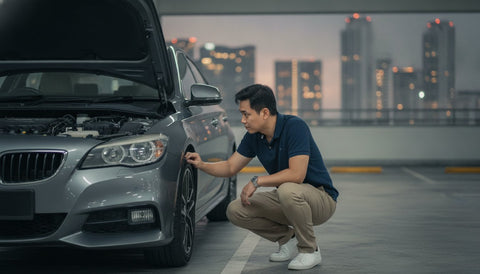
In a market where Category A COE prices sit at $123,847, buying a pre-owned vehicle isn't just a lifestyle choice; it's a major financial commitment that leaves very little room for error. You've likely spent weeks browsing listings, yet that nagging fear of inheriting someone else's expensive repair bills remains. It's completely natural to feel uneasy when you consider the common problems with used cars that often hide beneath a polished exterior. From the silent toll our tropical humidity takes on electronics to the risk of hidden accident histories, the stakes in Singapore are simply higher than elsewhere.
We're here to replace that uncertainty with the clinical precision of an experienced partner. This guide identifies the most frequent mechanical, electrical, and aesthetic issues found in the local secondary market to ensure your next purchase is a sound investment. You'll learn exactly which parts to inspect, how to spot deal-breakers like odometer tampering, and when a defect is actually a simple fix. By the end of this article, you'll have the technical knowledge and confidence needed to negotiate with dealers and secure a reliable vehicle that won't let you down.
Key Takeaways
- Identify hidden mechanical warning signs like engine sludge and transmission lag that indicate a history of poor maintenance.
- Understand how Singapore's unique humidity and city driving conditions contribute to common problems with used cars, specifically affecting air-conditioning and electrical systems.
- Learn to spot suspension and alignment issues caused by frequent speed bumps and intense urban road wear.
- Master DIY inspection techniques, including the "Panel Gap" test, to detect previous accident repairs and resprays.
- Discover how professional vetting and pre-purchase inspections provide a critical safety net against high repair bills.
Mechanical Red Flags: Engine and Transmission Issues
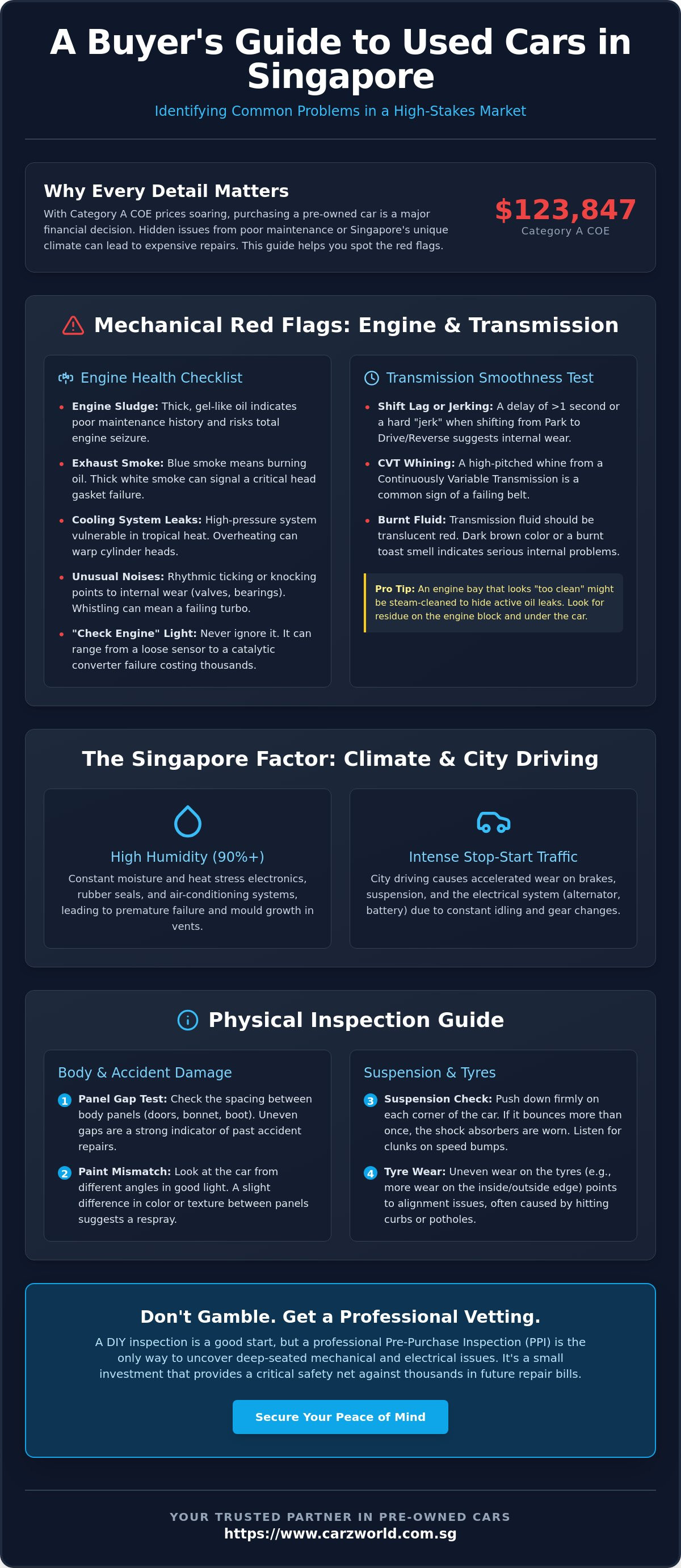
Identifying mechanical issues is the first step in securing a reliable vehicle. In Singapore, where cars often reach a decade of age before COE renewal, the engine and transmission represent the most expensive components to repair. Understanding the common problems with used cars starts with looking past a clean engine bay. A sparkling clean engine can sometimes hide months of neglect or active oil leaks that have been recently wiped away for a quick sale.
To get a truly objective view of a car's mechanical state, a professional Pre-purchase inspection is highly recommended. This third-party check helps you see beyond the surface and identify deep-seated issues that a standard test drive might miss. It's an essential step for anyone browsing pre-owned cars to ensure they aren't buying a liability.
To better understand what to look for during your search, watch this helpful guide on buying used cars in Singapore:
Cooling system leaks are the primary cause of engine failure in our tropical climate. High ambient temperatures put immense pressure on rubber hoses and plastic radiator tanks. If these fail, the engine can overheat within minutes, leading to warped cylinder heads. You should also watch out for engine sludge. This thick, gel-like substance forms when oil isn't changed frequently enough. It's a clear sign of a poor maintenance history and can lead to total engine seizure if left unaddressed.
The Transmission Test: Smoothness vs. Hesitation
When you start the car, shift from Park to Drive and then to Reverse. Any significant "jerking" or a delay of more than a second suggests internal wear. For cars equipped with Continuously Variable Transmissions (CVT), which are popular in Japanese models, listen for a high-pitched whining sound. High-mileage CVTs are prone to belt slip. Check the transmission fluid if the car has a dipstick; it should be translucent red, not dark brown or smelling like burnt toast.
Engine Health: Beyond the Visual Inspection
Let the engine idle and listen closely. A rhythmic ticking or knocking sound often points to valve train issues or worn bearings. During the test drive, accelerate firmly while checking the rearview mirror. Blue smoke indicates the engine is burning oil, while thick white smoke suggests a head gasket failure. Be wary of engines that look too clean. Some sellers steam-clean the bay to hide active oil leaks that would otherwise be obvious on the engine block or the ground below.
Modern Singaporean roads are filled with small-capacity European engines. While efficient, their turbochargers face extreme heat cycles in stop-start traffic. A failing turbo often manifests as a loss of power or a whistling noise under acceleration. Finally, don't ignore the "Check Engine" light. Even if the car feels fine, this light can signal anything from a loose sensor to a failing catalytic converter, which can cost thousands to replace. For those seeking specialized maintenance for high-performance or diesel engines, CJ Auto Services LLC provides an excellent example of the professional care required to keep these vehicles running reliably. A sound investment requires a car that is as healthy on the inside as it looks on the outside.
The Singapore Factor: Humidity and City Driving Wear
Singapore’s tropical environment presents a unique set of challenges for vehicle longevity. With average humidity levels often hitting 90%, the internal components of a vehicle are under constant stress from moisture and heat. Unlike cars in temperate climates, local vehicles deal with intense thermal cycles as they move from scorching outdoor car parks to shaded, ventilated office basements. This constant expansion and contraction of materials leads to many of the common problems with used cars that are unique to our island.
While Singapore doesn't follow the exact legal frameworks found in the FTC's Used Car Rule, the principles of transparency and thorough inspection remain universal. Buyers must be particularly vigilant about the toll that stop-start city traffic takes on the electrical system. Constant idling in traffic jams puts immense strain on the alternator and battery, as the vehicle's cooling fans and electronics work overtime to combat the external heat.
Air-Con Health: More Than Just Cold Air
In our climate, a failing air-conditioning system is more than an inconvenience; it's a deal-breaker. The cooling coil is a notorious failure point in older vehicles because it's prone to corrosion from trapped moisture. When inspecting a car, pay attention to any musty or vinegary smells immediately after turning the air-con on. This often indicates bacterial growth or a slow refrigerant leak. A healthy system should be able to lower the cabin temperature significantly within two minutes, even if the car has been parked in the direct sun. Listen for a loud "clunking" or persistent metallic humming from the engine bay, which signals that the compressor is reaching the end of its lifespan.
Electrical Systems and Sensors
Humidity is a silent killer for car electronics. These common problems with used cars often manifest as intermittent faults that are difficult to replicate during a short test drive. Power window motors are frequently the first to go, as moisture seeps past the window seals and corrodes the internal regulators. Always test every single window, mirror adjustment, and infotainment button. The car's main ECU (Electronic Control Unit) is also susceptible to heat soak in our dense traffic. If the car stumbles or hesitates when accelerating away from a traffic light, it could be a sensor failing due to years of high-temperature exposure.
Don't overlook the rubber components. The intense UV rays and heavy monsoon rains cause door seals and sunroof gaskets to harden and crack over time. If you notice dampness in the footwells or a faint smell of mildew in the boot, it's a sign that the weather stripping has failed. Ensuring these seals are intact is vital for preventing expensive cabin electronics from water damage. If you're looking for a vehicle that has already been vetted for these climate-specific issues, browsing a curated selection of pre-owned cars can save you from these hidden tropical headaches.
Wear and Tear: Suspension, Tyres, and Interior
While engine health is vital, the physical condition of a vehicle's suspension and interior tells a vivid story of its life on Singaporean roads. Our urban landscape is unique. We navigate thousands of speed bumps in residential estates and multi-storey car parks every day. This constant vertical movement creates specific wear patterns that differ from cars driven on long, flat highways. These common problems with used cars are often cumulative, meaning a car that feels fine on a smooth road might reveal its true condition the moment you hit an uneven surface.
Braking patterns in Singapore also tend to be aggressive. The stop-start nature of the CTE during peak hours forces drivers to rely heavily on their brakes. When you inspect a vehicle, look closely at the brake rotors. If you see deep grooves or a significant "lip" at the edge of the disc, the car has likely seen heavy city use. Performing a comprehensive assessment of these wear items helps you estimate immediate post-purchase costs. Uneven tyre wear is another major red flag. If the inner edge of a tyre is balder than the outer edge, it suggests poor wheel alignment or, more seriously, a compromised chassis from a previous kerb strike.
If you discover that the wheels of a pre-owned luxury vehicle have been scuffed or you want to enhance its look, Elite Custom Rims offers a range of premium wheel designs specifically for brands like Mercedes and Audi.
The Undercarriage: Bushings and Shock Absorbers
During your test drive, turn off the radio and listen for any "clunking" or "knocking" sounds when going over bumps. These noises usually point to worn control arm bushings or stabilizer links. Control arm bushings are made of rubber and frequently crack under the weight of the vehicle combined with our high ambient heat. You should also perform a visual check of the shock absorbers. If you spot dark, oily residue on the strut body, the seal has failed. A car with "blown" shocks will bounce excessively, making it feel unstable at higher speeds.
Interior Condition: UV Damage and Hidden Wear
Singapore’s intense UV rays are notoriously hard on car cabins. Many owners find their dashboards becoming "sticky" or "melting" as the plastic compounds break down over years of sun exposure. Check the headliner as well; the glue holding the fabric to the roof often fails in humid conditions, causing the material to sag. This is a frequent issue in European models kept in open-air car parks. Finally, examine the driver’s seat bolsters. If the leather is heavily cracked or peeling but the odometer shows low mileage, it could indicate that the car was used for short, frequent trips or that the mileage has been tampered with.
Choosing a vehicle that has been professionally screened for these issues is the best way to avoid unexpected bills. You can explore our current inventory of pre-owned cars, where each unit undergoes a rigorous check to ensure the suspension and interior meet our quality standards. Taking the time to verify these details now ensures your investment remains comfortable and safe for years to come.
DIY Inspection Guide: Spotting Problems Like a Pro
You don't always need a professional technician for every initial car viewing. Learning how to identify common problems with used cars yourself acts as an essential first filter. It saves you time and prevents you from paying for a professional inspection on a vehicle that should have been rejected immediately. By following a structured approach, you can spot the warning signs of a "lemon" before you even sit in the driver's seat.
Visual Bodywork Audit
Start with the "Panel Gap" test. Run your finger along the gaps between the bonnet, doors, and fenders. These spaces should be perfectly uniform across the entire vehicle. If one side is noticeably wider than the other, the car has likely been in an accident and repaired poorly. Look for "orange peel" texture on the paint, which looks slightly bumpy or uneven under direct sunlight. This is a clear sign of a non-factory respray. Check the rubber seals around the windows and plastic trim for paint overspray; factory robots don't leave paint on the trim, but local workshops often do.
Administrative vetting is just as important as the physical check. Always ask to see the service booklet. If the stamps are missing for long periods or the ink looks suspiciously fresh on every page, be wary. Cross-reference the mileage in the booklet with the odometer. If the interior wear we discussed earlier, such as a "melting" dashboard or torn bolsters, doesn't match a low-mileage reading, the odometer may have been tampered with.
The Strategic Test Drive
Take the car on a variety of roads to test its behaviour at different speeds. At low speeds, perform a full-lock turn in a car park. If you hear a rhythmic clicking sound, the CV joints are worn and will require replacement. On a straight, flat road, loosen your grip on the steering wheel slightly. If the car pulls to one side, it indicates alignment issues or deeper suspension damage. Firmly apply the brakes from about 50km/h. Any vibration in the pedal or steering wheel suggests warped rotors, which is a frequent issue in Singapore's heavy stop-start traffic.
Always ask the seller to keep the engine cold before you arrive. A warm engine can hide starting issues or faint knocking sounds that only appear when the oil is cold. While the bonnet is open, check the VIN plate for any signs of tampering. Finally, lift the carpet in the boot to inspect the spare tyre well. This area is the best place to find hidden rear-end collision damage. Look for crumpled metal, fresh welding spots, or signs of rust, as these are almost impossible to hide in the spare tyre compartment.
Vetting a car thoroughly takes patience, but it protects your financial future. If you prefer to skip the guesswork and deal with a partner that values transparency, you can browse our professionally inspected inventory to find a vehicle that has already passed these rigorous standards.
Peace of Mind: The Carz World Pte Ltd Vetting Standard
With Category A COE prices reaching $123,847 as of June 2026, the margin for error when purchasing a vehicle has never been smaller. We've explored the common problems with used cars, from engine sludge and transmission slips to the subtle toll our humidity takes on cooling coils. While the DIY tests we've shared are helpful first filters, they can't replace the industrial-grade diagnostic tools and decades of experience found in a professional showroom. The vetting standard at Carz World Pte Ltd is designed to eliminate the "lemon" risk before you ever step foot on our premises.
Every vehicle that enters our inventory undergoes a rigorous pre-screening process. We don't just look for a clean service history; we actively hunt for the hidden signs of neglect that lead to high repair bills. This methodical approach ensures that the car you drive home is a sound investment, not a financial liability. By choosing an established partner like Carz World Pte Ltd, you're buying more than just a car. You're securing a commitment to quality and transparency that a private seller simply cannot provide.
Our Multi-Point Inspection Process
Our experts perform a comprehensive evaluation of every mechanical and electrical system. We pay special attention to the high-heat components that often fail in Singapore's tropical environment, such as the alternator, battery, and cooling system. We also verify that all vehicles meet the latest LTA safety requirements and roadworthiness standards. This exhaustive check covers the undercarriage, suspension bushings, and interior electronics to ensure everything functions as intended. You can browse our vetted pre-owned cars to see the results of this meticulous process for yourself.
Why Trust Matters in the Used Car Market
Buying from a reputable dealer offers legal protections that private transactions lack. Under the Consumer Protection (Fair Trading) Act, also known as the Lemon Law, buyers have a six-month safety net for defects that existed at the time of delivery. This law applies to business-to-consumer sales but doesn't cover private individual sales. Carz World Pte Ltd takes this responsibility seriously, providing full documentation for mileage and vehicle history to build long-term trust.
Beyond the car itself, we manage the complex logistical hurdles of car ownership. Our team handles everything from COE transfers to insurance applications and financing, making the process feel fluid and positive. If you're looking to transition from your current vehicle, you can also sell your car to us with the same commitment to transparency and fair market valuation. We value our reputation for honesty and detail-oriented service, ensuring every client leaves Carz World Pte Ltd with total confidence in their purchase.
Drive with Confidence and Clarity
Entering the pre-owned market doesn't have to be a gamble. You now know how to spot the common problems with used cars, from humidity-related sensor failures to the physical signs of heavy city wear. By using a structured inspection approach and verifying service records, you've significantly reduced your risk of inheriting someone else's repair bills. These steps ensure that your next vehicle is a sound investment rather than a financial burden.
We're here to provide the final layer of security. Carz World Pte Ltd ensures every vehicle passes a professional multi-point inspection before it reaches our showroom. We prioritize transparency in vehicle history and mileage, a commitment reflected in our 100+ positive testimonials from local drivers. Our methodical process takes the stress out of your investment, allowing you to focus on the road ahead with complete peace of mind.
Explore our range of certified pre-owned cars at Carz World Pte Ltd to find your next reliable vehicle. Your journey toward a sound investment starts with the right information and a partner you can depend on.
Frequently Asked Questions
What is the most expensive common problem in a used car?
Major engine or transmission failure is typically the most expensive issue you'll face. Replacing a gearbox or rebuilding an engine can cost thousands of dollars, often making the repair uneconomical for older vehicles. These components are under constant stress from Singapore's stop-start traffic. It's essential to check for gear slippage or unusual engine noises before purchase to avoid these high costs.
How can I tell if a used car has been in a major accident?
You can identify major accidents by checking for structural inconsistencies and mismatched paint. Look closely at the chassis rails and the spare tyre well for signs of welding or crumpled metal. Uneven gaps between body panels often indicate that the car's frame was bent and poorly straightened. These physical markers are harder to hide than surface scratches and suggest a history of significant impact.
Is high mileage a deal-breaker for used cars in Singapore?
High mileage isn't necessarily a deal-breaker if the vehicle has a documented service history. A car driven 150,000km with regular oil changes and part replacements is often more reliable than a low-mileage car that has been neglected. In Singapore, many common problems with used cars arise from short, frequent trips that don't allow the engine to reach optimal temperature, regardless of the total distance.
Should I buy a used European car or a Japanese car for better reliability?
Japanese cars are generally more reliable and affordable to maintain in Singapore's climate. Brands like Toyota and Honda benefit from a wide availability of parts and simpler mechanical designs. European cars offer superior driving dynamics but often face more electrical issues due to our high humidity. Your choice should depend on whether you prioritize long-term maintenance costs or a premium driving experience.
How do I check if the odometer has been tampered with?
Checking the service booklet is the most reliable way to verify mileage. Look for consistent jumps in distance between annual service stamps. If the interior components, like the steering wheel or gear knob, look heavily worn while the odometer shows a low number, tampering is likely. You should also check the LTA's vehicle inspection records for historical mileage data to ensure the numbers align.
What documents should I ask for when buying a second-hand car?
You should request the vehicle's log card, full service history, and the most recent LTA inspection report. The log card verifies ownership and the car's remaining COE life, which is vital for calculating its true value. A complete service booklet proves the owner followed the manufacturer's maintenance schedule. These documents provide a clear picture of the car's past and help identify common problems with used cars before you commit.
Does a used car in Singapore come with any warranty?
Used cars purchased from dealers are covered by the Lemon Law for six months from the date of delivery. This law protects you against defects that existed at the time of purchase, excluding standard wear and tear. However, private sales between individuals don't come with any legal warranty. Reputable dealers often provide their own limited warranties for additional peace of mind, so always clarify the coverage terms before signing.
What should I do if I find a problem after buying the car?
If you find a defect within six months of buying from a dealer, you should contact them immediately to seek a repair or replacement. Under the Consumer Protection (Fair Trading) Act, the dealer is responsible for resolving issues that aren't related to normal wear. If the purchase was a private sale, your options are limited to what was stated in your sales agreement. Always document the issue with photos and a workshop report.
Disclaimer
This content is provided for general informational purposes only. Readers are encouraged to independently verify important information.
In Same Category
- Calculating the Breakeven Point for COE Renewal in Singapore
- Financial Checklist Before Committing to a Car Purchase in Singapore (2026)
- COE Renewal Conditions and Eligibility in Singapore: 2026 Guide
- Balloon Scheme Car Loan in Singapore: Pros and Cons for 2026
- Getting Car Finance with a New Business in Singapore: A Practical Guide
Related by Tags
- Used Cars for Sale in Tampines: 2026 Buyer's Guide
- Car Downpayment vs Monthly Instalment in Singapore: The 2026 Budgeting Guide
- Car Loan Singapore: The Complete 2026 Guide to Financing Your Vehicle
- How Much Salary to Afford a Car in Singapore: 2026 Affordability Guide
- Buying a Used Car in Singapore: 2026 Ultimate Guide
- What is PARF? The Ultimate Guide to Singapore’s Car Rebate System
- Mercedes-Benz EQB 250+ Review: The Ultimate 7-Seater Family EV in Singapore
- Long Term Car Rental Singapore: 2026 Definitive Guide
- How to Buy a Car in Singapore: The Ultimate 2026 Step-by-Step Guide
- Mercedes C-Class Singapore Guide 2026: Specs, COE, and Buying Tips
- Second Hand Hybrid Cars Singapore: The 2026 Value & Inspection Guide
- Cheapest Car in Singapore: The 2026 Guide to Affordable Ownership
- Parallel Import Cars Singapore: 2026 Buyer’s Guide
- Toyota Harrier Singapore: The Definitive 2026 Buyer’s Guide
- Honda Civic Singapore: 2026 New & Pre-Owned Guide
- Suzuki Swift Singapore: The Ultimate Smart-Money Hatchback Guide 2026
- Mazda 3 Singapore Guide 2026: Specs, Prices, and Buying Tips
- The Ultimate Toyota Alphard Singapore Guide: Luxury & Performance in 2026
- Hyundai Ioniq 5 Singapore: The Definitive 2026 Buying & Ownership Guide
- Sell My Car in Singapore (2026): Complete Guide
- Nissan Qashqai Singapore: Ultimate Buyer’s Guide 2026
- The Ultimate Used Car Buying Guide for Singapore in 2026
- Why Carz World is Your Trusted Used Car Dealer in Singapore (2026 Guide)
- Honda Odyssey Singapore: 2026 Family Buying Guide
- Toyota Sienta vs Honda Freed: The Ultimate 2026 Singapore MPV Comparison
- Used Honda Singapore: The Ultimate Buyer’s Guide for 2026
- Nissan Kicks e-Power Review Singapore (2026): The Ultimate No-Charge Electric SUV?
- The Real Cost of Owning a Car in Singapore: 2026 Comprehensive Guide