10 Critical Red Flags to Watch for When Buying a Used Car in Singapore (2026)
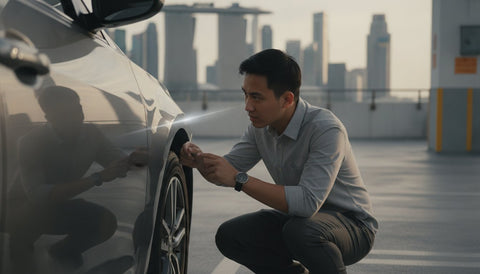
In Singapore’s unique car market, the most dangerous red flags aren't always found under the bonnet. They are often hidden in the fine print of your LTA records or the dealer's reluctance to be transparent. It's completely normal to feel a bit of anxiety when stepping onto a used car lot in 2026. Between the pressure of aggressive sales tactics and the complexity of revised PARF rebates, the fear of inheriting someone else's expensive accident history is a valid concern for any buyer.
You deserve a transaction that feels as smooth as the drive home. This guide will teach you exactly how to spot the critical red flags to watch for when buying a used car, from subtle mechanical warning signs to paperwork discrepancies that could cost you thousands in the long run. We'll walk through a physical inspection checklist, explain which specific LTA records you must verify, and provide the knowledge you need to walk away from a bad deal with total confidence. By the end of this article, you'll have the tools to ensure your next vehicle is a reliable investment rather than a costly mistake.
Key Takeaways
- Learn how to use a simple magnet test to detect hidden body filler and identify inconsistent panel gaps that signal past major accidents.
- Discover why requesting a cold start is essential for uncovering engine wear and what different exhaust smoke colours mean for your potential repair budget.
- Identify critical red flags to watch for when buying a used car by verifying LTA ownership history and checking for OMV or PARF discrepancies.
- Protect yourself from high-pressure sales tactics and learn why a refusal to allow a professional third-party inspection is an immediate deal-breaker.
- Gain peace of mind by understanding how Singapore’s Lemon Law protects you and why a final STA or VICOM evaluation is a non-negotiable step.
Aesthetic and Exterior Red Flags: More Than Just a Scratch
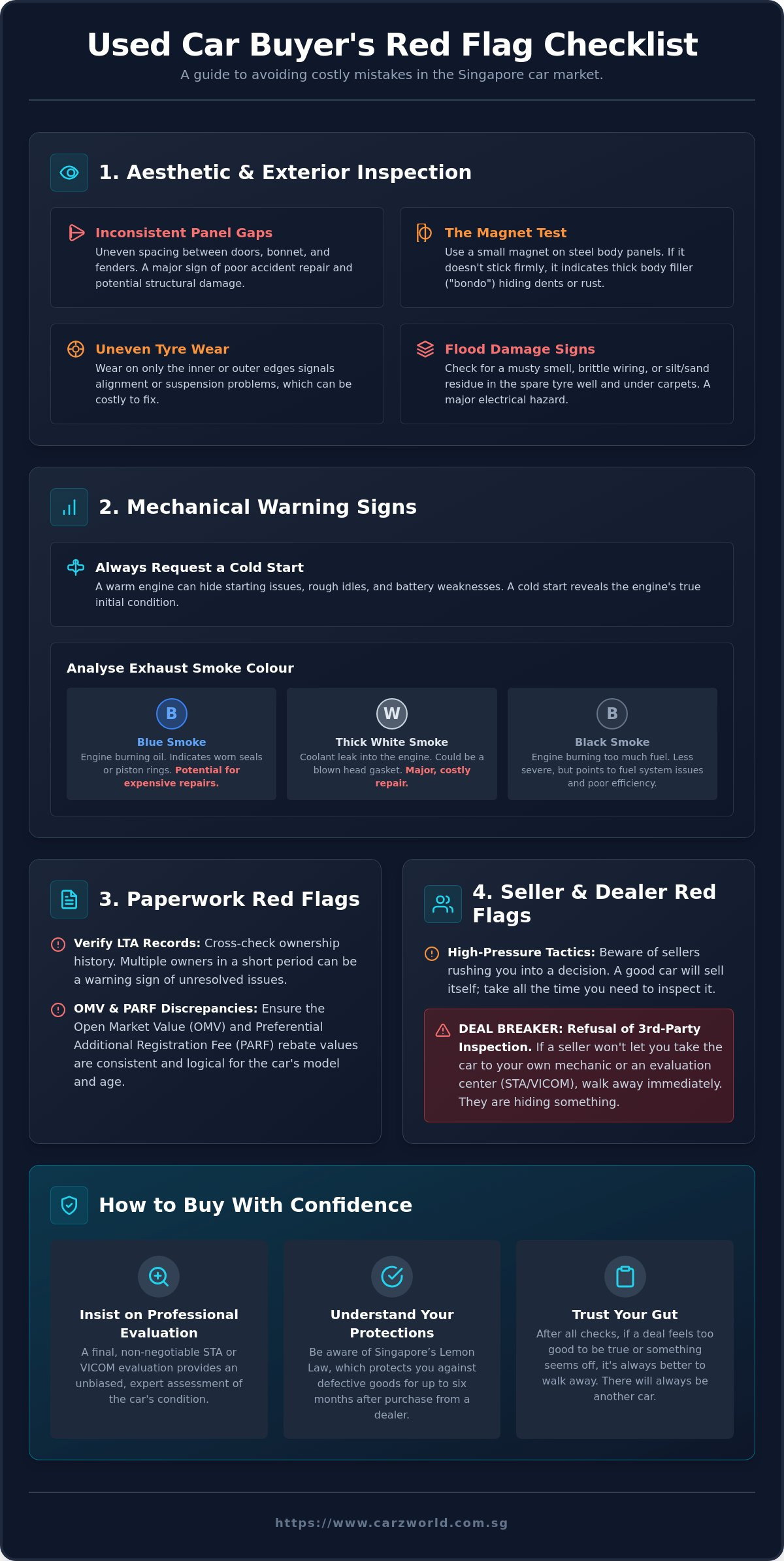
Buying a car often starts with the eyes. A fresh coat of wax can hide many secrets, but a savvy buyer looks closer. While the global used car market relies heavily on visual appeal, you need to look past the shine. One of the primary red flags to watch for when buying a used car is inconsistent panel gaps. These are the spaces between the doors, the bonnet, and the fenders. If one gap is significantly wider than the other, it's a clear sign that the car has undergone major structural repairs after an accident.
To better understand how to spot these exterior issues, watch this helpful video:
Beyond gaps, you should perform the "Magnet Test." Most car bodies are made of steel, but repair shops often use body filler to mask dents or rust. A small magnet won't stick to areas heavily layered with filler. It's a simple, non-invasive way to find hidden damage under a perfect-looking paint job. Identifying these red flags to watch for when buying a used car early will save you from inheriting a vehicle with a compromised frame.
Don't forget to look down at the tyres. Uneven tread wear isn't just about needing new rubber; it's a diagnostic tool. If the inside of the tyre is worn more than the outside, the car likely has suspension or alignment issues. In Singapore, where parts and labour are premium, these repairs add up quickly. Finally, check for signs of flood damage. Look for silt or sand in hard-to-reach crevices like the spare tyre well. A musty smell or brittle, crunchy wiring under the dashboard are also major warning signs that the car was submerged during a flash flood.
The Paintwork and Body Panel Inspection
Examine the car under direct sunlight to spot "orange peel" textures. This bumpy surface indicates a non-factory respray. Check rubber seals for overspray. If you see paint on a window gasket, that panel was definitely repainted. At Carz World, we emphasize transparency in our pre-owned car inventory, ensuring every vehicle meets high standards before it reaches the showroom. Verify that all doors and the boot close with a solid, consistent sound rather than a hollow metallic clang.
Glass and Light Cluster Discrepancies
Check the brand markings on every window. They should all match. If the driver's side window has a different logo than the others, it was likely replaced after a break-in or impact. Also, look for condensation inside the headlights. Moisture trapped in the lens often points to a failed seal or a front-end impact that cracked the housing. Ensure all exterior lights align perfectly with the bodywork. Gaps between the light cluster and the fender are common signs of poor repair work after a collision.
Mechanical Warning Signs: Identifying a "Lemon" on the Test Drive
While a shiny exterior is appealing, the engine and drivetrain are what truly determine a car's value. Many buyers make the mistake of testing a car that has already been warmed up by the seller. This is one of the major red flags to watch for when buying a used car. A warm engine can easily hide starting issues, battery weaknesses, or rough idles that only appear when the car is cold. Always request that the dealer keeps the engine cold before you arrive for your viewing.
Pay close attention to the exhaust during that initial start. Blue smoke often means the engine is burning oil, which usually leads to a massive repair bill later. Thick white smoke might indicate a coolant leak or a blown head gasket. Black smoke usually suggests the engine is consuming far too much fuel. These visual cues are often more reliable indicators of mechanical health than a simple odometer reading. According to this DBS guide to buying a used car, understanding these mechanical nuances is just as important as knowing your loan eligibility or PARF rebates.
In Singapore's heavy stop-start traffic, your transmission must be flawless. During the test drive, look for any hesitation, jerking, or "hunting" for gears as you accelerate. Similarly, find a safe, quiet road to test the braking behaviour. If the pedal pulses under your foot or the car pulls to one side during a firm stop, you are likely looking at warped brake discs or sticking calipers. These issues aren't just expensive; they're safety risks that should never be ignored.
Sensory Checks Under the Bonnet
Open the bonnet and perform the "Oil Cap Test." Remove the oil filler cap and look for a milky, mayonnaise-like substance or thick black crust. Engine sludge is a sign of neglected maintenance intervals. Take a moment to use your sense of smell. The acrid scent of burning oil or the sweet, syrupy smell of a coolant leak are immediate warnings. These sensory checks help you identify hidden red flags to watch for when buying a used car that a quick engine wash might have missed.
The Dynamic Test Drive Checklist
Don't just drive in a straight line. Take the car through a series of specific movements to stress the components:
- Steering: Turn the wheel to full lock in both directions while moving slowly. Any clicking sounds suggest the CV joints are failing.
- Suspension: Drive over HDB speed bumps at a moderate pace. Listen for groans, squeaks, or metallic clunks that signal worn bushings or shock absorbers.
- Climate Control: Run the air-conditioning on its coldest setting for several minutes. In our tropical climate, a weak compressor is an expensive and uncomfortable problem to solve.
If you notice multiple mechanical issues during your session, don't feel pressured to proceed with the purchase. It is often safer to browse a transparent inventory of pre-owned cars where vehicles have already undergone professional mechanical assessments.
Paperwork and Regulatory Red Flags: The Singapore Context
While mechanical checks are vital, the paperwork often hides the most expensive red flags to watch for when buying a used car in Singapore. A vehicle that drives perfectly can still be a financial liability if the regulatory details are messy. One of the first things to examine is the LTA ownership history. A high number of owners within a short period, such as three owners in just two years, is a major warning sign. It suggests that previous owners discovered recurring issues and decided to pass the problem to the next person rather than fixing it.
Understanding the Open Market Value (OMV) is equally critical because it dictates your loan limits and future rebates. For cars with an OMV of S$20,000 or less, you can secure a loan of up to 70% of the purchase price. If the OMV exceeds S$20,000, that limit drops to 60%. Discrepancies here can disrupt your financing plans and lead to unexpected out-of-pocket costs. Additionally, keep an eye on the PARF rebate structure. For cars registered from February 2026 onwards, the rebate is capped at $30,000. If a seller's valuation doesn't align with these updated LTA regulations, it is a significant red flag.
The "COE Trap" is another area where buyers often get caught. You must verify the remaining lifespan and the specific bidding category. A car nearing its 10-year mark without a renewed COE has a drastically different value proposition than one with five years remaining. Finally, always ask for the service booklet. Incomplete records during the warranty period are dangerous. Without a documented history, you might find your manufacturer warranty voided when you need it most. These administrative red flags to watch for when buying a used car are just as important as what is under the bonnet.
Verifying LTA Records and Log Cards
Use the LTA e-Service to verify the car's actual registration date and check for outstanding finance. A "lien" on the vehicle means the previous loan hasn't been fully settled. This will prevent a smooth ownership transfer and cost you the S$25 LTA transfer fee if the deal falls through. Always cross-reference the chassis number on the log card with the physical stamping on the car's frame. This ensures you aren't buying a vehicle with a swapped identity. At Carz World, we handle these pre-owned car transfers with absolute transparency to ensure a seamless experience.
The "Too Good to Be True" Price Tag
Compare the asking price against the current COE Prevailing Quota Premium (PQP). If a car is priced significantly below market value, it usually has a hidden history. It could be a former private-hire vehicle or have structural damage. Remember that the GST rate is 9% in 2026. This should be clearly reflected in the final breakdown. Checking the OMV is also essential for calculating your eventual scrap value. A lower OMV means a lower rebate. This directly impacts the total cost of ownership over the car's remaining lifespan.
Dealership and Seller Red Flags: Spotting Shady Sales Tactics
Beyond the mechanical condition and the log card details, the seller's behaviour is a goldmine of information. Identifying red flags to watch for when buying a used car often involves observing how a salesperson handles your requests for transparency. If you ask to send the vehicle for a third-party inspection and the dealer refuses, consider it an immediate deal-breaker. A reputable dealer has nothing to hide and will welcome a professional evaluation from centres like STA or VICOM to build your confidence.
Shady sellers often rely on high-pressure deposit tactics to close a sale quickly. They might claim another buyer is currently "on the way with cash" to force you into a "pay now or it's gone" situation. Genuine professionals understand that a car is a significant financial commitment and will give you the necessary space to make an informed decision. You should also listen closely for inconsistent stories. If a salesman describes a vehicle as a "low-mileage weekend car" but the log card shows it was previously registered to a car rental firm, the lack of honesty is a massive warning sign.
Be particularly careful with vague warranty terms. It is essential to distinguish between a "dealer warranty" and a "manufacturer warranty." A dealer warranty is only as good as that specific showroom's willingness to honour it, whereas a manufacturer warranty is backed by the official brand. Always ask for these terms in writing to avoid disputes if a major component fails shortly after you collect the keys.
Evaluating the Dealership’s Reputation
Look for established showrooms that maintain a transparent collection of used cars. Social proof is your best friend in this process. Read recent customer reviews and look for mentions of specific staff members who provided high-quality service. When clients name individuals like "Kelvin" or "Derrick" for their patience and honesty, it shows the business values long-term reputation over short-term gains. A stable business will typically offer in-house financing and insurance, which are signs of a well-organized, full-service operation.
The "As-Is" Clause and Your Rights
You should be extremely wary of contracts containing "As-Is" clauses that attempt to waive all seller responsibility. While used cars naturally have some wear and tear, these clauses shouldn't be used to hide significant defects. Always ask for a comprehensive breakdown of "Admin Fees" or "Agreement Fees" to ensure there are no hidden costs. A reputable dealer will always provide a clear, written Sales Agreement that protects both parties. If you want a purchase experience defined by transparency rather than pressure, explore our range of pre-owned vehicles today.
How to Buy with Confidence: The Safe Path to Ownership
Identifying the red flags to watch for when buying a used car is only half the battle. Once you've performed your own visual and mechanical checks, you need to verify your findings with professional data. The most reliable way to secure your investment is to insist on a professional evaluation from STA or VICOM. These independent centres provide an unbiased assessment of the car's structural integrity and mechanical health. If a seller hesitates to allow this final step, it's a clear sign that you should walk away from the deal immediately.
Buying from an established dealership offers a significant safety net that private sales simply cannot match. In Singapore, the Lemon Law protects consumers who purchase from registered businesses. This legislation covers most defects discovered within six months of your purchase. If a major fault appears that wasn't disclosed, the dealer is legally obligated to repair, replace, or refund the vehicle. Private sellers aren't bound by these rules. This makes the "Certified Pre-Owned" route a much more dependable choice for those who value long-term peace of mind. While you're calculating your budget, you might also consider preparing your current car for sale or trade-in to help offset the cost of your next vehicle.
The Professional Inspection Process
A professional inspection report usually comes with a grading system. A Grade A report indicates the car is in excellent condition with no signs of major repair. Grade B suggests some minor wear or previous cosmetic work but no structural damage. You can use these reports as a powerful negotiation tool. If the inspection reveals minor issues like worn brake pads or a leaking gasket, you can request the dealer to fix them before delivery. At Carz World, we welcome independent checks because we believe in total transparency throughout the transaction.
Conclusion: Choosing the Right Partner
Buying a car in 2026 requires patience and a methodical approach. The market is complex, and the financial stakes are high. By staying alert for red flags to watch for when buying a used car, you protect yourself from expensive surprises and shady sales tactics. Focus on verifying every claim, from the LTA log card to the actual engine performance. Choosing a transparent dealership experience saves you thousands in the long run and ensures your journey on the road is positive and stress-free. Browse our curated selection of trusted used cars today and experience a seamless path to ownership.
Step Into Your Next Drive With Total Confidence
Buying a vehicle in Singapore’s 2026 market doesn't have to be a gamble. By keeping a sharp eye on red flags to watch for when buying a used car, you've already shifted the power back into your hands. You now know that a solid deal is built on three pillars: a thorough physical inspection, verified LTA paperwork, and a seller who values transparency as much as you do.
At Carz World, we believe every driver deserves an honest experience. We back this up with comprehensive vehicle history transparency for every unit we sell. Our team provides full-service support from your initial viewing through to the final LTA ownership transfer and financing. With over 100+ positive customer reviews naming our dedicated staff, we've built a reputation as a dependable partner in your automotive journey.
Find your next worry-free car in our trusted pre-owned collection.
Your ideal car is out there. With these tools in your pocket, you're ready to find it without the stress.
Frequently Asked Questions
Is a car with a high mileage always a red flag in Singapore?
High mileage isn't always a deal-breaker if the maintenance records are complete and consistent. In Singapore, a typical car covers between 15,000 and 20,000 km annually. A vehicle with 100,000 km that has a full service history is often more reliable than a low-mileage car that has sat idle or missed essential oil changes. Always prioritize the quality of maintenance over the number on the odometer.
What should I do if the dealer refuses an independent STA/VICOM inspection?
You should walk away from the deal immediately without leaving a deposit. Refusal to allow a third-party evaluation is one of the most significant red flags to watch for when buying a used car. Professional dealerships welcome independent checks from centres like STA or VICOM because they have nothing to hide. Transparency is the foundation of a trustworthy transaction, and any resistance suggests hidden mechanical or structural issues.
Does the Singapore Lemon Law apply to private car sales?
No, the Singapore Lemon Law only applies to transactions between a consumer and a registered business or dealership. It does not cover private car sales between two individuals. This is why buying from a dealer provides a much higher level of security. If you purchase from a private seller, you are responsible for all due diligence and have very limited legal recourse if the car breaks down shortly after the sale.
How can I check if a used car has been in a major accident?
Start by looking for inconsistent panel gaps and mismatched paint shades under direct sunlight. Check for overspray on rubber seals and look for weld marks on the chassis that don't look factory-standard. The most effective method is a professional evaluation. Experts can identify structural repairs or frame damage that are invisible to the untrained eye, ensuring you don't buy a vehicle with a compromised safety structure.
Why is the number of previous owners important for a used car?
A high turnover of owners in a short period often signals that the car is a "lemon" with recurring problems. If a vehicle has had three owners in just two years, it suggests each owner discovered a fault and chose to sell rather than pay for repairs. Consistent ownership over several years usually indicates a reliable vehicle that the previous owner was happy to drive and maintain.
What are the most common hidden costs when buying a second-hand car?
Beyond the advertised price, you must budget for the S$25 LTA transfer fee and the 9% GST rate applicable in 2026. Many dealers also charge administrative or agreement fees which should be clearly stated in the Sales Agreement. You should also account for immediate insurance premiums and the cost of a comprehensive major service to ensure the car starts its life with you in peak condition.
Is a "too good to be true" price always a scam?
Usually, a price significantly below market value hides a troubled history that will cost you more later. It could be a former private-hire vehicle (PHV) with extreme wear or a car with structural damage from a major collision. Identifying these red flags to watch for when buying a used car involves comparing the price against the current COE PQP and the car's OMV to ensure the valuation is logical.
Can I get a refund if I find a major defect after buying a used car?
Under the Lemon Law, you can request a repair or replacement if a major defect appears within six months of purchase from a dealer. A full refund is typically the final step if the dealer is unable to fix the issue or provide a comparable replacement. This protection is a major benefit of buying from established showrooms, as it provides a clear legal path to resolve serious mechanical failures.
Disclaimer
This content is provided for general informational purposes only. Readers are encouraged to independently verify important information.
In Same Category
- Scrap Car vs Export Car in Singapore: How to Choose the Better Option
- Pros and Cons of Buying a High PARF Car in Singapore
- Car Valuation Services in Bukit Merah: A Seller’s Guide
- Scrapping Your Car Before 10 Years in Singapore: What Happens?
- Calculating the Breakeven Point for COE Renewal in Singapore
Related by Tags
- Used Cars for Sale in Tampines: 2026 Buyer's Guide
- Car Loan Singapore: The Complete 2026 Guide to Financing Your Vehicle
- Buying a Used Car in Singapore: 2026 Ultimate Guide
- What is PARF? The Ultimate Guide to Singapore’s Car Rebate System
- Long Term Car Rental Singapore: 2026 Definitive Guide
- Mercedes C-Class Singapore Guide 2026: Specs, COE, and Buying Tips
- Second Hand Hybrid Cars Singapore: The 2026 Value & Inspection Guide
- Cheapest Car in Singapore: The 2026 Guide to Affordable Ownership
- Parallel Import Cars Singapore: 2026 Buyer’s Guide
- Honda Civic Singapore: 2026 New & Pre-Owned Guide
- Suzuki Swift Singapore: The Ultimate Smart-Money Hatchback Guide 2026
- Mazda 3 Singapore Guide 2026: Specs, Prices, and Buying Tips
- The Ultimate Toyota Alphard Singapore Guide: Luxury & Performance in 2026
- Hyundai Ioniq 5 Singapore: The Definitive 2026 Buying & Ownership Guide
- Sell My Car in Singapore (2026): Complete Guide
- Nissan Qashqai Singapore: Ultimate Buyer’s Guide 2026
- The Ultimate Used Car Buying Guide for Singapore in 2026
- Why Carz World is Your Trusted Used Car Dealer in Singapore (2026 Guide)
- Honda Odyssey Singapore: 2026 Family Buying Guide