Is a Car an Asset or a Liability in Singapore? How It Affects Your Net Worth
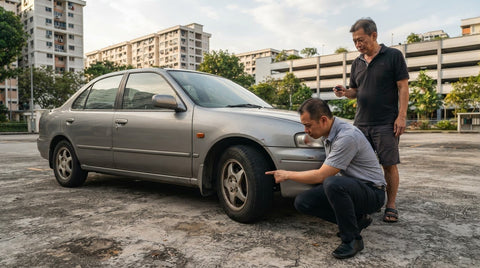
A car can be an asset and still reduce your net worth. Whether a car is an asset or a liability in Singapore depends on what you’re measuring: the vehicle has resale value, while any loan and ongoing expenses create financial obligations. Depreciation can also reduce its value over time.
The purchase price and monthly loan payment each show only part of the picture. Compare the car’s current estimated value with its outstanding loan, then account for depreciation and ownership costs to understand the effect on your finances.
This article explains how a car fits into your assets, liabilities and net worth, and why its current value may differ from what you paid. It also covers depreciation, COE considerations and the financial factors to weigh when deciding whether to buy, keep or sell a car in Singapore.
Key Takeaways
- Work out your car’s equity by comparing its current value with any outstanding loan, then include both in your net-worth picture.
- Understand which ownership factors can influence depreciation and why the car’s resale value may change over time.
- See how COE affects the cost and value of a car in Singapore, including why its remaining term matters.
- Learn how business use can affect a car’s treatment for accounting or tax purposes.
- Consider how loan interest, running costs and COE renewal can shape the overall financial impact of car ownership.
Assets, liabilities, and net worth
Whether a car is an asset or a liability in Singapore depends on its current value, loan balance and effect on your cash flow. Separate these factors to see how ownership affects your net worth.
Classifying a Car in Net Worth
An asset is something of value that you can sell; a liability is an amount you owe. A car is an asset because it can be sold, while any loan is a separate liability. The distinction matters because the car’s resale value alone doesn’t show how much of its value you own after accounting for debt.
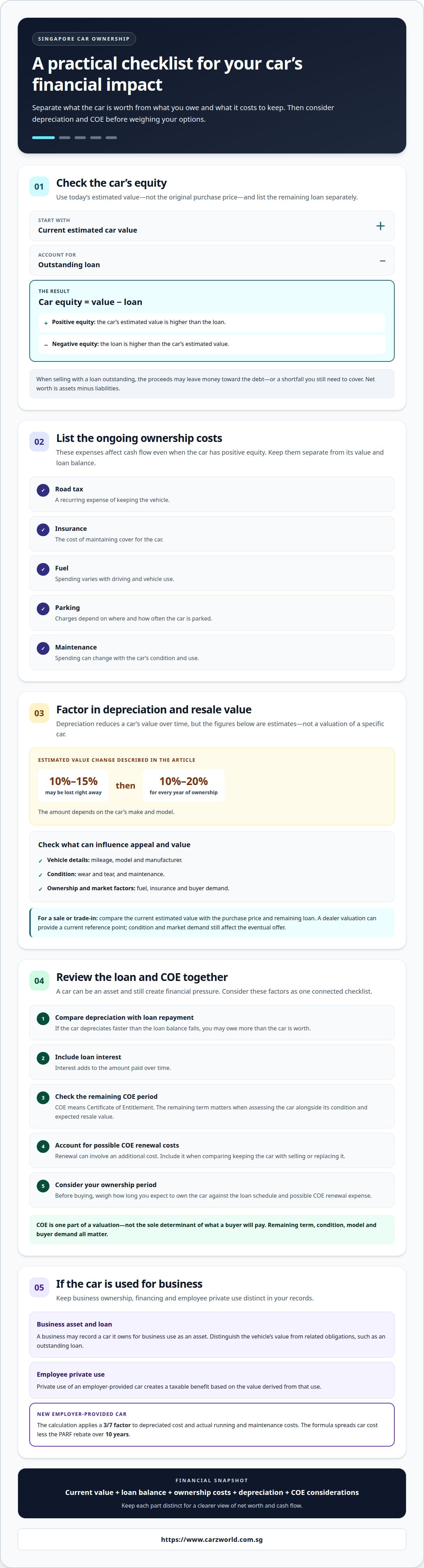
Compare the car’s current estimated value with its outstanding loan to work out your equity. If the value exceeds the loan, you have positive equity; if the loan is higher, you have negative equity. When selling a car with a loan outstanding, the proceeds may leave money toward the debt or a shortfall you still need to cover.
Net worth is the value of your assets minus your liabilities. Record the car at its current estimated value, not its original purchase price, and list the remaining loan separately. As you repay the loan, the liability falls. Once it’s fully paid, you own the vehicle outright, although its resale value can still change.
Business Use for Tax and Accounting
A business may record a car it owns for business use as a business asset. The vehicle’s value should be distinguished from related obligations, such as an outstanding loan. Private use can also affect tax treatment when an employer provides a car to an employee.
In Singapore, an employee’s private use of an employer-provided car creates a taxable benefit based on the value derived from that use. For a new employer-provided car, the calculation applies a 3/7 factor to depreciated cost and actual running and maintenance costs. The formula spreads the car cost less the PARF rebate over 10 years.
That tax treatment is separate from recording the car as a business asset. Keep business ownership, employee private use and any outstanding financing distinct in your records. This helps show what the business owns, what it owes and whether an employee benefit needs to be accounted for.
Annual Costs of Car Ownership
Common annual car expenses include road tax, insurance, fuel, parking and maintenance. The total varies with the vehicle and how you use it. These costs reduce the cash available to you, even if the car has positive equity.
Consider each category separately:
- Road tax: a recurring ownership expense that adds to the cost of keeping the vehicle.
- Insurance: a cost of maintaining cover for the car.
- Fuel: spending that varies with driving and vehicle use.
- Parking: charges that depend on where and how often the car is parked.
- Maintenance: spending that can change with the car’s condition and use.
For a clear view of your net worth, keep operating expenses separate from the car’s current estimated value and loan balance. The vehicle may count as an asset on your balance sheet while its recurring costs put pressure on cash flow. Listing each expense also helps you assess the full cost of ownership alongside your equity.
Car depreciation
Depreciation reduces a car’s value over time and affects what you may receive when selling it. In Singapore, COE considerations and the car’s condition also influence how owners assess its value.
Depreciation and Car Value
Depreciation is the reduction in a car’s value over time, and it matters when estimating resale proceeds. A car may lose 10% to 15% of its value right away, then another 10-20% for every year of ownership, depending on its make and model.
Any figures used to assess value are estimates, not a valuation of a specific car. Mileage, model, manufacturer, condition, wear and tear, maintenance, fuel and insurance can all affect its appeal. For instance, two cars of the same model may attract different offers if one has higher mileage or more visible wear.
For a sale or trade-in decision, compare the car’s current estimated value with its purchase price and remaining loan. A dealer valuation can help an owner considering a trade-in. It gives a current reference point, while the vehicle’s condition and market demand still influence the eventual offer.
COE Effects on Cost and Value
COE stands for Certificate of Entitlement and is part of Singapore’s car ownership framework. COE costs and renewal decisions affect the overall cost of keeping a car, not just its resale value.
When assessing a car, consider its remaining COE period alongside its condition and expected resale value. A car nearing expiry presents a different financial decision from one with more time remaining. Renewal can involve an additional cost, so include that potential expense when comparing keeping the car with selling or replacing it.
There’s no single COE adjustment that applies to every car’s value. The remaining term, condition, model and buyer demand all influence the comparison. Treat the COE position as one part of the valuation, not as the sole determinant of what a buyer will pay.
Financial Risks of Buying a Car
The financial risks of buying a car include depreciation, loan interest and potential COE renewal costs. These expenses can add up even as the car’s resale value falls.
A car loan is a liability. If the vehicle depreciates faster than the loan balance falls, you may owe more than the car is worth. Loan interest adds to the amount paid over time, while fuel, insurance, maintenance and depreciation also affect cash flow.
So, is a car an asset or a liability in Singapore? It can be both: the vehicle has resale value, while any financing and ongoing costs create financial obligations. Before buying, compare how long you expect to own the car with the loan schedule and possible COE renewal expense. This helps you judge whether its value and practical use justify the overall financial impact.
What is COE and how does it affect the cost and value of a car in Singapore?
The Certificate of Entitlement (COE) is part of Singapore’s car ownership system. Its cost contributes to the amount paid for a car, while its remaining term can affect how buyers assess the vehicle’s value.
How COE Shapes a Car’s Cost
When comparing cars, distinguish the vehicle’s resale value from the COE cost included in its overall purchase price. What you paid doesn’t necessarily match what you could recover by selling later. Resale value also reflects the car’s condition, model, market demand and remaining COE term.
For example, two cars of similar models and condition may offer different ownership prospects if their COE expiry dates differ. One may have more time before expiry, while the other brings a renewal decision closer. That difference can affect how long a car meets a buyer’s needs.
Remaining COE and Resale Value
The remaining COE term helps frame a car’s resale value by showing how long the current entitlement has left. It doesn’t determine the sale price on its own. Buyers may also consider mileage, wear, maintenance history, model and expected ownership costs when deciding what a car is worth to them.
Treat the remaining term as one part of a broader valuation, not a guaranteed premium or discount. Even a well-kept car merits a close look at its COE position. Likewise, a shorter remaining term alone doesn’t reveal the vehicle’s full value or the seller’s likely proceeds.
Renewal and the Ownership Decision
As expiry approaches, an owner may consider renewing, selling or replacing the car. Each option changes the financial picture. Renewal adds a cost to continued ownership, while a sale means assessing the car’s value with its existing COE term in mind.
Compare the renewal cost with the car’s condition, expected use and likely resale value. If you plan to keep it, consider whether its usefulness justifies the additional expense. If you plan to sell, the remaining term and the buyer’s needs matter to the valuation. Don’t assume renewal is automatically worthwhile or that selling is always preferable.
What to Include in a COE Comparison
Use the same criteria when comparing cars with different COE positions. Note each car’s remaining term, condition, mileage, expected ownership costs and financing balance. Then consider whether you intend to keep or sell it. This makes the trade-offs clearer than focusing on the headline purchase price alone.
For employer-provided car-benefit calculations in Singapore, the renewed COE period used is currently either 5 or 10 years. That specific calculation detail illustrates why the renewal period matters in its relevant context. For a personal purchase, focus on how the car’s remaining term and any future renewal decision fit your ownership plans and budget.
When can a car be a business asset for tax or accounting purposes in Singapore?
A car may be a business asset if a business owns it and can sell it. Its accounting value, any related loan and the tax treatment of employee use are separate considerations. Keeping them distinct helps the business understand what it owns and which car-related benefits may be taxable.
For accounting, record the car as an asset and any outstanding car loan as a liability. The vehicle’s value may change during ownership, so its original purchase cost won’t necessarily reflect what it could sell for now. A business reviewing its financial position should distinguish the car’s current estimated value from the remaining loan balance.
Tax treatment also depends on how a car is provided and used. In Singapore, an employee’s private use of an employer-provided car is a taxable benefit based on the value derived from that private use. This is separate from recording the vehicle as a business asset. Business records should distinguish the car, its financing and any employee benefit.
The calculation varies by vehicle arrangement:
- Employer-provided second-hand car: the taxable-benefit formula uses the period remaining from purchase to COE expiry as its divisor. It differs depending on whether the car is less than 10 years old or more than 10 years old when purchased.
- Employer-provided leased car: the taxable benefit applies a 3/7 factor to the employer’s rental, running, and maintenance costs.
- Car allowance: the employer declares the allowance in full. The taxable car-benefit formula doesn’t apply.
Some reimbursements are treated differently. Mileage reimbursement for business use isn’t taxable when its rate is reasonable. An employer’s reimbursement of ERP charges for work purposes isn’t taxable, while an ERP allowance is taxable. Reimbursing an employee’s own-vehicle taxes, repairs or maintenance expenses is also taxable.
Use also matters for commercial vehicles. Incidental benefits, including reimbursed petrol and parking, from an employer-provided commercial vehicle used for travel between home and work aren’t taxable. By contrast, a car-park benefit for an employee’s own car is taxable when it covers parking at work. If free season parking covers multiple locations, its value is based on the total market value of season parking at both car parks.
After a car’s COE is renewed, the employer-car benefit calculation uses the COE renewal amount, forgone PARF rebate, remaining renewed-COE period, and running and maintenance costs. Keeping these details separate helps businesses assess the car’s accounting position without confusing it with employee tax treatment.
What are the financial risks of buying a car in Singapore, including depreciation, loan interest and COE renewal costs?
Buying a car can affect your finances through depreciation, loan interest and future ownership decisions. In Singapore, the COE renewal decision adds another factor to weigh alongside regular expenses. Considering these costs together gives a clearer picture than focusing only on the purchase price or monthly instalment.
Depreciation and Loan Balance
A car loan is a liability, while depreciation can reduce the value of the vehicle securing that debt. If the car’s value falls below its outstanding loan, you may owe more than you could receive by selling it. That can leave a shortfall when selling or trading in the car.
Imagine needing to sell before finishing the loan. The sale proceeds may not cover the remaining balance, leaving a difference to account for. The outcome depends on the car’s current estimated value and loan amount, not its original purchase price.
Loan interest adds to the total paid over the borrowing period. Compare the repayment schedule with how long you expect to own the car. If you sell before clearing the loan, consider both the outstanding balance and likely sale proceeds. A lower instalment alone doesn’t reveal the total financing cost.
COE Renewal and Ownership Costs
COE renewal can be a significant decision because keeping the car may require an additional outlay. That expense comes on top of ordinary ownership costs such as fuel, insurance and maintenance. If you plan to keep the car, include renewal in your affordability assessment rather than treating it as a distant afterthought.
A car nearing COE expiry may still meet your transport needs, but renewal changes the cost of continuing to use it. Compare that commitment with selling or replacing the vehicle. Its condition, expected use, remaining loan and renewal cost all affect which option makes financial sense.
Managing the Combined Risks
Consider these costs together, not in isolation. Depreciation affects potential resale proceeds; the loan determines what remains payable; and renewal may change the cost of keeping the car. Fuel, insurance and maintenance also reduce the cash available for other needs.
- Before buying: compare expected repayments with your budget for fuel, insurance, parking, and maintenance.
- During ownership: track the loan balance and reassess the car’s value before making a sale decision.
- Near COE expiry: compare renewal, sale, and replacement in light of the car’s condition and your plans.
This comparison can reveal risks that a monthly instalment hides. A car may retain value yet still strain cash flow through financing and running costs. If depreciation leaves you with negative equity, selling may not clear the loan. The practical question is whether the car’s use justifies its combined costs and obligations.
Carz World Pte: Pre-Owned Cars
Carz World Pte Ltd offers pre-owned cars for buyers weighing ownership costs against resale value. A pre-owned car may suit someone comparing options after considering depreciation, loan commitments and the vehicle’s COE position.
When assessing a car, consider its condition, remaining COE term, expected running costs and how long you plan to own it. These factors put the purchase in context alongside your budget and transport needs. Carz World Pte Ltd also offers brand new cars, car rental and car export services.
For a closer look at pre-owned car options, contact Carz World Pte Ltd.
Make Your Next Car Decision With Confidence
Deciding whether a car is an asset or a liability in Singapore is personal, because the right choice depends on what you need from the vehicle and how it fits your priorities. Before making a move, consider how long you expect to keep a car, how much flexibility you want, and whether ownership or another transport arrangement suits your plans better.
Compare your vehicle options with how you plan to use them. You can explore pre-owned cars, brand new cars or car rental through Carz World Pte Ltd, then decide which best fits your needs. The aim isn’t simply to own a car, but to make a considered choice that works for your circumstances and clarifies your next step.
Contact Carz World Pte Ltd to discuss your car options, and take your next step with confidence.
Frequently Asked Questions
Is a Car an Asset or a Liability?
A car is an asset because it can be sold, but owning one can also mean debt and ongoing expenses. For a personal balance sheet, record the car’s current estimated value separately from any loan balance. A car with no loan still has resale value, while fuel and insurance continue to affect cash flow. The asset label alone doesn’t show whether ownership improves your overall financial position.
Is a car considered an asset or liability in Singapore personal finance?
Whether a car is an asset or a liability in Singapore depends on which part of your finances you’re assessing. For net worth, record its current estimated value and any outstanding loan separately. For cash flow, consider the regular costs of keeping it. You may own a car outright and still face ongoing expenses; if you finance it, account for both the vehicle and the debt.
How does car depreciation affect its value in Singapore?
Depreciation generally reduces what you could receive from selling a car compared with its earlier value. The amount depends on factors such as the model, condition, mileage, wear and maintenance. A car with heavy use, for instance, may be valued differently from a similar model in better condition. Use a current estimate when reviewing your finances, rather than relying on the original purchase price.
How do car loans and outstanding balances affect a car owner's net worth in Singapore?
A car loan reduces net worth because the outstanding balance is a debt, even while the car has resale value. Compare the current estimated value with the unpaid loan to understand your equity. If you sell before clearing the loan, the proceeds may not cover the balance. Include any shortfall in your financial planning instead of treating the sale proceeds as money freely available.
How do used-car prices and resale values compare with the original purchase price in Singapore?
A used car’s resale value is usually different from its original purchase price because it has aged and its condition or market appeal may have changed. The original amount paid is a historical figure, not a reliable estimate of what you could receive now. Compare similar models and account for mileage, condition and remaining COE term. A current valuation can help you assess a sale or trade-in against your expectations.
Disclaimer
This content is provided for general informational purposes only. Readers are encouraged to independently verify important information.
In Same Category
- COE Rebate for Early Deregistration: How Much Can You Get Back
- Pre-owned cars with memory seats in Singapore: asking prices
- How to Check If You Can Use CPF to Pay for COE Renewal
- Luxury pre-owned cars Toa Payoh: Compare listings, mileage and prices
- Is a Car an Asset or a Liability in Singapore? How It Affects Your Net Worth
Related by Tags
- Is a Car an Asset or a Liability in Singapore? How It Affects Your Net Worth
- Save for a Car or Take a Loan in 2026? Compare the Costs
- Is a car a good investment in Singapore compared with other ways to travel?
- Second hand car lots in Choa Chu Kang: dealers and prices
- Car Loan Hidden Fees: Which Application and Setup Charges Are Reasonable
- What to Do If Your Car Loan Is Rejected and Find Options
- Best Cars for Home-Based Businesses in Singapore: 2026 Guide
- Risks of Buying a Car with 1 Year of COE Left in Singapore (2026 Guide)
- Buying a Used Lorry in Singapore: 2026 Buyer’s Guide
- Financial Planning for Your First Car in Singapore
- COE Renewal for 5 Years vs 10 Years: Pros and Cons in Singapore
- Pros and Cons of Buying a High PARF Car in Singapore
- Calculating the Breakeven Point for COE Renewal in Singapore
- Financial Checklist Before Committing to a Car Purchase in Singapore (2026)
- Used Electric Cars in Singapore: 2026 Buyer's Guide
- Mazda CX-5 Singapore Review: Buyer Guide, Specs & Ownership (2026)
- Car Financing for Singapore Gig Workers: 2026 Guide
- Financial Checklist Before Buying a Car in Singapore: 2026 Expert Guide
- Calculating the Real 5-Year Cost of Car Ownership in Singapore (2026 Guide)
- 2026 Guide: Planning for a Second Family Car in Singapore