2026 Guide: Planning for a Second Family Car in Singapore
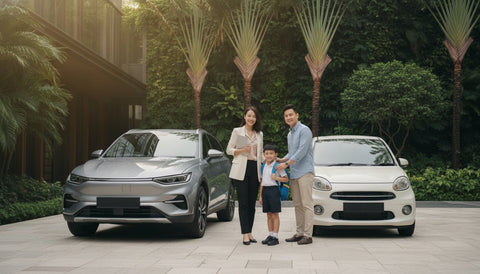
Owning a second vehicle in Singapore is often viewed as a fast track to financial strain, but it doesn't have to be. While the convenience of juggling morning school runs and demanding office commutes is undeniable, the math behind dual ownership can feel daunting. Sound financial planning for a second family car in Singapore requires far more than glancing at the showroom sticker price. It demands a clear understanding of long-term cash flow against a backdrop of evolving automotive regulations and elevated ownership costs.
Most households recognize that the standard 30% to 40% cash downpayment and fluctuating COE premiums represent the steepest hurdles. It is equally natural to worry about how recurring ERP charges, road tax, and season parking will impact your family's monthly savings. At Carz World Pte Ltd, our goal is to help you navigate these variables so you can secure an extra vehicle without compromising your domestic budget. In this guide, we break down a practical monthly expense framework, weigh the merits of pre-owned versus brand-new models, and show you how strategic trade-ins can minimize your upfront outlay.
Key Takeaways
- Evaluate the "utility gap" to determine if a second vehicle is a financial necessity or if alternative transport remains more cost-effective for your family.
- Gain a clear understanding of financial planning for a second family car sg, specifically regarding the 30% to 40% downpayment rules and 2026 COE trends.
- Identify hidden monthly expenses and learn how to secure potential multi-car insurance discounts to protect your household cash flow.
- Compare the long-term value of pre-owned versus brand-new cars to see which option best avoids the trap of rapid depreciation.
- Prepare your documentation and learn the differences between bank loans and in-house financing to ensure a smooth, transparent transaction.
Assessing the Need: Is a Second Family Car Financially Viable?
Deciding to add another vehicle to your driveway is a major milestone. In Singapore, it's rarely just about the convenience; it's a strategic move that requires thorough financial planning for a second family car sg. You must evaluate the utility gap. This is the point where relying on public transport or ride-hailing services stops being efficient. If your mornings involve three different school drops before heading to the office, the time saved often outweighs the financial cost. However, you must also consider the opportunity cost. The capital used for a downpayment could otherwise be growing in a diversified investment portfolio or your CPF account.
Every purchase starts with the Certificate of Entitlement (COE), which often costs as much as the vehicle itself. Adopting a Total Cost of Ownership (TCO) mindset is essential. This means looking beyond the sticker price to include insurance, road tax, and maintenance over ten years. It's about understanding the long-term impact on your household cash flow rather than just the initial transaction.
Defining Your Second Car Use Case
Identify if this vehicle is a primary workhorse or a secondary runabout. If it's mainly for short trips to the tuition center or grocery store, pre-owned cars offer excellent value by avoiding the steepest part of the depreciation curve. Consider your size requirements carefully. A compact hatchback is easier to park in tight HDB lots, while a 7-seater MPV might be necessary for multi-generational outings. Your mileage expectations will directly dictate your monthly fuel and maintenance budgets.
The Financial Threshold for Multi-Car Households
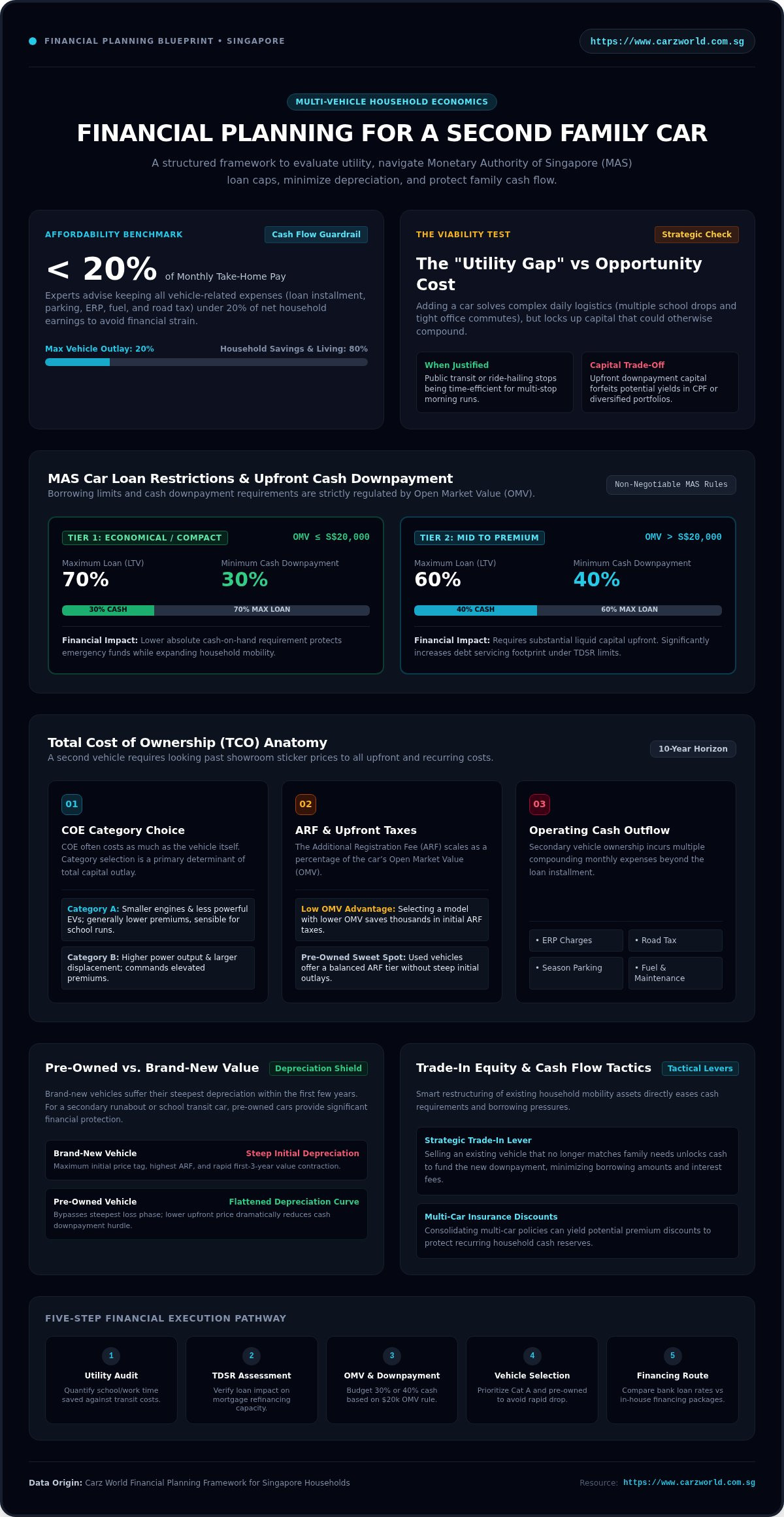
Singaporean families must be mindful of their Total Debt Servicing Ratio (TDSR). Adding a second car loan can impact your ability to refinance a mortgage or apply for new credit lines. Before you start browsing brand new cars, set a maximum all-in monthly budget. This figure should include the loan installment, parking, and ERP charges. Experts suggest keeping your total vehicle-related expenses below 20% of your household's monthly take-home pay to ensure long-term stability. This disciplined approach is the cornerstone of successful financial planning for a second family car sg.
Upfront Capital Requirements: COE, Downpayments, and Taxes
Securing the keys to a second vehicle requires a significant initial cash commitment. Unlike your first car, where you might have prioritized a specific brand, financial planning for a second family car sg often centers on maximizing liquidity. You must navigate the MAS loan restrictions that dictate your borrowing capacity. These rules are non-negotiable and depend entirely on the car's Open Market Value (OMV).
Your budget must also account for the Additional Registration Fee (ARF). This tax is calculated based on a percentage of the OMV and can increase the total cost significantly. Choosing a car with a lower OMV helps save thousands in upfront taxes. Many families find that a well-maintained pre-owned car provides the best balance between a manageable ARF and functional reliability. If you have an existing vehicle that no longer fits your needs, you can sell your car to unlock cash for the new downpayment. This trade-in acts as a financial lever, reducing the total amount you need to borrow and lowering your monthly interest costs.
The Downpayment Hurdle
The Monetary Authority of Singapore (MAS) sets clear limits on car loans. For any vehicle with an OMV exceeding S$20,000, the maximum loan-to-value (LTV) limit is capped at 60% of the purchase price. This means you need to provide a 40% cash downpayment upfront. If the OMV is S$20,000 or less, you can borrow up to 70%, requiring a 30% downpayment. While older used cars might have higher interest rates, their lower overall price tags mean your absolute cash-on-hand requirement is much smaller. This helps keep your emergency funds intact while expanding your family's mobility.
COE Strategies for Families
Choosing between Category A and Category B is a pivotal part of financial planning for a second family car sg. Category A cars, which include smaller engines and less powerful electric vehicles, generally have lower COE premiums. For a second car meant for school runs, a Category A model is often the most sensible choice. You should also be aware of the "COE Expiry" trap. As a car nears the end of its 10-year cycle, its PARF rebate value decreases. Budgeting for these rebates is crucial when you eventually decide to deregister or trade in the vehicle. Timing your purchase just after a COE bidding cycle can sometimes provide a clearer picture of market trends, though prices remain volatile. If you need a temporary solution while waiting for prices to stabilize, rental cars offer a flexible alternative without the long-term capital lock-in.
Estimating Monthly Operating Costs and Hidden Expenses
Many families focus heavily on the downpayment but underestimate the monthly cash flow impact of a second vehicle. Effective financial planning for a second family car sg requires a granular look at recurring expenses that go beyond the purchase price. Your monthly loan installment is the most predictable part of this equation. You'll need to balance your loan tenure against interest rates. While a longer tenure reduces your immediate monthly burden, it increases the total interest you'll pay over the life of the loan. It's also vital to consider how this additional debt affects your household's Total Debt Servicing Ratio (TDSR).
Insurance premiums are another significant factor for multi-car households. It's often possible to secure a loyalty discount by insuring both vehicles with the same provider. Don't forget to account for road tax, which is calculated based on engine capacity. If you're looking at a car older than ten years, remember that the road tax increases by 10% annually, eventually reaching a 50% surcharge. These fixed costs form the baseline of your budget before you even turn the key.
Maintenance and Depreciation
Budgeting for wear and tear is essential, especially for older vehicles that may require a dedicated repair fund. Unexpected issues with the transmission or cooling system can disrupt your finances if you aren't prepared. Depreciation rates also vary significantly between car segments. Generally, Japanese models maintain their value better than Continental brands in the local market. Choosing certified pre-owned cars is a strategic way to let the first owner absorb the steepest depreciation hit. This approach is a core component of smart financial planning for a second family car sg, as it provides a reliable vehicle with a lower total cost of ownership.
The Daily Commute Math
The "Variable Trio" of fuel, ERP, and parking often dictates the long-term viability of a second car. Peak-hour school runs can lead to substantial ERP charges that add up quickly over a month. You must also factor in the cost of a second season parking lot. In many HDB estates and condominiums, the second car lot is priced significantly higher than the first. When it comes to fuel, you'll need to decide if a hybrid is worth the higher upfront cost. If your daily mileage is high, the fuel savings can be substantial. However, for short neighborhood trips, a standard petrol engine might be more economical. Calculating these daily costs ahead of time ensures your family budget remains stable even as transport prices fluctuate.
Smart Financial Strategies: Pre-Owned vs. New vs. Rental
Selecting the right vehicle type is a pivotal moment in your financial planning for a second family car sg. While a brand new car offers the latest technology, a pre-owned car often presents a more balanced financial profile for a second driver. You'll avoid the massive first-year depreciation that affects new vehicles. When looking at new options, you must choose between Parallel Imports (PI) and Authorised Dealers (AD). PI models often come with a lower price tag but may have different warranty terms compared to AD cars. It's essential to weigh these savings against the long-term support you expect for the vehicle.
Viewing a car as a depreciating asset is a core part of financial planning for a second family car sg. Unlike property, a car's value drops every year. This reality makes the lower entry price of a used vehicle even more attractive for a multi-car household. You're effectively preserving more of your capital for other investments while still gaining the mobility your family needs. If you're ready to explore high-quality options that fit your budget, you can browse our latest vehicle inventory to find the perfect match for your family.
The Case for Certified Pre-Owned
Certified pre-owned vehicles bridge the gap between affordability and peace of mind. By opting for a car that's already a few years old, you significantly lower your initial capital outlay. You should evaluate the remaining COE life against the purchase price to ensure you're getting a fair deal. Many reputable dealers provide warranties that mitigate the risk of major repairs; this makes it a safe and logical choice for a second family vehicle. It's a strategy that prioritizes reliability without the premium price of a showroom model.
When to Consider Long-Term Rental
Ownership isn't the only path to mobility. A long-term car rental can be a smarter choice if you want to avoid the COE headache entirely. Rental fees are fixed and usually cover insurance, road tax, and all maintenance costs. This is particularly useful for families with temporary needs or those who prefer not to lock up S$50,000 or more in a downpayment. When you compare a monthly rental fee against the total cost of ownership, the flexibility of a rental often wins out.
Executing Your Plan: Financing and Professional Guidance
Moving from the research phase to actual execution requires organized documentation and a clear understanding of your borrowing options. The final stage of financial planning for a second family car sg involves gathering your income proof, such as your latest 15 months of CPF contribution history and computerized payslips. You'll also need to disclose existing debt obligations to ensure your application aligns with MAS guidelines. Having these documents ready prevents delays during the loan approval process and helps you secure the best possible terms.
You'll typically choose between bank loans and in-house dealer financing. Banks often provide lower interest rates, but their approval criteria can be rigid and the process may take several days. In-house financing is often more flexible and faster, which is beneficial if you're trying to secure a specific vehicle in a fast-moving market. Before you sign any Sales Agreement, ensure you've received a professional valuation when selling your current car. A fair trade-in value is the most effective way to reduce the cash outlay for your second vehicle.
Navigating the Paperwork
The administrative side of car ownership involves several moving parts. You'll need to account for LTA transfer fees and ensure your new insurance policy is active before you drive away from the showroom. A reputable dealer simplifies this by managing the MAS loan application on your behalf and coordinating with the relevant authorities. This structured approach ensures that all legal requirements are met without you having to visit multiple offices. Always double-check the Sales Agreement for the exact COE package and any specific "subject to COE" clauses before making your deposit.
Why Partner with a Trusted Dealer?
Partnering with an experienced dealer provides access to a much wider range of brand new cars and quality pre-owned inventory. This variety allows you to compare different models side-by-side to see which fits your family's evolving needs. Expert advice on COE bidding trends is also invaluable, as it helps you time your purchase more effectively. Carz World focuses on making this transition seamless, providing the logistical expertise and customer-centric service needed to manage a multi-car household. By following these steps, your financial planning for a second family car sg will lead to a successful and stress-free purchase.
Securing Your Family’s Mobility with Confidence
Adding a second vehicle to your household is a significant step toward greater family flexibility. By mastering the total cost of ownership and understanding MAS loan frameworks, you can make this transition without compromising your long-term goals. Successful financial planning for a second family car sg relies on choosing the right asset, whether it's a reliable pre-owned MPV or a flexible long-term rental. We've explored how a strategic trade-in and transparent financing can bridge the cash gap; this ensures your budget remains stable.
Our team at Carz World is dedicated to making these complex logistical processes feel seamless. We provide expert valuation services and a wide selection of family-friendly SUVs that fit your specific needs. You'll find transparent financing options strictly aligned with MAS guidelines to give you peace of mind throughout the transaction. Our extensive inventory of Japanese and continental models ensures you find the quality and reliability your family deserves.
Browse our family-ready used car collection and start your planning today. Your family's road to convenience starts with a well-informed and confident decision.
Frequently Asked Questions
How much downpayment do I need for a second car in Singapore?
You need a cash downpayment of either 30% or 40% of the car's purchase price. This requirement is determined by the vehicle's Open Market Value (OMV) as per MAS regulations. If the car's OMV is S$20,000 or less, the maximum loan-to-value (LTV) limit is 70%, requiring a 30% downpayment. For cars with an OMV above S$20,000, the LTV limit drops to 60%, meaning you must provide a 40% downpayment in cash.
Can I take two car loans at the same time in SG?
Yes, you can hold two car loans simultaneously as long as you meet the Total Debt Servicing Ratio (TDSR) requirements. The TDSR framework limits your total monthly debt repayments to 60% of your gross monthly income. This includes all existing liabilities like mortgages, credit cards, and your first car loan. Lenders will carefully review your credit profile to ensure your financial planning for a second family car sg doesn't exceed these mandatory thresholds.
Does a second car affect my ability to get a home loan (HDB/Bank)?
A second car loan will directly impact your eligibility for future home loans because it increases your total monthly debt obligations. Since the TDSR cap is 60%, the monthly installments for a second vehicle leave less room for mortgage repayments. If you plan to buy a new property or refinance your current home soon, it's wise to calculate how much the second car loan will reduce your maximum borrowing capacity for a mortgage.
Is it better to buy a used car or a new car as a second vehicle?
Buying a pre-owned car is often the more logical choice for a second family vehicle to avoid the steep initial depreciation of brand new models. A used car requires a lower total capital outlay and allows you to preserve more cash for other household needs. Most families find that a well-maintained, certified pre-owned vehicle provides the best balance of long-term value and functional reliability for daily school runs and neighborhood errands.
What are the hidden costs of owning two cars in a condo or HDB?
The most significant hidden cost is often the second parking lot fee. In HDB estates, the second season parking lot is priced higher than the first; similarly, many condos charge a premium for a second vehicle lot. You must also account for doubled insurance premiums, road taxes, and cumulative ERP charges from simultaneous commutes. These recurring expenses can add hundreds of dollars to your monthly budget, making a detailed financial plan essential before you commit to the purchase.
How does the COE rebate work if I sell my car early?
If you sell or deregister your car before its 10-year COE expires, you're entitled to a prorated rebate of the remaining COE value. This is known as the Quota Premium (QP) rebate. The refund is calculated based on the number of months and days left on the certificate at the time of deregistration. This rebate can be used to offset the cost of your next vehicle or taken as a cash refund through the LTA.
Are there any tax benefits for companies buying a second car?
Private cars registered under a company name generally don't qualify for tax deductions or capital allowances in Singapore. Expenses like insurance, road tax, and fuel for "S-plated" cars are not tax-deductible. However, if the second vehicle is a commercial vehicle, such as a van or pickup truck, your business may claim capital allowances and deduct operating expenses. It's best to consult a tax professional to see how this fits your specific corporate structure.
Should I consider an electric vehicle (EV) as my second family car?
An EV can be an excellent choice for a second family car, especially for short neighborhood runs and school drops. You'll benefit from lower "fuel" costs and potential tax incentives like the EV Early Adoption Incentive (EEAI). However, you must ensure you have easy access to a charging point at home or work. If your primary car is for long-distance trips, a compact EV serves as a perfect, cost-effective secondary runabout.
Disclaimer
This content is provided for general informational purposes only. Readers are encouraged to independently verify important information.
In Same Category
Related by Tags
- 2026 Guide: Planning for a Second Family Car in Singapore
- Mercedes C-Class Singapore Guide 2026: Specs, COE, and Buying Tips
- Honda Civic Singapore: 2026 New & Pre-Owned Guide
- Mazda 3 Singapore Guide 2026: Specs, Prices, and Buying Tips
- Hyundai Ioniq 5 Singapore: The Definitive 2026 Buying & Ownership Guide
- Why Carz World is Your Trusted Used Car Dealer in Singapore (2026 Guide)
- Honda Odyssey Singapore: 2026 Family Buying Guide
- Used BYD Atto 3 Singapore: The Ultimate 2026 Buyer's Guide to Value and Reliability
- Toyota Wish Review 2026: Is Singapore’s Favourite MPV Still a Top Used Buy?