Best Cars for Home-Based Businesses in Singapore: 2026 Guide

What makes the best car for home-based business owners in sg? It isn’t automatically a van or the most affordable passenger car. The right choice depends on the journeys your business creates, from carrying products or equipment to meeting clients, as well as the trips you make for everyday life.
Working from home doesn’t necessarily mean you need a different kind of vehicle. The decision comes down to practical needs: how often you travel, what you carry and whether the car must serve your household too. In Singapore, vehicle registration and use can involve separate requirements, so look beyond a car’s size or upfront cost when weighing your options.
This 2026 guide helps you match work journeys to a suitable vehicle category, balance business tasks with personal use, and consider ownership commitments such as COE and ongoing costs. You’ll also see when a passenger car, commercial vehicle or rental may be worth considering, then compare available brand-new and high-quality, well-maintained pre-owned cars as you decide on your next step.
Key Takeaways
- Map your work and personal journeys, including how often you travel, who comes along and what you carry.
- Use passenger, storage and parking needs to narrow down the best car for home-based business owners in sg.
- Keep home-business operating conditions separate from vehicle registration and use rules when reviewing official guidance.
- Compare buying with renting based on how regularly you need a vehicle, then weigh new and pre-owned options against your priorities.
- Build a shortlist around your routine and ownership preference, then compare available new and pre-owned cars.
Best car for a home-based business in Singapore: start with the journeys
Working from home doesn’t automatically mean you need a particular type of car. Your business may run mostly from a desk, while its journeys range from occasional client meetings to regular deliveries. Start with your weekly routine: where work takes you, how often you go, who travels with you and what you need to carry.
The right car depends on recurring journeys, passengers and items carried. Choose around the trips you genuinely make, not simply because your business is based at home. That distinction helps you compare a passenger car, a commercial vehicle or rental, and decide whether you need regular access to a vehicle at all.
Which business journeys could make a car useful?
Estimate how often work takes you away from home, and separate essential, repeated trips from occasional ones. Regular client visits or frequent deliveries may make access to a vehicle useful. An occasional meeting or an errand that can be combined with a personal trip may not, on its own, justify owning a car.
- Client meetings: Note how often you travel and whether you usually bring presentation materials or samples.
- Deliveries: Consider how regularly you transport orders and whether they fit safely in a passenger car alongside any passengers.
- Errands: Distinguish work-related stops from personal errands you can combine into the same outing.
- Work materials: List the equipment, stock or supplies you take along and consider how much room they need.
Bulky or heavier goods can affect which vehicle category is worth considering. Focus on what you actually transport and how often, rather than assuming every home business needs a van.
Does a home-based business need a commercial vehicle?
No. Being home-based alone doesn’t establish a need for a commercial vehicle. A passenger car may suit someone who mainly travels to meetings, runs errands and carries people or lighter everyday items. If deliveries or goods are a regular part of your work, check current official requirements for the activity and vehicle use before deciding. Don’t infer eligibility from a vehicle’s size or appearance.
It also helps to separate rules for operating a business at home from rules that apply to a vehicle. URA guidance concerns home-business arrangements, while vehicle use and registration involve separate considerations. A general overview of Singapore’s transport system and COE context is available in Transport in Singapore. Use current official guidance for decisions about your own operations.
To make the choice more concrete, keep a simple trip log for a few weeks. Record each work journey, its purpose, who came along and what you carried. Mark which trips were essential and which could be combined, postponed or handled another way. This gives you a practical basis for deciding whether a car would meet a recurring business need, fit your personal routine too, or only be useful for occasional trips.
How to choose a car around your work, passengers, and everyday needs
A useful shortlist starts with your routine, not a vehicle category. The best car for home-based business owners in sg should suit the work trips you repeat and the personal journeys you make, without prioritising features your daily life doesn’t call for.
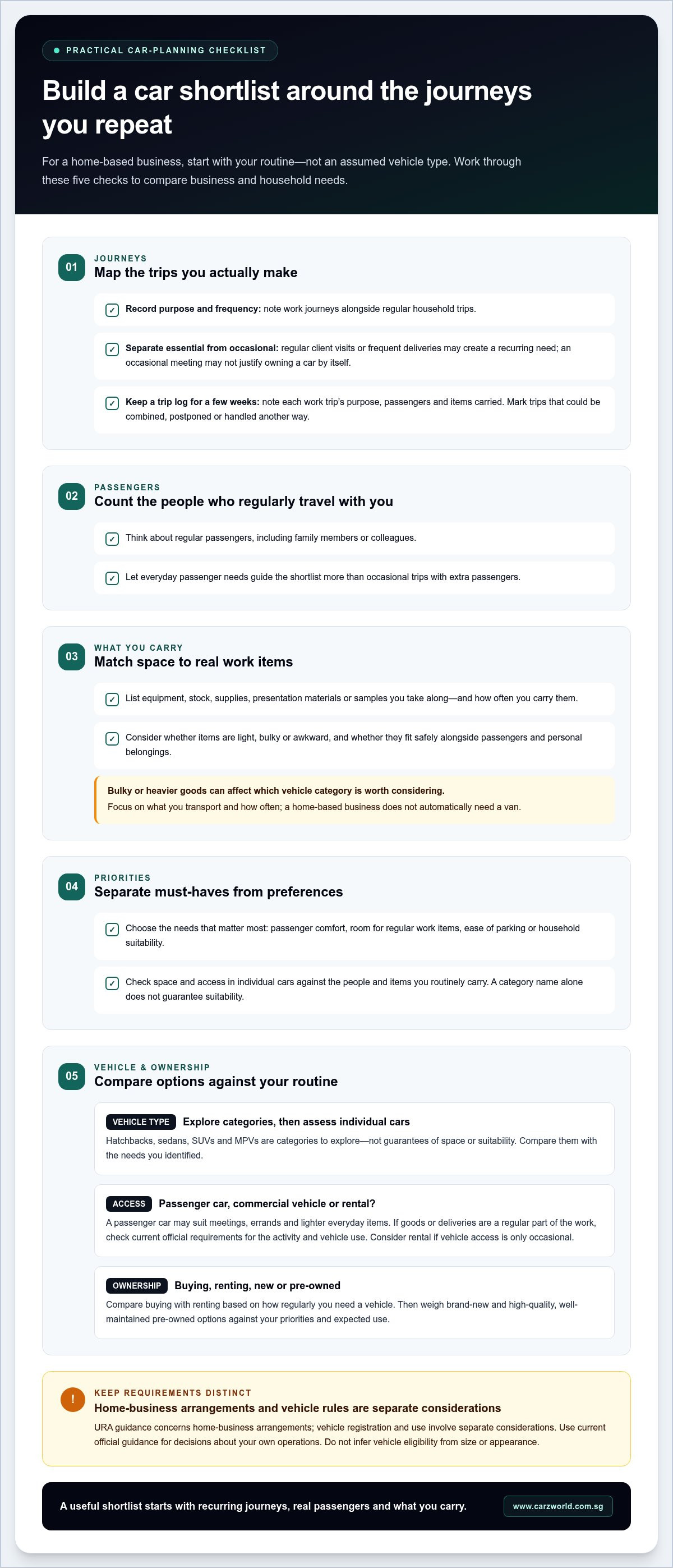
Work through these steps in order. Clear notes about your routine help you compare options consistently, rather than relying on a general idea of what a business owner “should” drive.
- Map your trips. Note the purpose and frequency of work journeys alongside regular household trips. Mark which are essential and which happen only occasionally.
- Identify passengers. Think about who regularly travels with you, including family members or colleagues. Occasional passengers may not need to shape your choice as much as everyday needs.
- List what you carry. Record the work items you take along and whether they’re light, bulky or awkward to handle. Consider the space they need alongside passengers and personal belongings.
- Set priorities. Decide what matters most, such as passenger comfort, room for regular work items, ease of parking or suitability for household use. Separate must-haves from preferences.
- Compare and review ownership. Compare broad car categories against your priorities, then consider whether buying, renting or choosing new or pre-owned fits your expected use.
How should you compare car types for business and personal use?
Hatchbacks, sedans, SUVs and MPVs are broad categories to explore, not guarantees of a particular amount of space or suitability. Start with the people and items you regularly carry, then compare individual cars against those needs. Check whether the space and access work for the items you bring, as well as for passengers. A car used for business and household journeys may be a practical fit if it suits recurring trips without making occasional tasks the deciding factor.
Shortlist cars only after defining the journeys and practical needs they must serve. This keeps the comparison grounded in your routine rather than assumptions about a vehicle’s category.
Which questions help create a useful shortlist?
Before comparing cars, answer a few practical questions. Who travels with you regularly? What do you routinely carry, and how much room does it take? Where will you park at home and at common destinations? Will the car fit your normal schedule, including household trips? Clear answers make it easier to compare options against the same priorities.
With those needs written down, compare available pre-owned cars against your shortlist. You can also explore Carz World’s available car options as you weigh which choice fits your business and personal routine.
Car ownership for Singapore home businesses: separate operating rules from buying choices
Two different questions can arise when you run a business from home: what conditions apply to the way you operate, and what vehicle suits the journeys your work creates? Keep them separate. URA’s home-business schemes concern business activity at residential premises. They don’t, by themselves, determine which car you can buy or whether a particular vehicle suits your work.
Use this distinction as a starting point, not a substitute for checking current requirements. Singapore vehicle ownership involves considerations such as the Certificate of Entitlement (COE), and ownership costs and rules can change. Verify current details through relevant official sources before making a decision. This helps keep the search for the best car for home-based business owners in sg grounded in both your routine and the requirements that apply to your situation.
| Question | What it concerns | Practical next step |
|---|---|---|
| How can I operate from home? | Home-business scheme conditions and the nature of your activity at the premises. | Review current URA guidance for the relevant scheme. |
| What vehicle should I choose? | Your journeys, passengers, items carried, parking needs and ownership preference. | Compare vehicle options against your actual routine. |
| Will work involve transporting goods? | Whether the pattern of goods transport or deliveries makes vehicle classification relevant. | Check current official vehicle guidance before deciding. |
What should owners know about Singapore home-business schemes?
URA describes the Home Office and Home-Based Business schemes, each with applicable conditions. Don’t assume that working from home automatically permits every type of activity or operating arrangement. Check URA’s current guidance for the scheme that fits your situation, including its conditions and details. Treat that as a separate task from choosing a car for client visits, errands or other work journeys.
When should you investigate commercial-vehicle requirements?
If your business regularly transports goods or makes deliveries, investigate whether vehicle classification affects your plans. That’s different from ordinary travel to a client meeting or using a passenger car for personal journeys. Don’t assume that a vehicle’s size or appearance settles the question. Check current official guidance on classification and use before choosing a vehicle for regular goods transport.
For the buying decision, make a separate shortlist based on the work and household journeys you expect to make. Then review the current COE and other ownership considerations that apply to the vehicles you’re comparing. Don’t rely on an old figure or general rule as though it settles your individual case. Keeping the operating and vehicle questions distinct makes the process clearer: check home-business conditions with URA, verify current vehicle requirements through official guidance, and choose a car based on the practical needs it must serve.
Buy, rent, or choose pre-owned: compare the practical trade-offs
Once you’ve defined the trips a vehicle needs to serve, consider how often you’ll need access to one. Buying and renting suit different patterns of use, and neither is automatically the better or cheaper choice. A regular schedule may make ownership worth exploring, while occasional or uncertain journeys may lead you to compare rental instead.
For the best car for home-based business owners in sg, the decision is less about finding a universal winner and more about balancing use, condition, budget comfort and personal priorities. Consider your household routine too. A car bought for work may also be part of your everyday travel.
When might renting suit an uncertain business routine?
If you need a car only for occasional client appointments or periods of busier delivery work, compare rental with ownership. Ask whether your work journeys happen on a predictable schedule or arise irregularly, and whether you also need a car for personal trips. Car rental is an alternative to consider when regular vehicle use is uncertain. Compare each path against your expected pattern rather than assuming one will cost less.
Ownership may fit a routine with frequent, planned journeys, but it also involves a longer-term commitment. Rental may suit less predictable needs, though the right choice depends on how and when you need a vehicle. Write down your expected use, then compare the practical fit of each option.
How should you weigh new against pre-owned cars?
Start with your priorities, not a blanket assumption that new or pre-owned is best. Consider the vehicle’s condition, how you intend to use it and what purchase commitment feels comfortable. Carz World describes its pre-owned cars as high quality and well maintained. If you prefer a new-car option, compare available brand-new cars with pre-owned choices against the same needs.
A simple comparison can keep the decision grounded:
- Intended use: Does the option suit the trips and regular tasks you expect it to handle?
- Condition: For a pre-owned car, consider its condition alongside your priorities and intended use.
- Budget comfort: Review the purchase commitment and ownership costs that apply, without assuming one category is always less costly.
- Personal fit: Consider whether the car works for household journeys as well as business travel.
There’s no need to rush from shortlist to decision. Compare new and pre-owned options side by side, and keep rental in view if your expected use remains uncertain. Explore Carz World’s car options and use your priorities to guide the next comparison.
Choose your next step with a car that fits your business routine
You’ve now got a practical way to compare choices. Before viewing cars, turn your priorities into a short checklist. It can help you assess each option consistently, whether you’re considering a brand-new car, a pre-owned car or another ownership arrangement. The aim is to find a vehicle that fits both your work routine and everyday life, not one chosen simply because you run a home-based business.
- Journeys: Which work and personal trips do you expect to make regularly?
- Passengers: Who will usually travel with you?
- Items: What work materials or goods need to fit?
- Parking: Where will you park at home and at destinations you visit often?
- Ownership preference: Are you leaning towards buying, renting, new or pre-owned?
- Official checks: What current home-business or vehicle guidance applies to your plans?
What should you prepare before viewing cars?
Bring your shortlist and a clear description of your routine. Note typical passengers and the items you carry, including anything bulky, so you can compare each available vehicle against the same practical needs. Consider parking as part of the assessment. A test drive can help you judge how a car feels for your own use and whether it fits your expectations. It helps you assess personal fit, but doesn’t replace reviewing ownership details.
Compare available new and pre-owned cars against your list rather than deciding by category alone. A car that suits your business trips should also make sense for the household journeys you expect it to handle. If your routine is still uncertain, keep your ownership preference flexible while you review your options.
How can you move from shortlist to purchase?
Carz World offers quote requests and test-drive scheduling to support your next steps. If you’re replacing an existing car, you can also calculate its trade-in value as part of your decision. Bring your priorities to the comparison, then review the available choices that best align with them. This keeps the process focused without assuming one vehicle or buying path suits every owner.
The best car for home-based business owners in sg is the one that meets recurring work needs while fitting personal journeys and ownership preferences. Keep the checklist close as you compare, and make your decision at a considered pace.
Explore cars for your business and everyday needs.
Make your shortlist work for your next step
The best car for home-based business owners in sg is the one that suits the journeys you expect to make, not simply the one that seems designed for work. Use your shortlist to compare options at a comfortable pace, keeping your business routine and personal needs in view. Clear priorities make each comparison more focused and help you move forward with confidence.
Carz World offers brand-new cars and high-quality, well-maintained pre-owned cars to consider. You can request a quote, schedule a test drive or, if you’re replacing a car, calculate its trade-in value as you explore your options. Take the next step when you’re ready: Explore cars for your business and everyday needs.
Frequently Asked Questions
Is a car necessary for a home-based business in Singapore?
No, a car isn’t necessary for every home-based business. If most work is handled online and you leave home only for occasional meetings, ownership may be difficult to justify. Mark work-related trips on your calendar for a few weeks, then note which ones require a car and which can be combined with personal outings. Check current URA guidance separately for conditions on running a business from residential premises.
Can I use a normal passenger car for my home-based business?
Yes, a passenger car may suit business travel that mainly involves people and everyday work items. For example, a consultant travelling to meetings with a laptop and presentation materials may have different needs from a seller regularly moving larger orders. If goods transport or deliveries are part of your routine, check current official Singapore guidance on vehicle classification and operating requirements before choosing a vehicle.
How do I choose the best car for my home business in Singapore?
Choose the best car for home-based business owners in sg by comparing your actual routine, not the label of your business. Write down recurring trips, usual passengers, work items and parking arrangements. Identify essential needs, such as fitting a regular sample case or accommodating family journeys after work. Compare available vehicles against those priorities and review current ownership information from authoritative Singapore sources before deciding.
Should I buy or rent a car for a home-based business?
It depends on how often you need a car and how predictable those trips are. If you travel for work only during occasional projects, compare rental with the commitment of owning a vehicle. If work and personal travel recur throughout your routine, ownership may be worth considering. Don’t assume either option is automatically cheaper. Review the terms and practical arrangements for each choice, including how they fit your personal travel needs.
Does running a business from home mean I need a commercial vehicle?
No, operating a business from home doesn’t by itself mean you need a commercial vehicle. The kind of travel and items involved matter. Driving to a client appointment is different from routinely transporting goods for delivery. If goods transport forms a regular part of your work, use current official Singapore guidance to understand the relevant vehicle classification and operating requirements rather than relying on assumptions about a vehicle’s size or appearance.
What should I check before buying a car for business use in Singapore?
Before deciding, make a short list of regular trips, passengers, items to carry and parking constraints. Compare that list with the vehicles you’re considering, then review current COE and ownership information through authoritative sources. If work includes goods transport or deliveries, check applicable official requirements as well. Request a quote to assess a purchase option, and schedule a test drive to judge how the vehicle feels for your own use.
Disclaimer
This content is provided for general informational purposes only. Readers are encouraged to independently verify important information.
In Same Category
Related by Tags
- Best Cars for Home-Based Businesses in Singapore: 2026 Guide
- Risks of Buying a Car with 1 Year of COE Left in Singapore (2026 Guide)
- Best Second Hand Cars for Malaysia: Singapore Buyer's Guide
- Buying a Used Lorry in Singapore: 2026 Buyer’s Guide
- Financial Planning for Your First Car in Singapore
- Best Time to Renew COE in 2026: A Practical Singapore Guide
- COE Renewal for 5 Years vs 10 Years: Pros and Cons in Singapore
- Understanding the MAS Car Loan Restrictions in Singapore (2026)
- Pros and Cons of Buying a High PARF Car in Singapore
- Car Valuation Services in Bukit Merah: A Seller’s Guide
- Calculating the Breakeven Point for COE Renewal in Singapore
- Financial Checklist Before Committing to a Car Purchase in Singapore (2026)
- Used Electric Cars in Singapore: 2026 Buyer's Guide
- Electric Vehicle Guide 2026: Types, Charging and Buying in Singapore
- COE Results Singapore: How to Read the Latest Bidding Outcomes in 2026
- Singapore Car Loan Guide for EP Holders (2026)
- Mazda CX-5 Singapore Review: Buyer Guide, Specs & Ownership (2026)
- Car Financing for Singapore Gig Workers: 2026 Guide
- Calculating the Real 5-Year Cost of Car Ownership in Singapore (2026 Guide)
- 2026 Guide: Planning for a Second Family Car in Singapore
- Parallel Import Singapore: The Ultimate 2026 Buyer’s Guide
- How to Buy a Car in Singapore: The Ultimate 2026 Step-by-Step Guide
- Mercedes C-Class Singapore Guide 2026: Specs, COE, and Buying Tips
- Honda Civic Singapore: 2026 New & Pre-Owned Guide