Financial Checklist Before Committing to a Car Purchase in Singapore (2026)

A manageable monthly instalment doesn’t necessarily mean a car is affordable. In Singapore, the purchase price is only part of the picture: COE, insurance, road tax, parking and other running costs also affect your budget. If you’re weighing these expenses, this financial checklist before committing to a car purchase sg buyers can use will help you look beyond the headline price.
Compare loan offers by what you’ll repay overall, not just the monthly figure. This guide shows you how to estimate the full cost of ownership, assess your upfront cash needs and compare new and pre-owned cars on a consistent basis. It also explains why the effective interest rate matters alongside the advertised flat rate.
The checklist covers the figures and paperwork to review before signing, including the COE and remaining ownership period for a pre-owned car, as well as factors that may affect future resale value. With a clearer view of the numbers, you can decide whether a car fits your finances and compare new and pre-owned options with greater confidence.
Key Takeaways
- Set a clear limit for your upfront contribution and monthly transport budget before comparing cars.
- Sort ownership expenses into upfront, monthly, annual and occasional costs to build a complete budget.
- Use the financial checklist before committing to a car purchase sg to compare cash price, deposit, loan amount, tenure and total repayment.
- Compare new and pre-owned options against the same budget, and review the written price and applicable fees before paying a deposit.
- Commit only when the figures add up, repayments are manageable and you’ll still have an emergency buffer.
Financial checklist before a car purchase in Singapore: set your real budget
An instalment that fits your monthly budget doesn’t automatically make a car affordable. The full commitment includes upfront payments, recurring ownership expenses and a reserve for unexpected costs. Before comparing cars or loan offers, set two limits: the maximum you can contribute upfront and the monthly transport budget you can sustain.
This financial checklist before committing to a car purchase sg buyers can use starts with your finances, not the advertised instalment. Review your take-home income, essential expenses, savings goals and existing debt to work out what you can genuinely afford.
For another perspective on planning before buying, watch this video:
How much of your budget can safely go towards a car?
Start with the money left after essentials, debt repayments and regular savings. Choose a conservative monthly limit that leaves room for changes in income or unexpected bills, rather than stretching to the largest instalment you might qualify for. There’s no single income percentage that suits every buyer. Household responsibilities, savings priorities and existing commitments all affect what feels manageable.
Keep your upfront contribution separate from your monthly limit. A larger deposit may reduce the amount borrowed, but it shouldn’t leave you without funds for essential expenses or emergencies.
Which costs belong in your initial budget?
List the down payment, applicable taxes and fees, insurance, and any immediate setup expenses. Keep these separate from ongoing costs such as fuel or charging, parking and routine upkeep, which need their own monthly or annual allowance. The Certificate of Entitlement (COE) is part of Singapore’s car-ownership system and can materially affect a vehicle’s cost. Include the applicable amount in your calculations.
The purchase price is only one part of affordability. Your budget must also cover the costs of getting on the road and keeping the car.
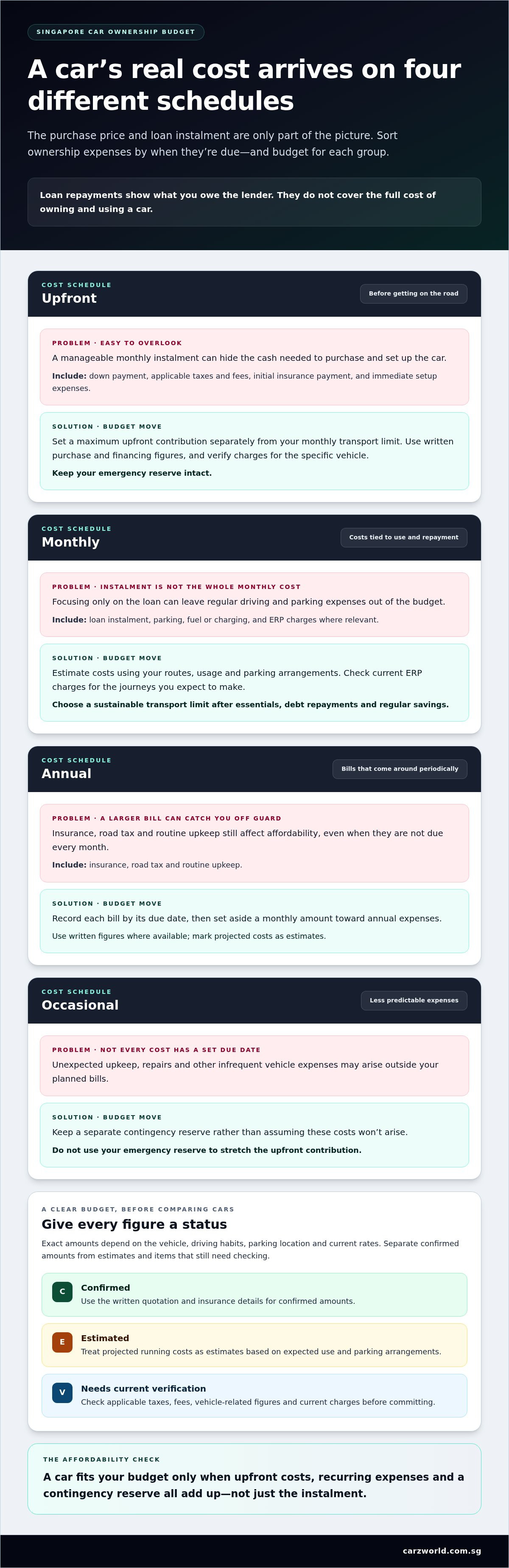
Mark each figure as confirmed, estimated or requiring current verification. Use the written quotation and insurance details for confirmed amounts. Treat projected running costs as estimates, and check applicable taxes, fees and vehicle-related figures against current information before committing.
Budget check before you commit
- Set your maximum upfront contribution without using your emergency reserve.
- Choose a sustainable monthly transport limit after essentials, debt and savings.
- Record one-off costs separately from recurring expenses and contingency funds.
- Label each amount confirmed, estimated or still requiring verification.
Calculate the full cost of owning a car in Singapore
A realistic ownership budget groups costs by when they are due, so a large annual bill or one-off payment doesn’t catch you off guard. The exact amounts depend on the vehicle, your driving habits, where you park and current rates. Use written figures where available, and clearly mark estimates.
Loan repayments show what you owe the lender, but they aren’t the full cost of owning and using a car. Budget for operating costs separately and set aside a contingency for expenses that are harder to predict.
| Timing | Costs to include | How to budget |
|---|---|---|
| Upfront | Down payment, applicable taxes and fees, initial insurance payment and any immediate setup expenses | Use the written purchase and financing figures; verify applicable charges for the specific vehicle. |
| Monthly | Loan instalment, parking, fuel or charging, and ERP charges where relevant | Estimate based on your route, usage and parking arrangements. Check current ERP charges for the journeys you expect to make. |
| Annual | Insurance, road tax and routine upkeep | Record each bill by its due date, then set aside a monthly amount towards annual expenses. |
| Occasional | Unexpected upkeep, repairs or other infrequent vehicle expenses | Keep a separate contingency reserve instead of assuming these costs won’t arise. |
Which recurring costs should you include in Singapore?
Build separate budget lines for insurance, road tax, parking, fuel or charging, and routine upkeep. Add ERP charges if your usual journeys may incur them, and use current applicable charges rather than relying on an old estimate. For annual bills, divide the expected amount into monthly savings contributions. This makes the full monthly commitment easier to compare with your income.
How do COE and PARF affect a car’s financial picture?
The Certificate of Entitlement (COE) is a key part of Singapore’s vehicle costs. It determines the period the vehicle can be used before the entitlement expires, subject to applicable rules. For a pre-owned car, include the remaining COE period in your assessment. Also review whether any Preferential Additional Registration Fee (PARF) value may apply and how it affects the vehicle’s financial picture. Check vehicle-specific details and current rules with LTA or OneMotoring. For the financing portion of your budget, refer to MAS’s official car loan limits.
This financial checklist before committing to a car purchase sg buyers can use should capture both scheduled bills and less predictable costs. Once you’ve set your cost categories, compare new and pre-owned car options against the same budget.
Compare car financing by total repayment, not just instalment
A lower monthly instalment can look attractive, but it may come with a longer loan term and a higher total amount repaid. Compare written offers using the same vehicle price and deposit assumptions. Record the cash price, deposit, amount financed, instalment, tenure, interest basis, fees and total repayment so you can see the full commitment side by side.
What should you compare between car loan offers?
Car loans may quote a flat interest rate, calculated against the original loan amount, while the effective interest rate reflects the cost of borrowing as repayments reduce the balance. Don’t compare rates alone. Check the repayment schedule, any stated fees and the total amount payable. A longer tenure can reduce instalments while extending the period you carry the debt. Treat estimates as illustrative, not guaranteed terms.
| Offer detail | Offer A | Offer B |
|---|---|---|
| Cash price and deposit | Enter from written offer | Enter from written offer |
| Financed amount | Enter from written offer | Enter from written offer |
| Interest rate and basis | Record rate and flat or effective basis | Record rate and flat or effective basis |
| Tenure and instalment | Record term and repayment schedule | Record term and repayment schedule |
| Fees and total repayment | Record stated fees and total payable | Record stated fees and total payable |
Use figures from the actual written offers rather than filling gaps with assumptions. For background on loan eligibility and the application process, see DBS’s guide to financing your ride.
How do you check whether a loan fits your finances?
Stress-test the instalment against a drop in income, existing debt and the ongoing costs of running the car. Check current eligibility, loan limits and documentation requirements against official guidance, including the Monetary Authority of Singapore’s current rules for motor vehicle loans. Requirements can change, so don’t rely on an old quotation or an illustrative calculator alone.
Approval is not the same as affordability. The financial checklist before committing to a car purchase sg buyers use should include total repayment and recurring ownership costs, while leaving room for other priorities and unexpected expenses. Once the figures work, compare available car options against your budget.
Use this Singapore car-purchase checklist for new and pre-owned cars
Before paying a deposit or signing, compare the car’s written figures with the budget you’ve already set. The checks are similar for every vehicle, but pre-owned cars need extra attention to their remaining COE, applicable rebates and condition. For a new car, scrutinise the complete quotation and the assumptions behind its charges and payment schedule.
Work through this list in order. Keep the supporting documents together so you can resolve any mismatch before committing.
- 1. Match the price. Check the written cash price and any listed taxes or fees. Make sure the amount due upfront fits your limit.
- 2. Reconcile the financing. Compare the deposit, financed amount, interest basis, tenure, instalment and total repayment with the written offer. Include any stated fees.
- 3. Add ownership expenses. Include insurance, road tax, parking, fuel or charging, ERP where relevant, and a reserve for upkeep.
- 4. Verify vehicle-specific details. Check the applicable COE and rebate information, ownership timeline and charges against current official guidance.
- 5. Recheck your buffer. After the upfront payment, confirm you’ll still have savings for emergencies and can manage recurring costs.
What financial checks matter for a pre-owned car?
Record the registration details and remaining COE period, then consider how that timeline fits your intended ownership period. Review applicable PARF information and confirm vehicle-specific details and current rules through LTA or OneMotoring. Account for the car’s documented condition and any likely near-term upkeep in your budget, rather than assuming the asking price covers everything. Compare pre-owned cars in Singapore using the same cost categories.
What should you verify before committing to a new car?
Read the complete written quotation, including the payment schedule, financing assumptions, items included and applicable current charges. Check that the amount payable matches your calculations, and record estimates separately from confirmed figures. If you expect to sell the car later, treat the ownership period and resale value as assumptions, not guaranteed outcomes. Review brand-new cars against the same budget rather than comparing headline prices alone.
A financial checklist before committing to a car purchase sg buyers can use should leave no unexplained difference between the quotation and their own figures. If a price, fee or payment term doesn’t line up, pause and resolve it before signing. Explore car options at Carz World to compare vehicles against your completed checklist.
Know when you are financially ready to commit to a car
A car purchase is closer to a confident yes when the complete figures are in writing, repayments and running costs fit your budget, and the upfront payment won’t use up your emergency savings. If any part of the calculation is unclear, pause. A deposit or financing approval shouldn’t replace a careful final review.
What should be checked before paying a deposit or signing?
Compare the final written quotation with your own figures. Check the price, deposit, amount financed, interest basis, repayment schedule, fees and payment dates. Make sure the loan terms match the offer you assessed, and account for insurance and recurring ownership expenses alongside the instalment.
Use this go/no-go check:
- Figures are complete: You understand the upfront amount, total repayment and applicable charges.
- Repayments are manageable: The instalment and regular car expenses fit without pushing essential spending or savings aside.
- A buffer remains: You’ll still have an emergency reserve after paying the deposit and other upfront costs.
- Documents agree: The written quotation and financing details match your calculations, with no unexplained differences.
If a fee, payment date or loan term differs from what you budgeted for, have the discrepancy resolved in writing before you sign. Keep copies of the final quotation and relevant financing documents so you can refer back to the agreed figures.
How can you take the next step with confidence?
Once your checks are complete, compare suitable new and pre-owned cars against the same budget. Consider whether each vehicle fits your planned ownership period and ongoing costs, not just its purchase price. If the figures don’t leave enough room for other commitments or a reasonable reserve, revisit the budget or consider a different option.
This financial checklist before committing to a car purchase sg buyers can follow is designed to support a considered decision, not rush one. Take the time you need to compare the written details and choose what fits your finances.
Ready to compare vehicles against your completed checklist? Explore Carz World’s car inventory and review the options at your own pace.
Make your next car decision with confidence
A sound car budget looks beyond the instalment. Account for upfront payments and ongoing ownership costs, then compare financing by the total amount you’ll repay. For a pre-owned car, factor in its remaining COE period and applicable rebate details. For a new car, review the full written quotation and its assumptions before committing.
Use your financial checklist before committing to a car purchase sg to make a clear go-or-no-go decision: do the figures add up, can you manage the repayments and running costs, and will you still have an emergency buffer? If the written terms don’t match your calculations, resolve the difference before signing.
Once your budget is in place, compare suitable vehicles at Carz World. The dealership offers both new and pre-owned cars, along with vehicle financing and insurance services. Explore cars at Carz World and review your options at your own pace.
A well-informed decision starts with clear numbers. Take the next step when the car and its full cost fit your plans.
Frequently Asked Questions
How do I calculate the total cost of owning a car in Singapore?
Add the upfront payment and applicable purchase charges to your financing repayments and running expenses. Include insurance, road tax, fuel or charging, parking, ERP charges where relevant, and maintenance. For a pre-owned car, account for its remaining COE and any applicable PARF details. A useful financial checklist before committing to a car purchase sg buyers can follow uses vehicle-specific quotations and current official information, not generic estimates.
What costs should I check before buying a car in Singapore?
Review the written vehicle price, deposit, financing terms, applicable taxes and fees, and insurance. Then budget for road tax, fuel or charging, parking, ERP charges where relevant, and upkeep. For a pre-owned car, also check the remaining COE, condition and possible near-term expenses. Separate confirmed amounts from estimates, and verify current figures before committing so your budget reflects the specific car and your expected use.
Is the monthly car instalment enough to judge affordability?
No. The instalment covers the loan repayment, not the full cost of ownership. You’ll also need to budget for insurance, road tax, fuel or charging, parking, ERP charges where relevant, maintenance and other applicable expenses. Compare the total amount payable over the loan term and estimate your broader monthly transport costs. An instalment that looks manageable by itself may leave too little room for essential expenses or unexpected bills.
How should I compare car loan offers in Singapore?
Compare the financed amount, interest basis, tenure, repayment schedule, fees and total repayment, not only the quoted instalment. A longer tenure may reduce the monthly payment while extending the commitment, so consider both cash flow and total cost. Use figures from written offers, and label personal calculations as estimates rather than guaranteed terms. Check current eligibility requirements and financing rules using relevant official Singapore sources before relying on them.
What financial checks matter when buying a pre-owned car in Singapore?
Start with the written price and financing terms, then check the car’s registration details, remaining COE period, ownership timeline and applicable PARF information. Add insurance, road tax and expected running expenses to your budget. Consider the vehicle’s condition and allow for possible near-term upkeep without assuming a particular repair cost. Verify vehicle-specific details and current rules through official sources before signing, and make sure the purchase still leaves room for other commitments.
Can I afford a car if I can manage the down payment?
Not necessarily. A down payment is only one part of the commitment. Check whether you can also cover repayments, insurance, road tax, fuel or charging, parking, ERP charges where relevant and maintenance, while continuing to meet savings goals. Leave room for unexpected expenses. If the budget works only when every estimate is at its lowest, reconsider the vehicle, your planned spending or the timing of the purchase.
What should I verify before signing a car purchase agreement?
Reconcile the final written price with the deposit, applicable fees, loan amount, repayment schedule and payment dates. Check that insurance and recurring ownership costs fit your budget, and verify vehicle-specific COE or PARF details where relevant. Read the agreement carefully and keep copies of the quotation and financing documents. If the written terms differ from your calculations, resolve the discrepancy before signing, and verify rule-dependent figures against current official information.
Disclaimer
This content is provided for general informational purposes only. Readers are encouraged to independently verify important information.
In Same Category
- Calculating the Breakeven Point for COE Renewal in Singapore
- Financial Checklist Before Committing to a Car Purchase in Singapore (2026)
- COE Renewal Conditions and Eligibility in Singapore: 2026 Guide
- Balloon Scheme Car Loan in Singapore: Pros and Cons for 2026
- Getting Car Finance with a New Business in Singapore: A Practical Guide
Related by Tags
- Financial Checklist Before Committing to a Car Purchase in Singapore (2026)
- Balloon Scheme Car Loan in Singapore: Pros and Cons for 2026
- Used Electric Cars in Singapore: 2026 Buyer's Guide
- Car Financing for Singapore Gig Workers: 2026 Guide
- 2026 Guide: Planning for a Second Family Car in Singapore
- Mercedes C-Class Singapore Guide 2026: Specs, COE, and Buying Tips
- Honda Civic Singapore: 2026 New & Pre-Owned Guide
- Mazda 3 Singapore Guide 2026: Specs, Prices, and Buying Tips
- Hyundai Ioniq 5 Singapore: The Definitive 2026 Buying & Ownership Guide
- Why Carz World is Your Trusted Used Car Dealer in Singapore (2026 Guide)
- Honda Odyssey Singapore: 2026 Family Buying Guide