Shipping a Car from Singapore: The Ultimate 2026 Export Guide
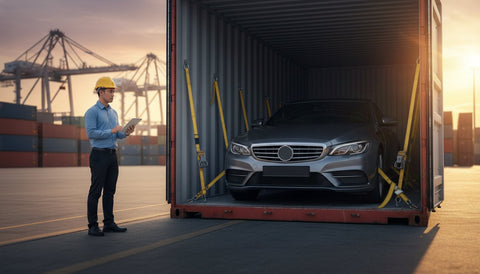
Did you know that as of February 2026, the maximum PARF rebate for deregistering a car is now capped at $30,000? This significant reduction from the previous $60,000 limit means that every detail of shipping a car from singapore now carries more financial weight. It's natural to feel concerned about complex LTA paperwork, fluctuating freight costs, or the risk of damage during a long transit. You want to know that your vehicle is handled with care and that you aren't leaving money on the table.
This guide provides everything you need to know to manage international compliance and secure your rebates with confidence. We'll walk through the updated 2026 rebate percentages, the online de-registration process via Singpass, and the logistics of choosing between RoRo or container shipping. By following these steps, you can ensure a seamless transition for your vehicle and a positive outcome for your finances.
Key Takeaways
- Discover why Singaporean cars remain highly valued in global markets and how to maximize your remaining PARF and COE rebates.
- Learn the essential steps for completing LTA de-registration and the specific role of Export Processing Zones in your export timeline.
- Compare the pros and cons of RoRo versus containerised freight to find the most secure and cost-effective method for shipping a car from singapore.
- Understand destination-specific import duties and safety standards to avoid unexpected costs and ensure full legal compliance at your destination.
- Find out how professional car export services can manage the entire logistical chain, from valuation to final delivery and rebate processing.
Why Shipping Your Car from Singapore Makes Financial Sense
Exporting your vehicle isn't just a logistical choice. It's often a strategic financial decision. For many owners, shipping a car from singapore yields a higher total return than selling it on the local used market. This is especially true for continental or high-end luxury models where international demand outstrips local depreciation rates. By looking beyond our borders, you tap into a global market that values the high maintenance standards typical of Singaporean vehicles.
To better understand the logistical side of this process, watch this helpful video:
The PARF and COE Rebate Advantage
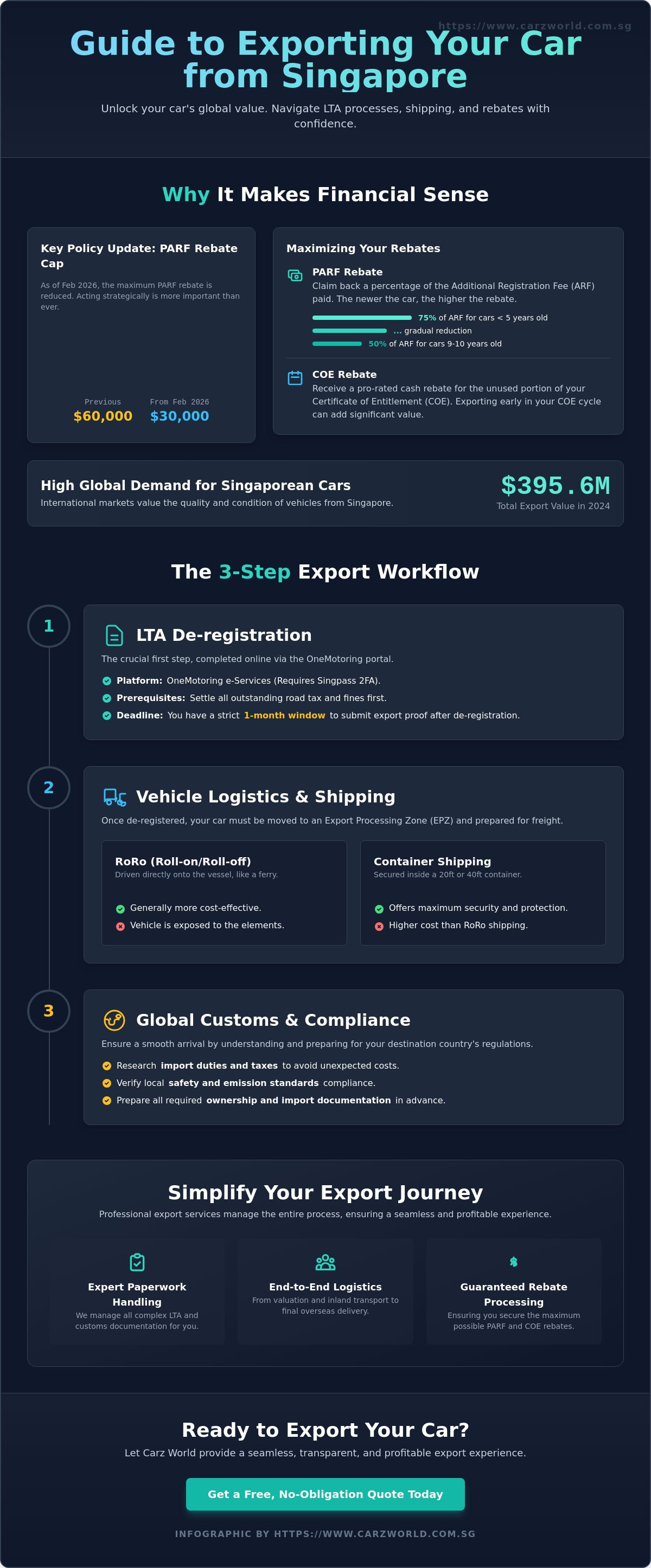
Singapore's tax structure provides a unique safety net through rebates. When you deregister a vehicle for export, you become eligible for the Preferential Additional Registration Fee (PARF) rebate. As of February 2026, the maximum PARF rebate is capped at $30,000. While this is a shift from previous years, it remains a substantial sum that helps offset freight and handling fees. The exact amount depends on your car's age, with younger vehicles receiving a higher percentage of the ARF paid.
You can also claim back the unused portion of your Certificate of Entitlement (COE) system. If you export your car with several years remaining on its quota, the pro-rated rebate adds significant value to your bottom line. Combining these government returns with a strong international sale price makes the case for export cars very compelling. It's a methodical way to ensure you don't lose the residual value locked in your vehicle.
Maintenance Standards and Global Demand
Singaporean vehicles enjoy a stellar reputation worldwide. Strict LTA regulations and excellent road infrastructure mean these cars are typically in better condition than those from other right-hand drive (RHD) markets. Buyers in the United Arab Emirates and the United States have increasingly sought out Singaporean exports for this reason. In 2024, the total export value reached $395.6 million, reflecting a strong global appetite for premium, well-maintained units.
International buyers prefer these vehicles because they usually come with low mileage and documented service histories. Unlike cars in larger countries, Singaporean cars don't endure long-distance commutes or harsh off-road conditions. This high maintenance standard ensures your car retains a premium price point on foreign shores. It's an honest, effective way to maximize your asset's value without the pressure of a fast local sale.
The LTA De-registration Process and Legal Requirements
Completing the legal paperwork is the most critical step when you begin shipping a car from singapore. Without a successful de-registration, you cannot legally move your vehicle across borders or claim your hard-earned rebates. The process is handled digitally through the OneMotoring website. You'll need your Singpass with 2FA enabled to access the system. It's a methodical process, but missing a single step can lead to delays in your export timeline.
Before you log in, gather your essential documents. You'll need the vehicle's log card, your NRIC or passport, and a valid sales agreement if the car is being sold to an overseas buyer. If you're transferring ownership as part of the export, remember that the LTA charges a standard administrative fee of S$25. Once the de-registration is approved, you have a strict one-month window to submit proof of disposal, such as export documents, to the LTA. Failing to meet this deadline can complicate your rebate claims.
Navigating the LTA e-Services Portal
The digital application is straightforward if you're prepared. Log into the OneMotoring portal and select the de-registration option. You'll be asked to verify your vehicle details and confirm your eligibility for PARF and COE rebates. A common error is attempting to de-register while having outstanding road tax or fines. Ensure all LTA-related fees are settled in full before you start. This ensures the system calculates your final rebate amount accurately, giving you a clear picture of your financial return before the car leaves the country.
Managing the Export Processing Zone (EPZ)
Once de-registered, your car can no longer be driven on Singapore's roads. It must be moved immediately to an Export Processing Zone (EPZ) or a licensed warehouse. The EPZ acts as a secure holding area where vehicles wait for their shipping slot. While in the zone, your car is officially "in transit" for the LTA's records. You'll need to arrange professional towing to transport the vehicle from your home to the EPZ.
Storage fees apply within the zone, so it's wise to coordinate your shipping dates closely with your de-registration. This period is also when you'll finalize the logistics for Navigating Global Customs and ensuring your documentation meets international standards. If the paperwork feels overwhelming, you can speak with our team to help manage the transition from your driveway to the export docks seamlessly.
Comparing Shipping Methods: RoRo vs. Containerised Freight
Once you've cleared the legal hurdles and completed the LTA vehicle de-registration process, you must decide how your vehicle will travel. Shipping a car from singapore usually involves choosing between Roll-on/Roll-off (RoRo) or containerised freight. Each method offers distinct advantages depending on your budget and the specific type of vehicle you're exporting. It's a strategic choice between cost-efficiency and maximum protection.
RoRo Shipping: Efficiency for Mass Market Models
RoRo is the most economical choice for standard, operational vehicles. Your car is driven onto a specialized vessel at Jurong Port or PSA terminals and secured to the deck. It's essentially a large, floating parking garage. This method is highly efficient for major shipping lanes, especially to markets in the Middle East or Australia. However, it comes with strict limitations. You aren't allowed to store personal belongings inside the car. The vehicle must also be in good working condition to be driven up the loading ramps.
Transit times for RoRo are generally reliable because these vessels operate on fixed schedules. While this method is budget-friendly, your car is briefly exposed to the elements during the loading process. For many owners of reliable, mass-market models, this is a practical way to manage shipping a car from singapore. It keeps your overheads low while ensuring the car reaches its destination safely.
Container Shipping: The Premium Choice
Containerised shipping provides a much higher level of security. Your vehicle is loaded into a reinforced steel container and sealed before it's hoisted onto the ship. This sealed environment is crucial for preventing sea-salt corrosion, which is a significant risk on long-haul routes to Europe or the Americas. It's the recommended choice for luxury continental cars, high-value export cars, or classic models that require a pristine environment.
You can choose between sole-use or shared containers. A sole-use container gives you the entire 20-foot or 40-foot space. This is perfect if you want to include spare parts or personal items alongside the vehicle. Shared containers, also known as consolidated shipping, allow you to split the cost with other exporters. It's a smart middle ground for those who want the protection of a container without the full expense of a private one.
Regardless of your choice, comprehensive marine insurance is essential. Most policies cover total loss, but you should consider "all-risk" coverage for premium vehicles. This ensures that any minor transit damage is handled professionally, maintaining the car's resale value in its new home.
Navigating Global Customs and Destination Compliance
Arriving at the destination port is a major milestone. However, the vehicle must still pass through customs and meet local safety standards before it hits the road. Different countries have vastly different rules for shipping a car from singapore. Understanding these regulations beforehand prevents expensive delays or the risk of your vehicle being denied entry. It's about being prepared and methodical in your approach to international laws.
Most countries apply import duties and local taxes based on the vehicle's value. You'll also need an approved Singapore Customs Export Permit before the car can leave, which is typically obtained via the TradeNet system. For your destination, Australia charges a 5% import duty on cars less than 30 years old. On top of that, a 10% Goods and Services Tax (GST) applies. New Zealand is more straightforward with no import duty. However, they do charge a 15% GST on the total landed value. These costs are calculated on the CIF (Cost, Insurance, and Freight) value, so keep these figures in mind when budgeting.
Biosecurity is a high priority in several regions. Your car must undergo a thorough professional steam clean before it leaves Singapore. This process removes soil, seeds, or pests that could threaten local ecosystems. If the car arrives dirty, local authorities will charge for an expensive, mandatory cleaning service at the port. It's a simple step that saves a lot of time and money later. Once cleared, you'll need to arrange for local registration and new plates to legally drive in your new country.
Popular Destinations: Australia and New Zealand
Australia and New Zealand are top choices for RHD vehicles. In Australia, your car must comply with the Australian Design Rules (ADR). There's also a Luxury Car Tax (LCT) for vehicles that exceed a specific price threshold. New Zealand focuses heavily on frontal impact and emissions standards. You'll need to provide proof that your vehicle meets these specific environmental and safety benchmarks before it's approved for registration. Being aware of these details ensures a fluid transition through their ports.
Shipping to the United Kingdom
The UK is another common destination. If you're moving there permanently, you might qualify for the Transfer of Residence (ToR) scheme. This allows for tax-free imports under certain conditions. Most Singaporean cars will need to pass an Individual Vehicle Approval (IVA) test. This check ensures the car's lights, mirrors, and safety features align with UK road laws. Explore our export car collections for RHD-ready models that often meet these standards.
Managing these global regulations is easier with the right partner. You can contact us today to get a clear breakdown of the compliance requirements for your specific destination.
How Carz World Pte Ltd Streamlines Your Vehicle Export Journey
Managing the transition from Singaporean roads to a global destination requires more than just a shipping booking. It demands a synchronised effort between legal compliance and physical logistics. Carz World Pte Ltd provides a comprehensive service that simplifies shipping a car from singapore for every owner. We leverage a network of trusted freight partners to ensure secure transit, whether you choose RoRo or containerised shipping. Our process begins with a professional valuation. This ensures you understand the true market value of your asset before it leaves the country.
We take pride in our methodical approach to every transaction. Our team handles the end to end management of LTA de-registration and rebate processing. This allows you to focus on your move while we secure your financial returns. We maintain a high standard of service that is grounded in honesty and reliability. By choosing a partner with local expertise, you avoid the common pitfalls of international shipping and enjoy a predictable, stress-free experience.
Expertise in Singaporean Vehicle Regulations
Our team possesses a deep understanding of local vehicle regulations. This expertise is vital when navigating the 2026 PARF rebate caps and the specific requirements of the LTA e-Services portal. We don't just provide advice; we handle the legwork. This includes the physical transfer of the vehicle to the EPZ and ensuring all Singapore Customs export permits are in order. By having boots on the ground in Singapore, Carz World Pte Ltd resolves local administrative hurdles faster than international freight forwarders. You can Sell your car to us for export to bypass the complexities of finding a foreign buyer yourself.
Tailored Export Solutions for Every Client
We recognise that a private collector has different priorities than a relocating expat. Our solutions are tailored to these specific needs. Our showrooms and offices in Ubi and Alexandra serve as accessible touchpoints where you can speak directly with our staff. This local presence ensures a high level of accountability and service speed. We maintain a policy of transparent pricing. The quote you receive is what you pay. There are no hidden port charges or surprise administrative fees at the eleventh hour. We provide regular status updates so you always know the location of your vehicle. This customer-centric approach turns a complex logistical journey into a fluid and predictable experience.
Ready to start your export process? Browse our export services or visit us at our Ubi or Alexandra locations to discuss your requirements with our specialists.
Take Control of Your Global Move
Exporting your vehicle is a significant financial decision that rewards careful planning and professional oversight. By aligning your LTA de-registration with the right freight method, you protect your financial interests and ensure your car's safety. Whether you choose the economy of RoRo or the security of a container, the goal is a seamless transition to your new home. Understanding the 2026 rebate structures and destination-specific taxes is the first step toward a successful outcome.
Success in shipping a car from singapore depends on managing complex paperwork and global logistics with precision. As a trusted Singapore dealer with showrooms in Ubi and Alexandra, we specialise in international car export and expert LTA paperwork handling. We're here to ensure your vehicle arrives safely while you maximise your financial returns. You don't have to navigate these regulations alone.
Get a Professional Export Valuation for Your Car Today and take the first step toward a hassle-free export journey. We look forward to helping you move forward with confidence.
Frequently Asked Questions
How much does it cost to ship a car from Singapore to the UK?
Shipping costs depend on the chosen transit method and the specific destination port in the United Kingdom. Factors such as current fuel surcharges, terminal handling fees, and whether you select RoRo or containerised freight will influence the final price. It is best to request a personalised quote to get an accurate breakdown of the expenses for your specific vehicle model and export timeline.
Can I export my car if it is still under a hire-purchase loan?
No, you must fully settle any outstanding hire-purchase loans before you can begin the export process. The bank needs to release its legal interest in the vehicle so that you can obtain the necessary clearance for de-registration. Once the loan is paid in full, you'll receive a release letter, which is a mandatory requirement for the LTA to process your application.
What is the PARF rebate and how do I claim it when exporting?
The PARF rebate is a return of a portion of the Preferential Additional Registration Fee you paid when the car was first registered. Effective February 2026, the maximum rebate is capped at $30,000 for eligible vehicles. You can claim this amount through the OneMotoring website using your Singpass after the vehicle has been de-registered. This rebate is a key financial benefit when shipping a car from singapore.
How long does the entire car export process take from Singapore?
The total timeline generally ranges from four to eight weeks. Administrative tasks like LTA de-registration and moving the car to the Export Processing Zone typically take about one week. The remaining time depends on the shipping lane and the distance to your destination port. It is a structured process that requires careful coordination between paperwork approval and vessel departure schedules.
Do I need to clean my car before shipping it to Australia or NZ?
Yes, a professional steam clean is a legal requirement for vehicles entering Australia or New Zealand. These countries maintain very strict biosecurity standards to protect their local ecosystems from foreign pests and soil. If your vehicle arrives with any organic debris, it will face mandatory quarantine and expensive cleaning fees at the port. Cleaning the car thoroughly in Singapore ensures a fluid entry through customs.
Can I pack personal belongings inside my car during shipping?
You can only include personal items if you choose containerised shipping. RoRo shipping methods strictly prohibit any items inside the vehicle for safety and security reasons. If you have spare parts or household goods to move, a sole-use container is the best choice. It provides a secure environment for both your vehicle and your belongings during the journey.
What happens to my COE when I ship my car out of Singapore?
When you de-register your vehicle for export, you're entitled to a COE rebate for the unused portion of your certificate. This rebate is calculated on a pro-rated basis depending on how many months are left on the quota. This refund is processed alongside your PARF rebate, helping to maximise your total financial return when shipping a car from singapore to a new global market.
Is it better to sell my car in Singapore or export it to my new country?
This is a strategic choice based on your car's age and its international resale value. For many premium or continental models, the combination of LTA rebates and a strong sale price overseas often yields a better return than a local trade-in. It's worth comparing a professional export valuation against local market offers to see which path makes the most financial sense for your specific situation.
In Same Category
- Toyota Prius in Singapore: A Practical Buyer’s Guide for 2026
- Best Cars for Home-Based Businesses in Singapore: 2026 Guide
- Risks of Buying a Car with 1 Year of COE Left in Singapore (2026 Guide)
- Best Second Hand Cars for Malaysia: Singapore Buyer's Guide
- Buying a Used Lorry in Singapore: 2026 Buyer’s Guide