Compare car choices for a couple living in central Singapore
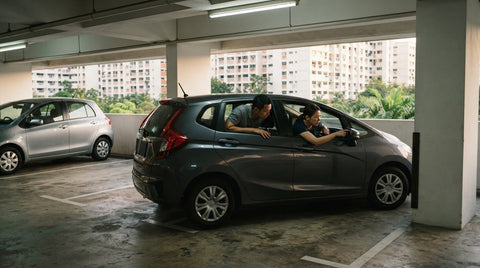
The best car for a couple living in central Singapore is the one that fits your daily routine, not necessarily the one with the most space. Before choosing, consider who will drive and whether they meet Singapore’s licence requirements, how you’ll manage fuel or charging, and where the car will be parked. These practicalities can matter as much as size or style.
It’s easy to focus on the model first, especially if you want a comfortable car for weekends and everyday trips. But the right choice depends on how you’ll use it and what arrangements are practical where you live.
This comparison explains how licence requirements, fuel and charging needs, and parking responsibilities shape your options. You’ll see which car types may suit a couple’s routine, what trade-offs to weigh, and how to choose based on your actual needs.
Key Takeaways
- Match the car’s fuel or charging needs to your regular routes and the parking arrangements available where you live.
- Assess ownership costs as a combination of COE, road tax, insurance and parking, rather than focusing on the purchase price alone.
- Compare car size and everyday usability to find an option that feels manageable on central Singapore roads and in parking spaces.
- Consider safety features, reliability and maintenance needs alongside comfort when choosing a car for two.
- Use your driving licence requirements and day-to-day routine to narrow the options before deciding whether to buy new, choose pre-owned or rent.
Fuel, charging and parking responsibilities
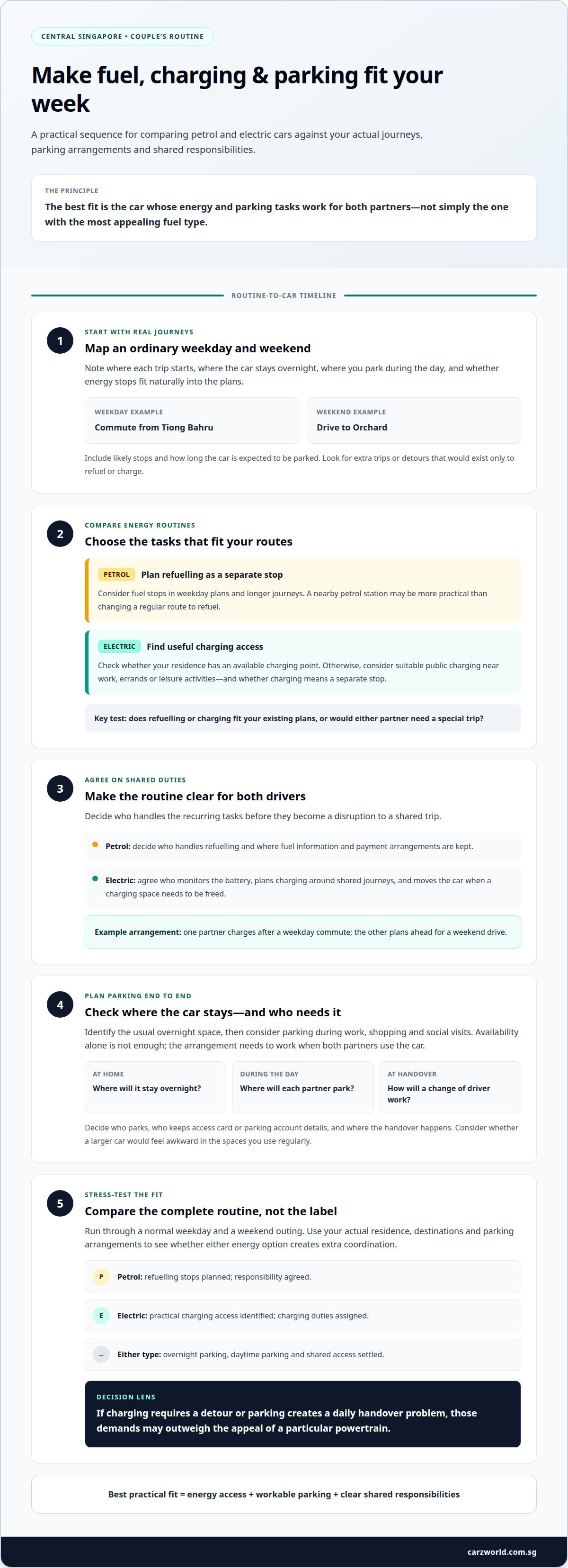
For a couple in central Singapore, your daily routine can determine whether petrol or electric charging is more convenient. Start with two typical journeys, such as commuting from Tiong Bahru and driving to Orchard at the weekend. Note where each trip starts, where the car stays overnight, and whether charging or refuelling fits naturally into those plans. A car that works for both routines can mean fewer extra stops and less coordination.
A petrol car may suit drivers who prefer refuelling as a separate, occasional errand. Factor fuel stops into weekday plans and longer journeys. For example, if one partner regularly drives across Singapore after work, a nearby petrol station may be more practical than changing the route to refuel. Make sure both partners know where fuel information and payment arrangements are kept.
An electric car replaces fuel stops with charging sessions. The key question is where it can charge while parked for a useful stretch of time. If your residence has an available charging point, overnight parking may provide a convenient opportunity to charge. Otherwise, charging may require a separate stop or access to a suitable public facility near work, errands, or leisure activities. Location and access matter more than the “electric” label.
Discuss charging responsibilities before choosing an electric car. Agree on who monitors the battery level, plans charging around shared journeys, and moves the car when a charging space needs to be freed. For example, one partner could charge after a weekday commute, while the other plans ahead for a weekend drive. Clear expectations help keep a low battery from disrupting a shared trip.
Give parking the same attention as energy needs. First identify where the car will usually be parked overnight, then consider where it will stay during work, shopping, and social visits. A couple living near Marina Bay, for instance, may use different parking locations throughout the day. The question is not simply whether parking is available, but whether the arrangement works when both partners need the car.
Make your parking plan specific. Decide who parks the car, who keeps any access card or parking account details, and how you’ll manage a change of driver. If one partner parks at home and the other collects the car later, agree on a handover point. Consider whether a larger car would be awkward in the spaces you use regularly. These details affect convenience before you even start driving.
Use this short comparison to identify the routine that fits:
- Petrol: plan refuelling stops and decide who handles them.
- Electric: identify practical charging access and assign charging duties.
- Either type: settle overnight parking, daytime parking, and shared access.
Before choosing a car, map out an ordinary weekday and a weekend outing. Mark likely stops, how long you expect to park, and any fuel or charging tasks. Then ask whether either partner would need to make a special trip just for the car. If charging requires a detour or parking creates a daily handover problem, those demands may outweigh the appeal of a particular powertrain.
The best choice is the one whose energy and parking tasks fit both partners’ routines. Compare petrol and electric options against your actual routes, residence, and regular destinations. For a couple in central Singapore, that practical fit may matter more than choosing a car based only on its fuel type.
What is the total cost of owning a car in Singapore, including COE, road tax, insurance, and parking?
There’s no single useful total for every couple in Singapore. Costs depend on the car, how you acquire it, and how often you use it. Build a household estimate that separates one-off purchase costs from recurring expenses. Keeping each category distinct makes it easier to compare cars without counting the same cost twice.
COE and purchase price: The Certificate of Entitlement (COE) is part of the cost of owning a car in Singapore. When comparing purchase options, use an itemised quote to see how the car price and COE are represented. Don’t add a separate COE figure if it is already included in the quoted total. For a pre-owned car, consider its remaining COE period alongside its age and how long you expect to own it. For a new car, compare the full stated purchase amount rather than focusing on one component.
Road tax: Treat road tax as a recurring expense, not a one-off purchase cost. The amount depends on the vehicle, so it can differ between cars. Include the applicable payment in your yearly ownership estimate, then set aside a regular amount each month. This makes it easier to compare a car with higher recurring charges against one with a lower purchase price.
Insurance: Add the insurance premium for the car and its intended drivers. The amount may depend on the vehicle, driver details, and selected coverage. If you’re sharing one car, consider both partners’ driving arrangements when estimating this cost. Compare coverage terms as well as premiums. A lower premium alone doesn’t show whether the protection suits your household’s needs.
Parking: Include your regular space at home and the parking you use for work, errands, and evenings. A couple near Orchard, for example, may have different home and daytime parking needs. Track the locations you actually use, separating routine parking from occasional visits. If both partners use the car, account for where each typically parks, not just one person’s commute.
Next, add running costs tied to your routine. Petrol or charging costs depend on the car and how you drive. Include regular servicing and other upkeep in your household plan, without assuming every car has identical needs. If you finance the car, account for the payments separately from the vehicle’s total purchase amount. This helps distinguish monthly cash flow from the full cost of ownership.
Use a simple comparison worksheet for each option:
- Purchase: record the stated price and how COE is included.
- Recurring charges: list road tax and insurance separately.
- Use: estimate parking, fuel or charging, and upkeep from your routine.
- Ownership period: compare costs over the same intended period.
For example, compare a smaller petrol car with an electric option using the same journeys and parking pattern. Don’t assume either will cost less based on purchase price alone. The difference may come down to charging access, fuel use, insurance, or parking habits. Use consistent estimates for both partners’ regular trips.
The most useful comparison is a household budget that clearly separates one-off and recurring costs. It gives you a practical basis for assessing affordability before choosing a car in central Singapore.
Which car models are easiest to park and drive in central Singapore?
In central Singapore, start by considering vehicle size and visibility, not badges. A compact hatchback is a practical category to compare because its shorter body can be easier to manoeuvre into tight parking spaces. A small sedan may suit couples who prefer a separate boot. A crossover offers a higher seating position, but its larger body may feel less manageable in narrow car parks. These are starting points, not guarantees for every model.
Compare the exact dimensions of each car, including its length and width. Manufacturer specifications provide a consistent basis for comparing a hatchback, sedan, or crossover. Consider how the measurements fit the spaces you use at home and around places such as Orchard or Bugis. A small difference in width can affect room to open the doors, while overall length affects the space in front and behind.
Turning circle and sightlines also matter on familiar routes. A car with a tighter turning circle may be easier to manoeuvre on a multi-storey car park ramp or in a narrow access lane. A clear view over the bonnet and through the rear window can help with positioning. Parking sensors or a reversing camera can assist, but they don’t replace careful manoeuvring or awareness of nearby obstacles.
Use this comparison to decide which body style deserves a closer look:
| Body style | Parking consideration | Driving consideration | May suit |
|---|---|---|---|
| Compact hatchback | Compare shorter overall length and width | Assess visibility and turning circle | Couples prioritising easy manoeuvring |
| Small sedan | Check the full body length and rear visibility | Consider the separate boot when reversing | Couples carrying luggage or everyday items |
| Small crossover | Check width and height against regular spaces | Assess sightlines and how the larger body feels | Couples who prefer a higher seating position |
If you’ll share the car, assess it from both drivers’ perspectives. One partner may find the seat and mirrors easy to adjust, while the other may prefer a different seating position. Compare visibility from the driver’s seat, steering effort at low speeds, and how easily each person can judge the car’s corners. If you regularly share driving around Tanjong Pagar, both partners should feel comfortable with that routine.
Make your assessment specific during a viewing. Check the manufacturer’s listed dimensions, then compare them with the spaces you use. Sit in the driver’s seat and adjust the mirrors. Check sightlines at the front and rear, and see how the controls feel. If a test drive is available, include a tight turn and a parking manoeuvre in a familiar setting. This gives you more useful information than choosing by body style alone.
Couples who rarely carry bulky items may find a compact hatchback easier to live with than a larger crossover. If luggage, shopping, or regular passengers matter more, compare the boot and cabin before prioritising the smallest exterior. For example, a small sedan may offer a manageable footprint with a separate luggage area. The best fit is a car both partners can manoeuvre confidently and park as part of their regular routine.
What safety, reliability, and maintenance factors should couples consider when choosing a car
For a couple sharing one car, safety needs to work for both drivers. Compare the specific model and year, not just the badge. Look for details on airbags, braking support, stability control, and child-seat compatibility if relevant. Features vary between versions, so two cars with the same model name may not have identical equipment. A clear comparison helps you decide which protections matter for your regular journeys around central Singapore.
Driver-assistance features can help, but they don’t replace attentive driving. Check whether the specific car includes a reversing camera, parking sensors, lane assistance, or blind-spot alerts. Consider whether both partners find the alerts clear and useful. For example, a driver who often parks in a tight space near home may value rear visibility more than a feature designed mainly for expressway driving. Prioritise equipment that suits your actual routes.
Reliability depends on the condition and upkeep of the individual car, not just its reputation. For a pre-owned vehicle, reviewing its service records and ownership history can help you understand how consistently it has been cared for. Look for signs of regular routine servicing and check whether documented work matches the car’s age and use. A tidy interior alone can’t show how well its mechanical components have been maintained.
For a brand-new car, compare the maintenance schedule and coverage terms for that specific model. For a pre-owned car, consider its documented service history and any upcoming scheduled work. These details help you understand what ownership may involve. If one partner relies on the car for a daily commute from Queenstown to the city, planned servicing may require more coordination than occasional weekend use.
Maintenance also depends on how you drive. Frequent short trips around Tiong Bahru, heavy stop-start traffic, and longer weekend journeys create different usage patterns. Discuss who will track service appointments and who can arrange transport while the car is being serviced. If both partners need the car for separate schedules, even routine maintenance can affect household plans. A shared calendar can clarify responsibilities.
- Safety: compare equipment on the exact vehicle version and model year.
- Condition: review service records and documented work for a pre-owned car.
- Routine: match scheduled maintenance to commuting and weekend use.
- Shared use: agree who coordinates appointments and travel arrangements.
During a viewing or test drive, both partners should assess comfort and visibility. Adjust the seat and mirrors separately, then check whether the dashboard is easy to read. Notice whether the brakes feel predictable and whether road noise makes conversation difficult. A car that feels comfortable to one driver may offer poor visibility to the other. Comparing impressions helps prevent a choice based on only one person’s preferences.
Use the same checklist for each candidate, whether it is a compact hatchback or a small sedan. Record the safety equipment, service information, and maintenance schedule, then discuss which trade-offs suit your use. To explore suitable vehicles for your household, compare car options for two drivers.
Carz World Pte Ltd
Carz World Pte Ltd can help couples compare car options against their central Singapore routines. If you’re deciding between buying new, choosing pre-owned, or using a car for a shorter-term need, consider its brand new cars, pre-owned cars, and car rental options. Bring your priorities into the conversation: how often you drive, where you park, whether you can charge an electric car, and what both partners need from the vehicle. These details make it easier to focus on suitable choices rather than features you won’t use. If you’re ready to discuss your options, contact Carz World Pte Ltd.
Turn Your Priorities Into a Clear Next Step
Choosing the best car for a couple living in central Singapore starts with a shared decision, not a perfect specification sheet. Before moving ahead, agree on what each partner needs and which compromises feel acceptable. One partner may value a simple weekday routine, while the other prioritises comfort for weekend plans. A short shared shortlist gives you a practical basis for comparing suitable options.
Carz World offers brand new cars, pre-owned cars, and car rental. These options give couples different ways to approach car use, whether you’re ready to buy or prefer a rental. Consider which option fits your plans, then bring your priorities to Carz World to explore the available choices.
Explore your options with Carz World Pte Ltd, and take the next step toward a choice that works for both of you.
Frequently Asked Questions
What are the best compact cars for couples living in central Singapore?
A compact hatchback or small sedan is a sensible starting point for two people seeking a manageable car for city trips. The right choice depends on how you use the cabin: a hatchback can make loading everyday items straightforward, while a sedan offers a separate boot. Compare specific cars by checking how easily both partners can get comfortable, see out, and access the rear seats when needed.
Are hybrid or electric cars more economical for city driving in Singapore?
Neither is automatically more economical. The better fit depends on your driving pattern and access to charging. A hybrid uses petrol alongside electric power, while a fully electric car relies on charging. For example, compare your regular stop-start journeys and weekend drives, then consider how conveniently you can charge an electric car. Base your comparison on actual use, not an assumed saving from the powertrain alone.
Disclaimer
This content is provided for general informational purposes only. Readers are encouraged to independently verify important information.
In Same Category
Related by Tags
- Compare car choices for a couple living in central Singapore
- Car Consignment Agent in Sembawang for Price Setting
- Choosing a Family Car for Elderly Parents in Singapore
- Practical cars for financial advisors sg: Check what you can afford
- Practical cars for insurance agents sg: compare car costs
- Used SUV for Sale in Clementi: Compare Prices and Mileage
- Is a Car an Asset or a Liability in Singapore? How It Affects Your Net Worth
- Save for a Car or Take a Loan in 2026? Compare the Costs
- Is a car a good investment in Singapore compared with other ways to travel?
- Find reliable low maintenance second hand cars in Singapore by mileage
- Sell My Car Fast in Punggol: A Practical Guide
- Best Cars for Home-Based Businesses in Singapore: 2026 Guide
- Risks of Buying a Car with 1 Year of COE Left in Singapore (2026 Guide)
- Best Second Hand Cars for Malaysia: Singapore Buyer's Guide
- Financial Planning for Your First Car in Singapore
- Best Time to Renew COE in 2026: A Practical Singapore Guide
- COE Renewal for 5 Years vs 10 Years: Pros and Cons in Singapore
- Understanding the MAS Car Loan Restrictions in Singapore (2026)
- Pros and Cons of Buying a High PARF Car in Singapore
- Car Valuation Services in Bukit Merah: A Seller’s Guide
- Calculating the Breakeven Point for COE Renewal in Singapore