Practical cars for toddlers, car seats, strollers and luggage
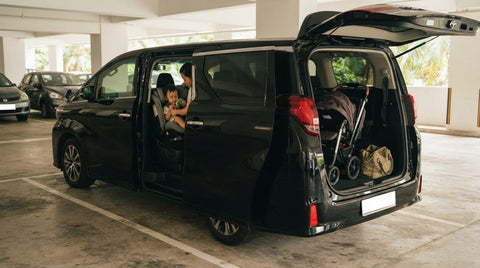
A spacious cabin isn’t enough if child seats, a stroller and luggage are difficult to manage. In Singapore, children under 1.35 meters must sit in the rear and be secured in a car seat or booster seat. Choosing a practical car for a family with toddlers and car seats means balancing that safety requirement with the room your family needs.
It’s natural to focus first on a car’s size, but the layout matters just as much: child seats can reduce space for passengers and everyday gear. This guide explains how to compare MPVs and sedans for car-seat fit, stroller and luggage space, and family practicality. You’ll also learn what to consider when choosing a vehicle for your family’s routines in Singapore.
Key Takeaways
- Compare MPV layouts for easier access to multiple child seats and room for the rest of the family.
- Assess a sedan by how its rear-seat arrangement and boot work with your child seats and everyday needs.
- Consider how your stroller and luggage fit together, not just the car’s stated cargo space.
- Evaluate the Toyota Alphard against your family’s seating, loading and day-to-day requirements.
- Weigh car-seat fit, passenger comfort and usable storage together when choosing a family car in Singapore.
1. MPVs for families needing space for multiple car seats
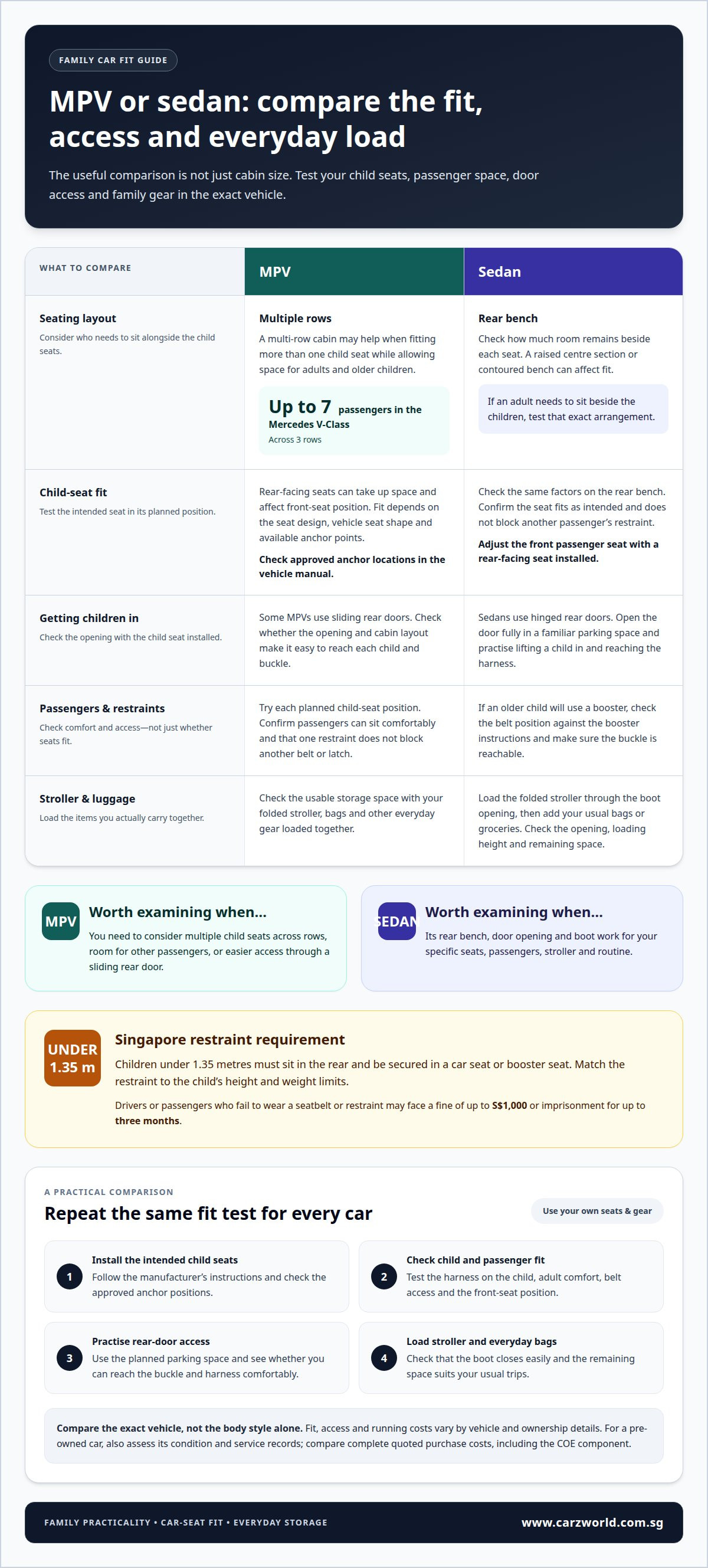
An MPV may suit families fitting more than one child seat because its cabin has multiple rows. The Mercedes V-Class seats up to seven passengers across three rows. This layout lets families consider child-seat placement alongside seats for adults and older children.
Rear-facing seats can be harder to fit in compact SUVs, MPVs and sedans because they take up space and may affect front-seat position and access. Installation depends on the car-seat design, vehicle seat shape and available anchor points. Try the intended seat in its planned position, following the manufacturer’s installation instructions.
Access also depends on the rear-door design and where each child seat sits. Some MPVs use sliding rear doors, while sedans and many compact SUVs use hinged doors. The opening and cabin layout affect how easily an adult can reach a child, so compare access with the seat installed, not just in an empty cabin.
Fuel economy, road tax, insurance and maintenance costs vary by vehicle and ownership details, so body style alone doesn’t settle the comparison. Engine and vehicle specifications affect running costs, while insurance depends on the policy and owner’s circumstances. Compare specific vehicles and cost components instead of assuming every MPV costs more than every sedan.
In Singapore, children under 1.35 metres must sit in rear seats and use a car seat or booster. Drivers or passengers who fail to wear a seatbelt or restraint may face a fine of up to S$1,000 or imprisonment for up to three months. Match the restraint to the child’s height and weight limits.
Choosing new or used depends on your priorities and the individual car. Before buying, install the intended child seats and inspect the seat belts, anchor points, rear-door access and space around each seat. For a pre-owned car, include its condition and service records in your assessment.
Family-car prices and Certificate of Entitlement (COE) costs depend on the specific vehicle and purchase timing. Compare the complete quoted purchase cost for each car, including its COE component, rather than relying on a single figure for MPVs or sedans.
ISOFIX anchor and top tether point counts vary by vehicle model and seating position. Check the vehicle’s manual for approved anchor locations, then confirm that each intended child seat can use a permitted position without blocking another passenger’s restraint.
Look for a strong independent crash-test rating and driver-assistance features relevant to collision prevention. Compare ratings for the exact model and year, and treat these features as support for attentive driving, not a replacement for correctly installed restraints.
2. Sedans with space for car seats
A sedan can work for a family if its rear bench, doors and boot suit the child seats and daily routine. Body style alone won’t tell you whether a car is practical. Check the exact vehicle with your family’s own seats, since cabin shape and seat design affect fit.
Start with the rear bench. Place each car seat where it would normally be used, then check how much room remains beside it. A bench that looks wide may still have a raised centre section or contours that affect how seats fit. If an adult needs to sit beside the children, test that arrangement before deciding.
Next, assess front-seat space with a rear-facing seat installed. Its position can affect how far the front passenger seat moves, especially if the passenger is tall or needs a particular seating position. Adjust the front seat for a real passenger, then check that the child seat remains correctly positioned according to its instructions.
Door access matters when loading children every day. Open the rear door fully in a familiar parking space and practise lifting a child into the seat. Check whether the opening gives you enough room to reach the buckle and harness. A child-friendly setup lets an adult secure the restraint without twisting around the door frame.
Also test a booster seat if an older child will travel with toddlers. Check that the vehicle’s seat belt passes across the child as intended by the booster’s instructions and that the buckle remains easy to reach. If several restraints share the rear bench, make sure one seat doesn’t block access to another belt or latch.
Then test the boot. Load your stroller folded, followed by the bags or groceries you routinely carry. Check the opening, boot floor and space left around the stroller. A sedan may have a useful boot, but a narrow opening or awkward loading height can make everyday use less convenient.
For a real comparison, repeat the same fitting exercise across the sedans you’re considering. Record whether the child seats fit, whether adults can sit comfortably, and whether the stroller and family bags fit together. This practical test is more useful than choosing by exterior size alone. Families weighing different body styles can also compare available car options against their seating and storage needs.
During the fitting, check the harness on the child, not just whether the seat physically fits the bench. For a rear-facing car seat, the strap should leave only the space of one or two fingers behind the chest. Repeat this check in each sedan, with the child seated as they would be during a journey. If the setup differs between vehicles, consult the car seat’s instructions before completing the comparison. Record the result alongside passenger space and how easily you can reach the buckle. This lets you compare both cabin practicality and whether the restraint can be set up as intended for your family’s regular trips.
3. Stroller and luggage capacity
A boot can look spacious and still be awkward for family gear. Test the actual items you carry, such as a folded stroller, a diaper bag and a change of clothes. Load them together, then check whether the boot closes easily and the remaining space suits your usual trips.
Start with the stroller. Fold it as you would before a journey, then load it through the boot opening. Check whether its wheels or handle catch and whether you can lift it in without turning it at an awkward angle. If your stroller has a removable carrycot or seat unit, include those parts in the test.
Next, add luggage in the order you normally pack it. For example, place a suitcase beside the stroller, then fit smaller bags where they will go. Notice whether you can reach an item without removing everything else. A boot that holds the stroller alone may be less practical once bags and everyday supplies are included.
Keep the passenger cabin in mind, too. A rear-facing seat can affect front-passenger space, while a booster seat may change how children share the rear bench. Load the boot with those restraints already installed for a more realistic view of the space your family can use on an ordinary outing.
Think about what needs to stay within reach. You may want a snack bag or spare clothes accessible during a stop, while heavier luggage can sit deeper in the boot. Arrange items before closing the hatch. Keep loose objects from obstructing the driver’s view or creating an obstacle around the seats.
For a family visit or overnight trip, repeat the packing test with the gear you would actually bring. Include the stroller, children’s bags and any luggage needed for that journey. Try different placements, but don’t force items against the hatch or stack them where they could obstruct a rear-facing seat’s installation area.
Finally, compare vehicles using the same packing routine. Note which boot takes the folded stroller easily, where luggage fits and whether everything remains accessible once loaded. A quick record of these points makes comparisons clearer than judging capacity by appearance alone.
4. Toyota Alphard family practicality
Assess the Toyota Alphard by how its seats, child restraints and cargo work together. Start by placing each child seat in its intended position. Then check whether the remaining seats suit the passengers travelling with you. The vehicle’s layout matters more than its name alone.
Fit a rear-facing restraint in the position you plan to use. Follow the child-seat and vehicle instructions, then check whether the front passenger can sit comfortably. Test the same arrangement with the driver’s seat adjusted for its regular user. A child seat that fits behind one seating position may affect another.
Next, practise getting a child into the seat. Open the rear door and approach the restraint as you would in a car park. Check whether you can lift the child, reach the harness and close the door without awkward movement. Repeat this for each occupied row, especially if passengers need to reach seats farther back.
Consider how adults and children will share the cabin. Place the toddler restraints first, then decide where other passengers will sit. Check whether each passenger can reach their seat belt without moving a child seat. If an older child uses a booster, test buckle access and belt position with the booster installed.
Test storage separately. Fold your family’s stroller and load it into the Alphard, then add the bags you commonly carry. Check whether you can lift the stroller through the opening and whether luggage blocks access to anything needed during the journey. Try removing the stroller without rearranging every bag.
Also consider how your family uses the vehicle between destinations. For school or childcare drop-offs, practise opening the door, securing the child and loading their bag. For longer outings, repeat the exercise with all intended passengers and luggage aboard. These checks show whether the seating and storage arrangement suits your real routine.
Before choosing a Toyota Alphard, repeat the fit test with the exact child seats, stroller and passengers you expect to carry. Review the vehicle manual for approved restraint positions, then follow each child-seat maker’s installation instructions. A family-friendly decision depends on the complete setup, not just the number of seats or the vehicle’s exterior size.
5. Which cars in Singapore are most practical for families with toddlers and car seats?
The practical choice depends on your family’s passengers, child seats and regular luggage. In Singapore, children under 1.35 metres must sit in rear seats and use a child restraint. That rule makes rear-seat layout central. Compare an MPV, sedan or compact SUV with your actual seats installed, rather than choosing by appearance alone.
For multiple child seats, an MPV can be a useful starting point. The Mercedes V-Class seats up to seven passengers across three rows. That capacity may help families plan where adults and children sit, but passenger numbers alone don’t show whether every restraint fits. Test your exact arrangement and check access to each seat.
A sedan may suit a smaller family if its rear bench accommodates the required restraints and leaves room for passengers. Fit each seat in its intended position, then check belt access and how easily an adult can reach each child. The boot also needs to work with your stroller and bags.
Assess the Toyota Alphard by its complete cabin setup. Place the toddler restraints first, then check passenger seating and stroller storage. Don’t assume the model name or body style proves a particular seat will fit. The exact child seat, vehicle seating position and family routine determine whether the arrangement works.
For toddlers, keep the rear-facing seat in use for as long as possible, ideally until age 2. Rear-facing installation takes more space, so check the front passenger position after fitting the restraint. Follow the car-seat maker’s limits and instructions. A comfortable adult seating position should not come at the expense of correct installation.
Use the same practical test for every vehicle you compare. Install the seats, place children in their usual positions, and check access to buckles and doors. Then load the folded stroller and everyday bags. For example, a car may fit two restraints but leave too little room for a passenger or essential luggage.
Choose an MPV if your family needs its seating layout and usable cabin space. Consider a sedan if the rear bench, access and boot suit your tested setup. The best fit is the vehicle that accommodates each restraint correctly and handles your real routine, not simply the largest option.
Compare family car options against your seating and storage needs, then explore suitable vehicles for your next step.
Carz World Pte Ltd
Carz World Pte Ltd gives families options to consider when choosing a vehicle for child seats, a stroller and everyday luggage. If you’re weighing a new purchase against a pre-owned car, its brand new cars and pre-owned cars provide two routes to explore. Car rental is another option for families who need a vehicle temporarily.
Use your shortlist of practical requirements to guide the decision: restraint fit, passenger access and space for the folded stroller. The right choice depends on how the vehicle suits your family’s routine, not just its category. For help with your next step, contact Carz World Pte Ltd.
Choose a vehicle that fits your next chapter
Family transport needs can change as toddlers grow and routines shift. A vehicle should suit your regular journeys now and remain manageable as household plans evolve. A practical car for a family with toddlers and car seats needs to fit your current routine, while leaving room to reassess as your needs change. Take time to turn those priorities into a clear shortlist.
Think about who travels regularly, what gear comes along, and whether you need ongoing ownership or temporary use. Choosing a practical car for a family with toddlers and car seats means weighing these everyday needs together. As children grow, revisit what works so your transport choice continues to suit changing family routines.
Ready to consider your options? Contact Carz World Pte Ltd to discuss your needs. Take the next step with a clear sense of what matters most to your family.
Frequently Asked Questions
What is the safest seat for a child in the car?
The back seat is the safest place for children younger than 13, and Singapore requires children under 1.35 metres to use a car seat or booster in the rear. For infants and toddlers, use a rear-facing restraint until the child reaches its manufacturer’s height or weight limit. Keeping a child rear-facing for as long as possible, ideally until age 2, helps guide your choice as they grow.
Which cars fit two or three child seats across the rear bench?
Fit depends on the vehicle’s rear bench, restraint sizes and permitted anchor positions, so passenger capacity alone can’t confirm that two or three seats will fit. The Mercedes V-Class seats up to seven passengers, but that doesn’t show how many child seats fit across one row. Try the exact restraints side by side, then check that each can be secured correctly and passengers can use their belts.
What are the boot capacities of popular family cars in Singapore with a stroller loaded?
There isn’t one useful boot-capacity figure for a car with a stroller loaded: the result depends on the model, boot layout and stroller dimensions. Compare vehicles using the same folded stroller and usual bags. Load them together, close the boot, then check whether everyday items remain accessible. This practical test shows how much usable space your family has for real trips, beyond an empty-boot capacity figure.
How do car-seat access and rear-door opening angles compare in popular family cars?
Access depends on the model, rear-door design and child-seat position. Some MPVs have sliding rear doors, while sedans and many compact SUVs have hinged doors. Test access with the seat installed.
How many ISOFIX child-seat anchors and top tether points do popular family cars have?
ISOFIX anchor and top tether point counts vary by vehicle model and seating position. Check the vehicle’s manual for approved anchor locations and confirm each intended seat can use a permitted position without blocking another passenger’s restraint.
What safety ratings and driver-assistance features matter most when choosing a car for toddlers?
Look for a strong independent crash-test rating and driver-assistance features relevant to collision prevention. Compare ratings for the exact model and year, and treat these features as support for attentive driving, not a replacement for correctly installed restraints.
Disclaimer
This content is provided for general informational purposes only. Readers are encouraged to independently verify important information.