Understanding the MAS Car Loan Restrictions in Singapore (2026)

What if the biggest loan available still leaves you with more to pay upfront than expected? Understanding the MAS car loan restrictions starts with a key detail: a car’s Open Market Value (OMV) determines the maximum loan-to-value limit, while the loan calculation uses the lower of the purchase price or valuation. That can change your deposit estimate before you start comparing cars.
It’s reasonable to want a clear idea of how much you could borrow, whether you’re buying new or pre-owned. For cars with an OMV of S$20,000 or less, the maximum loan is 70% of the calculation base. For cars with a higher OMV, the limit is 60%. The maximum loan tenure is seven years, though a used car’s age may affect the term a lender offers.
This guide explains how OMV shapes the loan limit, what the rules mean for your upfront contribution, and how to compare financing for new and pre-owned cars. You’ll also learn how to use the limits to estimate repayments and set a realistic budget before choosing a vehicle.
Key Takeaways
- Understanding the MAS car loan restrictions helps you distinguish the regulatory borrowing cap from the amount a lender may approve.
- Check a vehicle’s OMV before estimating your upfront contribution, as it determines which loan limit applies.
- Compare new and pre-owned cars using both the financing rules and a repayment amount that fits your budget.
- Use a buying checklist to assess the vehicle, estimate your deposit, and compare loan terms before committing.
- Apply your budget and financing criteria when comparing new and pre-owned cars available from Carz World.
What the MAS car loan restrictions mean for Singapore car buyers
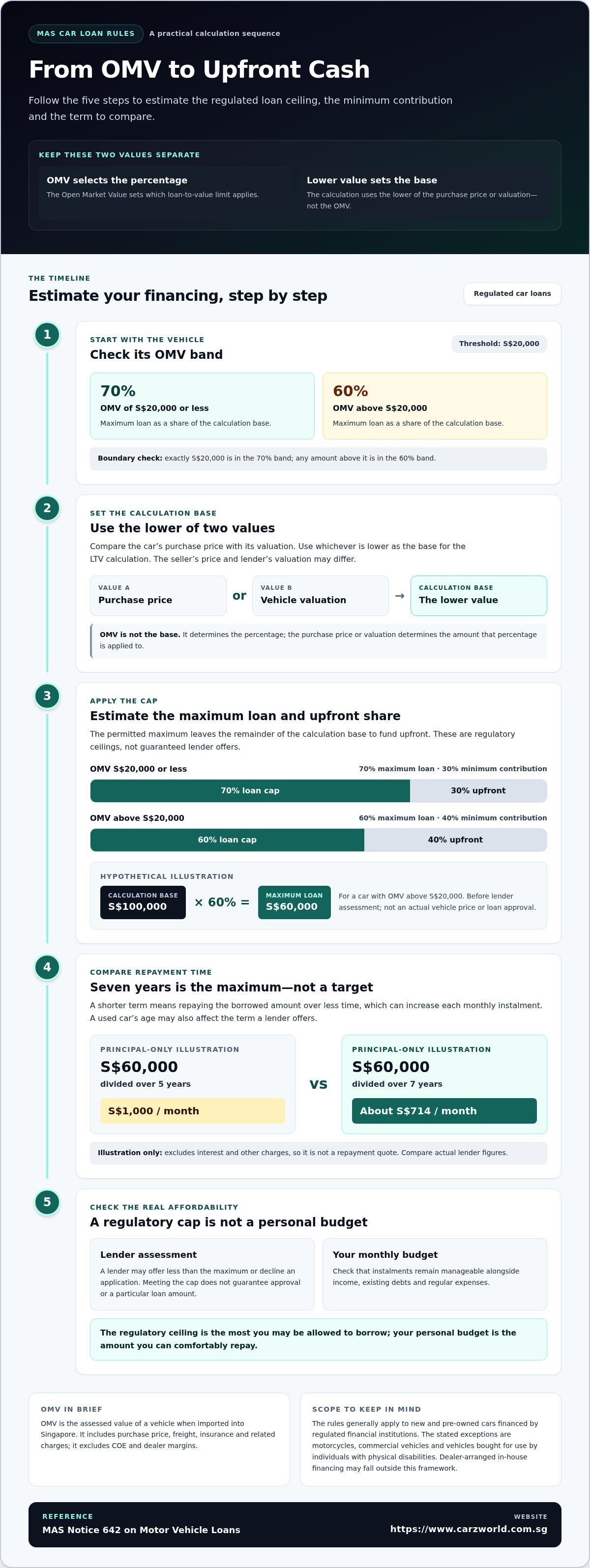
Understanding the MAS car loan restrictions means knowing two limits: how much of a car’s value can be financed and how long the loan can run. For a car with an Open Market Value (OMV) of S$20,000 or less, the maximum loan is 70% of the lower of its purchase price or valuation. If its OMV is above S$20,000, the cap is 60%. The maximum tenure is seven years. These limits apply to new and pre-owned cars financed under the regulated framework.
These are ceilings, not spending targets. The permitted maximum doesn’t tell you whether the resulting instalments fit your income, existing debts, and regular expenses. The regulatory ceiling is the most you may be allowed to borrow; your personal budget is the amount you can comfortably repay.
Which car financing rules does MAS set?
MAS rules limit the loan-to-value ratio and repayment tenure for car loans provided by regulated financial institutions. The OMV band determines whether the loan cap is 70% or 60% of the lower of the purchase price or valuation. The maximum tenure is seven years. Lenders still assess each application, so meeting the regulatory limits doesn’t guarantee approval or a particular loan amount.
The restrictions generally apply to both new and used cars. The exceptions identified here are motorcycles, commercial vehicles, and vehicles bought for use by individuals with physical disabilities. Dealer-arranged in-house financing may fall outside the MAS-regulated financial-institution framework, so don’t assume it follows the same rules. Financing limits are also separate from COE rules and registration requirements. The Certificate of Entitlement (COE) in Singapore relates to a vehicle’s right to be used on the road, while MAS restrictions govern borrowing limits and tenure.
Why the restrictions matter before you choose a car
The loan cap affects how much you need to contribute upfront. For example, if a car’s OMV is above S$20,000, borrowing is capped at 60% of the calculation base, leaving at least 40% of that base to fund upfront. For an OMV of S$20,000 or less, the minimum contribution is 30%. The calculation base is the lower of the purchase price or valuation, not the OMV itself.
Plan beyond the deposit. Consider whether the monthly instalment remains manageable alongside your other commitments. A shorter loan means repaying the borrowed amount over less time, which can increase each instalment. The seven-year maximum is a boundary, not a recommendation to borrow up to it.
Keep the regulatory cap separate from the lender’s assessment. A lender may offer less than the maximum or decline an application based on its assessment. Review the current restrictions and the specific loan terms before committing to a vehicle. This gives you a more realistic starting point for comparing cars while leaving room in your monthly budget.
How OMV, loan-to-value limits, and tenure shape your car loan
Open Market Value (OMV) is the assessed value of a vehicle when it is imported into Singapore. It includes the vehicle’s purchase price, freight, insurance, and related charges, but excludes the Certificate of Entitlement (COE) and dealer margins. For regulated car loans, the OMV determines which loan-to-value (LTV) limit applies. The LTV percentage is calculated against the lower of the vehicle’s purchase price or its valuation, not against OMV itself.
The current limits are set out in MAS Notice 642 on Motor Vehicle Loans. Use this table as a starting point. A lender’s assessment may result in a lower loan amount.
| Vehicle OMV | Maximum loan as a share of the lower of purchase price or valuation | Maximum tenure |
|---|---|---|
| S$20,000 or less | 70% | 7 years |
| More than S$20,000 | 60% | 7 years |
How OMV affects the maximum amount you may finance
The threshold is strict: an OMV of exactly S$20,000 falls in the 70% band; any OMV above S$20,000 falls in the 60% band. The purchase price or valuation sets the calculation base, while OMV selects the percentage. These figures can differ, and the lender’s valuation or assessment may also differ from the seller’s price. The regulatory cap is therefore not a promise of the final loan.
Hypothetical example: Suppose a car has an OMV above S$20,000, and both its purchase price and valuation are S$100,000. The 60% cap would permit a maximum loan of S$60,000, before lender assessment. This is a simple illustration, not an actual vehicle price, lender offer, or approval. If the valuation were lower than the purchase price, the lower figure would be the calculation base.
How loan tenure changes monthly repayments
Seven years is the maximum tenure, not a required term. A shorter term spreads repayment over fewer months, which generally means larger monthly instalments for the same loan principal. For a simple principal-only illustration, S$60,000 divided evenly over five years is S$1,000 per month; over seven years it is about S$714 per month. This excludes interest and other charges, so it isn’t a repayment quote.
Your instalment reflects both the amount borrowed and the time allowed to repay it. A longer term may reduce the principal portion due each month, but it doesn’t increase the permitted LTV cap. Compare terms using the lender’s actual figures, then check that the repayment suits your budget. With the calculation in mind, you can compare cars at Carz World against a more realistic financing range.
New or pre-owned car: compare financing limits and real affordability
New and pre-owned cars are generally subject to the same MAS loan-to-value limits and maximum tenure. The car’s OMV determines the applicable loan cap, while the lender’s assessment determines whether it will offer that amount. The shared framework is a useful starting point, but it doesn’t make two purchases equally affordable. The MAS Rules for Motor Vehicle Loans explain the regulatory limits; your deposit, instalments, and ownership plans complete the budget picture.
Compare the same factors for each vehicle: the OMV band, the purchase price and valuation used for financing, the upfront contribution required, and the proposed repayment period. Then look beyond the loan calculation. Insurance, ongoing ownership commitments, and how long you expect to keep the car can all affect whether the choice works for you.
What to compare when financing a pre-owned car
For a pre-owned vehicle, check its details and OMV information rather than assuming its age or resale price determines the loan percentage. The MAS framework applies the OMV threshold and financing calculation to eligible used cars too. A lender may offer a shorter tenure depending on the vehicle’s age and its own assessment, so don’t build your budget around the seven-year maximum without reviewing the actual terms.
Consider remaining COE and your expected ownership period separately from the MAS loan cap. They can shape how long you intend to keep the car and how its costs fit your plans, but they don’t change the basic LTV calculation. Maintenance is another distinct budget item, not part of the regulatory loan limit. Comparing pre-owned cars in Singapore is more useful when you weigh these ownership factors alongside the financing details.
How to set a purchase budget below the loan ceiling
Choose a monthly repayment you can manage before working backwards to a vehicle price. Include your existing monthly commitments, then consider what remains for insurance and other ownership expenses. Next, estimate the upfront contribution using the applicable LTV limit and the lower of the purchase price or valuation. Keep some flexibility for expenses that aren’t part of the car loan.
The regulatory maximum, lender assessment, and personal comfort level are three different things. Approval isn’t guaranteed, and a lender may offer less than the permitted cap. A shorter tenure can also mean larger monthly instalments, so compare actual loan terms rather than choosing a car based only on the maximum borrowing amount.
Use the same affordability test for new cars in Singapore. A new vehicle and a pre-owned one may have different purchase prices, OMVs, loan terms, and ownership considerations, even though the core MAS limits are the same. Understanding the MAS car loan restrictions helps you compare the financing framework, but your comfortable repayment should guide the final choice. Explore Carz World’s vehicle selection with that budget in mind.
A practical checklist before applying for a Singapore car loan
Preparing before you compare a vehicle’s financing needs with your budget can make the decision clearer. Understanding the MAS car loan restrictions is one part of the process; lender terms and your own repayment comfort matter too. Work through these steps before committing to a purchase.
- Select a vehicle. Record the specific car you’re considering, its advertised purchase price, and whether it’s new or pre-owned. For a used car, note details that may affect the available loan tenure, such as its age.
- Check the OMV. Find the vehicle’s Open Market Value and identify the applicable loan-to-value band. OMV determines the percentage limit, while the lower of the purchase price or valuation is the calculation base under the rules.
- Estimate your upfront contribution. Apply the relevant loan limit to the calculation base to estimate the minimum contribution. Treat this as an initial estimate, not a confirmed loan amount, because the lender’s assessment may affect the offer.
- Compare loan terms. Review the proposed amount, tenure, repayment schedule, interest, and fees. Confirm the current MAS restrictions and the lender’s specific terms before accepting an offer.
Information to gather before comparing financing
Keep the vehicle’s price, OMV, intended deposit, and preferred tenure together so you can compare offers on the same basis. List your regular financial commitments too, then decide what monthly repayment leaves room for other expenses. Prepare the identity and income documents requested by the lender, and follow its document requirements rather than assuming they’re the same for every application.
Approval, interest, fees, and repayment terms depend on the lender and the details of your application. A regulatory maximum doesn’t guarantee approval for the maximum amount, or approval at all. Compare the written offer with both your estimates and your budget.
Questions to resolve before accepting an offer
Review the full borrowing cost and repayment schedule in writing. Compare the interest basis, total repayment, instalment amount, and applicable fees, not just the headline rate. Check whether the proposed tenure fits the vehicle and your plans, and read the agreement for early repayment conditions, charges, and other restrictions.
Make sure the proposed financing follows the current MAS rules that apply to the lender and vehicle. Don’t rely on arrangements presented as a way around required limits or upfront contributions. If anything in the written offer is unclear, get an explanation before signing.
Once you’ve set your budget and gathered the vehicle details, discuss vehicle financing with Carz World as a practical next step in planning your purchase.
Applying the MAS car loan rules when choosing a car with Carz World
Once you’ve worked out a realistic deposit and monthly repayment, use those figures to guide your vehicle search. The regulatory loan cap is only one part of the decision. Your preferred tenure, the lender’s assessment, and other ownership costs also affect whether a car fits your plans. Understanding the MAS car loan restrictions helps you compare options using clear financing criteria, rather than treating the maximum permitted loan as a target.
Carz World is a Singapore dealership selling brand new and pre-owned vehicles, and provides vehicle financing. Use your budget to narrow down suitable choices, then consider the financing terms for the vehicle you’re interested in.
Match the vehicle to your financing plan
Before comparing cars, write down the upfront amount you’re comfortable contributing and the monthly repayment you can manage. For each vehicle, review its price and OMV information, then estimate the applicable loan cap and deposit. Keep your preferred tenure in view too. A shorter repayment period may mean higher monthly instalments, while a lender may offer a term below the regulatory maximum.
Compare the figures consistently. For pre-owned cars, include the vehicle’s age and remaining COE in your ownership planning, separate from the MAS loan calculation. For new cars, consider the purchase details and applicable financing assessment. Browse Carz World’s pre-owned cars to compare vehicles against your budget. Assess each car on its own details rather than assuming every option has identical financing terms.
A useful shortlist can include the vehicle’s price, OMV, estimated deposit, intended ownership period, and target repayment range. This makes it easier to spot where a vehicle may stretch your budget before moving forward. Leave room for insurance and other ongoing ownership expenses outside the car loan.
What to expect when discussing vehicle financing
Financing terms depend on the vehicle, the lender’s assessment, and your individual application. A regulatory limit doesn’t guarantee that a lender will approve an application or offer the maximum amount. Interest, fees, repayment schedules, and available tenure can also vary, so review the written terms carefully before accepting.
Use the discussion to understand the proposed loan amount, upfront contribution, instalments, and applicable fees. Check that the terms fit your budget and follow the current rules. If the offer differs from your estimate, revisit the vehicle choice or repayment plan before making a commitment. Comparing the details helps you avoid assumptions about approval or cost.
Carz World can help you consider vehicle financing alongside its new and pre-owned car options. Explore Carz World’s vehicle options and discuss a suitable next step at your own pace.
Take your car budget into the next step
Understanding the MAS car loan restrictions gives you a clearer starting point, but the next decision is personal: which vehicle fits your practical needs and financial comfort? Before moving ahead, decide what you’re willing to contribute upfront, what monthly repayment feels manageable, and which ownership trade-offs matter most. That gives you a useful way to assess options without treating the maximum loan as a spending target.
As you compare vehicles, keep your budget flexible enough to account for the full ownership picture. Review any financing offer in writing and take time to understand its terms before accepting. A considered choice should feel workable not only at purchase, but throughout the repayment period.
When you’re ready to explore suitable options, Carz World can help you consider vehicles alongside its vehicle financing service. Explore vehicles and discuss your financing options with Carz World to take the next step at a pace that feels right for you.
Frequently Asked Questions
What are the current MAS car loan restrictions in Singapore?
For regulated financial-institution car loans, the maximum loan is 70% of the lower of the purchase price or valuation for cars with an OMV of S$20,000 or less, and 60% when the OMV is higher. Understanding the MAS car loan restrictions also means accounting for lender assessment: these limits set a ceiling, not a guaranteed loan amount. Car loans also fall under TDSR, with total monthly debt repayments capped at 55% of gross monthly income.
How much can I borrow for a car in Singapore?
Your maximum depends on the car’s OMV band and the calculation base, which is the lower of its purchase price or valuation. First identify whether the OMV is at or below S$20,000 or above it, then apply the relevant 70% or 60% limit. A lender may approve less after assessing your application, income, and financial commitments, so use the cap for planning rather than assuming it will be offered.
What does OMV mean for a car loan?
OMV means Open Market Value, the assessed value of a vehicle when it is imported into Singapore. It includes the vehicle’s purchase price, freight, insurance, and related charges, but not the COE or dealer margins. For financing, OMV selects the applicable LTV band; it isn’t itself the amount used to calculate the loan. Check the vehicle’s OMV information alongside its price and valuation when estimating your financing range.
Does the MAS car loan restriction apply to pre-owned cars?
Yes, the core MAS loan limits apply to both new and pre-owned cars financed through regulated financial institutions. A used car’s age can affect the lender’s assessment and the tenure it is willing to offer, so the maximum term may not be available for every vehicle. Don’t assume a pre-owned car automatically qualifies for the higher loan percentage. The OMV band, rather than whether it is used, determines the applicable cap.
What is the maximum car loan tenure in Singapore?
The maximum tenure for a regulated car loan is seven years. That is an upper limit, not a standard term every buyer or vehicle will receive. A lender may offer a shorter period based on its assessment, and a used car’s age may affect the available term. Before comparing instalments, review the offered tenure in writing and consider whether it suits your expected ownership period and monthly budget.
Can I get a 100% car loan in Singapore?
A car loan from a regulated financial institution cannot exceed the applicable MAS LTV limit, so it won’t cover 100% of the purchase price under these rules. The required upfront contribution must be paid in cash and can’t be financed through another loan. Dealer-arranged financing may be outside MAS regulation and have different terms, so examine the arrangement carefully and don’t assume a “zero deposit” offer follows the standard regulated loan framework.
Can I repay my car loan early in Singapore?
Early repayment depends on the terms of your specific loan agreement. Before making an extra payment or settling the balance, review the written contract for notice requirements, settlement calculations, and applicable charges or conditions. Get a current settlement figure and confirmation of how the payment will be applied. This helps you compare the cost of settling early with continuing scheduled repayments, without assuming every loan handles early repayment the same way.
Disclaimer
This content is provided for general informational purposes only. Readers are encouraged to independently verify important information.
In Same Category
- Understanding the MAS Car Loan Restrictions in Singapore (2026)
- Scrap Car vs Export Car in Singapore: How to Choose the Better Option
- Pros and Cons of Buying a High PARF Car in Singapore
- Car Valuation Services in Bukit Merah: A Seller’s Guide
- Scrapping Your Car Before 10 Years in Singapore: What Happens?
Related by Tags
- Understanding the MAS Car Loan Restrictions in Singapore (2026)
- Pros and Cons of Buying a High PARF Car in Singapore
- Electric Vehicle Guide 2026: Types, Charging and Buying in Singapore
- COE Results Singapore: How to Read the Latest Bidding Outcomes in 2026
- Getting Car Finance as a Freelancer in Singapore: 2026 Guide
- Singapore Car Loan Guide for EP Holders (2026)
- Calculating the Real 5-Year Cost of Car Ownership in Singapore (2026 Guide)
- Parallel Import Singapore: The Ultimate 2026 Buyer’s Guide
- How to Buy a Car in Singapore: The Ultimate 2026 Step-by-Step Guide