Reliable Cars for Malaysia: Comfort and Fuel Efficiency
A reliable car for frequent Malaysia trips should match your usual passenger and luggage needs, feel comfortable over long distances, and use fuel efficiently. For drives over 300 km a day, cruise control and a quiet cabin can make the journey more comfortable. A car achieving 15 to 17 km per litre can also use less fuel on Malaysian road trips than one achieving 9 or 10 km per litre.
Comfort and running costs both matter when you travel regularly. A sedan may suit a smaller group with lighter luggage, while an SUV can offer more room for passengers and bags. Choose based on how you travel, not just the body style.
This guide covers cabin comfort, fuel efficiency and vehicle size, with practical comparisons for common road-trip needs. Use it to narrow down a car that suits your journeys between Singapore and Malaysia.
Key Takeaways
- Match passenger space and luggage capacity to the way you travel, so the car feels practical for both everyday use and longer drives.
- Compare fuel-efficiency figures across suitable models to understand how driving habits and route conditions can affect fuel use.
- Use your typical passenger and luggage load to decide whether a sedan or SUV is the better fit for your trips.
- Learn which car issues can interrupt a long-distance journey and what signs deserve attention before setting off.
- Understand the factors that shape maintenance and repair costs in Singapore, and how they may influence your choice of car.
1. Choosing a comfortable car for long-distance driving
For drives over 300 km a day, prioritise cruise control and a quiet cabin. These features can reduce the effort of maintaining speed and make long stretches less tiring. A four-hour drive each way between Kuala Lumpur and Penang is easier to manage when the cabin stays calm and the driver can maintain a steady pace. Seat support, clear visibility and simple controls also matter when you spend hours behind the wheel.
Match the cabin to your passengers and luggage. Toyota Vios and Honda City sedans can seat five, but space may feel tight when everyone brings large bags. For family trips lasting six or more hours, a Toyota Innova offers a more practical layout for children and luggage. Check rear-seat comfort and access, especially if passengers need room to settle in for a long journey.
Which car models have the best reliability ratings and owner reviews in Singapore? There’s no single model that suits every driver or trip. Toyota Vios and Honda City are practical examples to consider for five-person seating, but compare reviews for the specific model year and assess the car’s condition before choosing.
For a Singapore-registered car entering Malaysia, prepare the vehicle’s registration documents, your driving licence and proof of insurance that applies in Malaysia. Treat these as essential travel paperwork, and check the current entry process before departure because administrative requirements can change.
What insurance coverage is needed for Singapore cars travelling in Malaysia? Your motor policy should cover you in Malaysia for the trip. Review its territorial coverage and exclusions, and consider whether the protection suits your vehicle and travel plans.
For long highway drives, prioritise safety features that help you maintain control and stay alert. Look for stability control, anti-lock braking, airbags and driver-assistance features such as lane-departure alerts or adaptive cruise control. These features support the driver, but don’t replace attention, rest or safe following distances.
Before choosing a reliable car for frequent Malaysia trips, sit in each row, adjust the driving position and check how easily passengers can get in and out. Consider your usual route, journey duration and luggage load together. A car that suits those needs is more likely to keep the journey comfortable from departure to arrival.
2. Fuel efficiency on Malaysian road trips
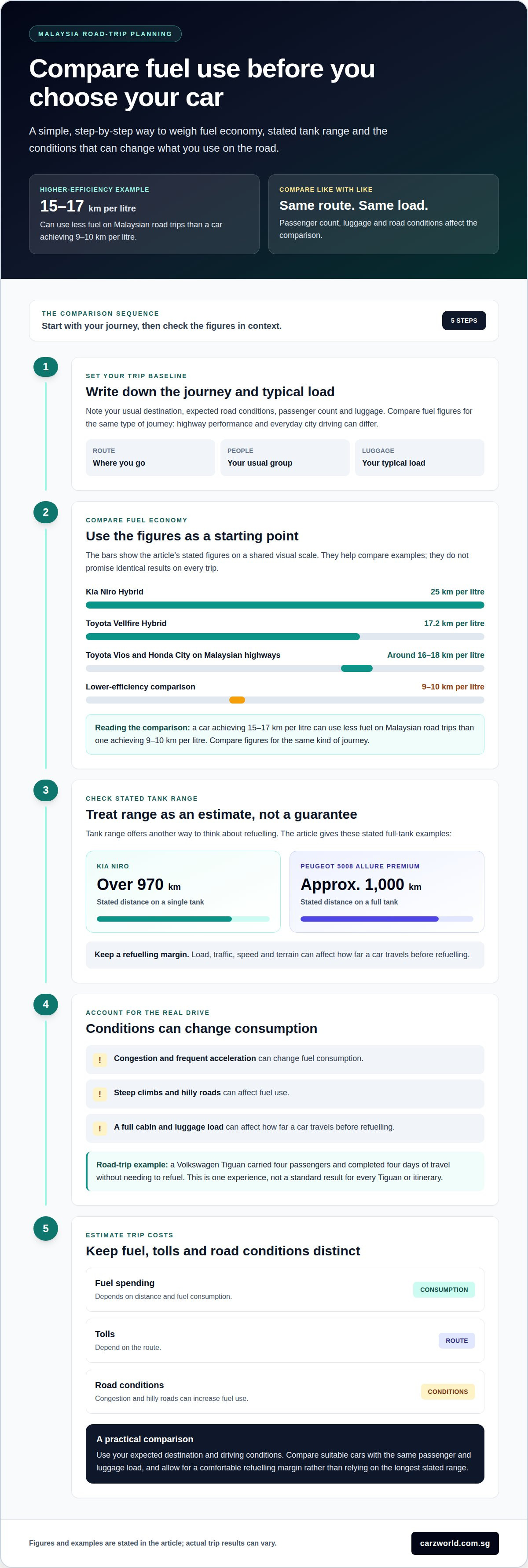
Fuel economy affects how often you stop and how much fuel a route uses. A car achieving 15 to 17 km per litre can use less fuel than one achieving 9 or 10 km per litre on Malaysian road trips. Compare figures for the same type of journey, since highway performance and everyday city driving can differ. A published figure is a useful starting point, not a promise of identical results on every trip.
Toyota Vios and Honda City models are described as delivering around 16 to 18 km per litre on Malaysian highways. The Kia Niro Hybrid is stated at 25 km per litre, while the Toyota Vellfire Hybrid is stated at 17.2 kilometres per litre. These examples help show how vehicle type and powertrain can shape fuel use. Compare them against your passenger and luggage needs, rather than choosing solely by the highest figure.
Tank range offers another way to think about refuelling. The Kia Niro is stated to travel over 970 km on a single tank, while the Peugeot 5008 Allure Premium is stated to travel approximately 1,000 km on a full tank. Those figures describe stated range, not a guaranteed distance for every driver. Load, traffic, speed and terrain can affect how far a car travels before refuelling.
Driving patterns matter, too. In one road-trip example, a Volkswagen Tiguan completed four days of travel without needing to refuel. That experience doesn’t establish a standard result for every Tiguan or itinerary. Congestion, frequent acceleration, steep climbs and a full cabin can all change fuel consumption. For a fair comparison, consider the same route, passenger count and luggage load for each car.
Tolls, fuel prices and road conditions all affect trip costs in Malaysia. Tolls depend on the route, while fuel spending depends on distance and consumption. Congestion and hilly roads can also increase fuel use. Estimate these costs separately and compare routes based on the journey you expect to drive.
To make a practical comparison, note your usual destination, expected driving conditions and typical load. Then compare fuel economy and tank range for suitable models, allowing for a comfortable refuelling margin instead of relying on the longest stated range. If you’re weighing different vehicle types for regular journeys, compare available vehicle options against your travel needs.
The Volkswagen Tiguan in the road-trip example carried four passengers, providing context for its reported fuel experience. The Toyota Innova is suitable for groups spending six or more hours on the road with children. Consider passenger needs and journey duration alongside fuel figures when comparing vehicles.
3. Sedans and SUVs for long-distance driving
Choose a body style based on your usual passenger count, luggage and route. A sedan can suit a small travel group with manageable bags, while an SUV may make more sense when extra cabin or cargo flexibility matters. Neither body style automatically guarantees comfort or reliability. Compare the specific car’s seating, boot layout and driving position with the trips you actually take from Singapore.
Malaysian expressways make stability a practical consideration. A car that feels stable at 110 km/h is recommended for highway driving, so assess how composed it feels at cruising speed. Don’t judge only by its size or appearance. The vehicle should remain easy to control, with a comfortable driving position and clear visibility throughout a sustained drive.
Uphill routes add another factor. For drives to Cameron Highlands or Genting with five passengers and luggage, the recommendation is at least a 1.5L sedan or compact SUV. The engine size alone doesn’t describe the whole experience, so consider the car with the load it will normally carry. A full cabin and bags change how a vehicle feels on climbs compared with a short, lightly loaded drive.
For families needing more seating, the Perodua Aruz is a seven-seat option for Malaysian road trips. Extra seats can accommodate a larger group, but passengers and luggage still need to fit comfortably together. Think about who will use each row and where their bags will go. Seat count is useful, but the layout should suit your travel group.
Cargo flexibility can also influence the choice. The Kia Niro’s luggage compartment expands to 1,392 litres when the second-row seats are folded down. That arrangement can help when fewer passengers travel and bulky luggage takes priority. With the seats in use, assess the available space for your normal bags instead of relying only on the expanded capacity figure.
Use a simple comparison before deciding:
- Choose a sedan if your regular group and luggage fit its cabin and boot.
- Consider a compact SUV for uphill journeys with five passengers and bags, following the 1.5L recommendation.
- Consider a seven-seat layout such as the Perodua Aruz when your group needs more passenger seats.
- Assess folding-seat cargo space if your trips sometimes prioritise luggage over rear passengers.
When choosing a reliable car for frequent Malaysia trips, compare options with your usual passenger and luggage load in mind. A sedan may suit a smaller group, while an SUV may better fit a family or changing cargo needs. The right match handles your route, occupants and bags without forcing an impractical compromise.
4. What are the most common car problems on long-distance drives in Malaysia?
Long highway journeys can expose existing wear that short city trips may not reveal. Common trouble spots include tyres, the battery, cooling system, brakes and engine fluids. These aren’t a ranking of Malaysian breakdown causes, but practical areas to consider before a long drive, especially on extended highway stretches or steep climbs.
Tyre problems can start with damage, uneven wear or incorrect pressure. Before leaving Singapore, inspect each tyre’s tread and sidewalls for visible cuts, bulges or embedded objects. Check pressure when the tyres are cold, using the vehicle manufacturer’s recommended figure. A loaded car may handle differently, so account for passengers and luggage when considering how it will behave on Malaysia’s expressways.
A weak battery can make starting difficult, while a cooling-system problem may show as a rising temperature gauge or warning light. Check for dashboard alerts before departure and pay attention to any warning during the journey. If the temperature rises unusually or the engine warning light comes on, pull over somewhere safe and follow the vehicle manual’s instructions. Don’t continue driving while a serious warning remains unexplained.
Check the brakes before routes with sustained traffic or long descents. Listen for unfamiliar grinding or squealing, and notice changes in pedal feel during ordinary driving. A brake warning light or reduced braking response needs prompt attention before you continue. Avoid testing the brakes aggressively on a public road. Unusual sounds or behaviour are reasons to stop and seek appropriate assistance.
Low or deteriorated engine oil and coolant can contribute to engine trouble. Check fluid levels according to the owner’s manual, and look beneath the parked car for fresh leaks. Don’t open a hot cooling system. If a fluid warning appears, follow the manual’s guidance rather than guessing what is safe for that vehicle.
Worn wiper blades and low washer fluid can also reduce visibility in heavy rain. Test the wipers before departure and make sure the windscreen clears properly. On a wet Malaysian road, poor visibility can make it harder to judge traffic and road conditions. Replace ineffective blades before the trip rather than waiting for rain to expose the problem.
A simple pre-trip routine helps catch warning signs early:
- Inspect tyres: Look for damage and check cold pressure against the vehicle manual.
- Review the dashboard: Note warning lights before setting off and respond to new alerts.
- Check fluids and leaks: Follow the manual and look around the parked vehicle.
- Test visibility and braking: Confirm the wipers work and notice any unusual brake behaviour.
For frequent Singapore-to-Malaysia drives, treat a new noise, warning light or change in handling as a reason to pause. A careful check before departure can help identify developing problems before they interrupt the journey.
5. Maintenance Costs for Long-Distance Cars in Singapore
Maintenance costs in Singapore depend on the car, its age, condition and servicing needs. There’s no single useful total for every long-distance model. Toyota Vios, Kia Niro Hybrid and Volkswagen Tiguan have different components and service requirements. For an accurate ownership budget, separate scheduled servicing from repairs, then consider how your mileage and driving pattern affect each.
Start with the manufacturer’s maintenance schedule for the specific model and year. Scheduled work may include routine inspections and replacement of service items. The exact tasks depend on the vehicle and its service intervals. A car driven regularly between Singapore and Malaysia may accumulate mileage differently from one used mainly for short local journeys, so factor annual distance into your plans.
Repair spending is less predictable because it depends on the fault and parts involved. A worn tyre, battery issue or brake concern calls for different work from an engine or transmission problem. Vehicle age, mileage and service history also affect the likelihood of repairs. For a pre-owned Toyota Vios or Volkswagen Tiguan, review available service records and assess the car’s condition before estimating future repair needs.
Hybrid models add another consideration. The Kia Niro Hybrid combines an engine with a hybrid battery, so its maintenance profile differs from that of a conventional petrol car. Don’t assume every hybrid repair will cost more or less. The model, fault and required parts determine the work. Compare the maintenance schedule and vehicle condition, not just fuel economy, when judging long-term ownership costs.
In Singapore, a practical budget should account for routine servicing, wear-related replacements and unexpected repairs. Keep those categories separate in your records. When comparing a Honda City with a Peugeot 5008, for example, use each model’s own schedule and history rather than applying one car’s servicing pattern to another. Include the vehicle’s current condition, because overdue work can change near-term spending.
- Identify the exact model and year: Schedules and parts differ between vehicles.
- Review servicing records: Look for completed scheduled work and recurring repairs.
- Separate routine work from repairs: This makes future spending easier to track.
- Consider mileage and condition: Both influence which maintenance needs arise.
For a long-distance car, make maintenance history part of the ownership decision, alongside comfort and fuel use. Use the model’s service schedule and condition to build a realistic Singapore-dollar budget without relying on a generic estimate. Explore vehicle options for your travel needs.
Carz World Pte Ltd
Carz World Pte Ltd can help you consider vehicle options that fit your Malaysia travel plans. If you’re weighing cabin space, fuel use and whether to buy or rent, explore its pre-owned cars, brand new cars and car rental options. Think about your regular passenger count, luggage and route when narrowing your choice. A car suited to occasional trips may differ from one used for frequent long-distance drives. Carz World Pte Ltd also offers car export services for readers whose vehicle needs involve export. Share what matters most for your journeys, such as seating or cargo flexibility, to make the discussion more focused. Contact Carz World Pte Ltd to discuss your options.
Make your next car decision with confidence
Before choosing, turn your travel needs into a short list of priorities. Decide who usually travels, how much luggage you carry and what kind of journey you make most often. Then weigh those needs against the car’s comfort, fuel use, body style and expected upkeep. This makes it easier to compare options without letting one appealing feature dominate the decision.
A reliable car for frequent Malaysia trips should suit your everyday routine, not just an occasional holiday drive. If your travel pattern changes, your preferred balance of space, running costs and flexibility may change too. Consider how you’ll use the vehicle during ordinary weeks as well as longer journeys. A clear picture of your routine can make your next step more focused.
For help exploring your options, contact Carz World Pte Ltd. Share what matters for your regular trips and take the next step toward a car that fits your plans.
Frequently Asked Questions
Which cars are most reliable for frequent Singapore-Malaysia road trips?
No single model is best for every driver. A car’s condition and maintenance history matter as much as its model name. Toyota Vios and Honda City are examples to consider, but assess the specific vehicle’s service records and how it drives with your usual passenger load. For a used car, look for consistent maintenance documentation and recurring issues. Choose a model that also fits your route and luggage needs.
What is the real-world fuel consumption and range of popular cars for Singapore-Malaysia trips?
Real-world fuel use and range vary with traffic, speed, road gradients, passenger load and driving habits. Published figures for models such as the Kia Niro Hybrid or Toyota Vios can help compare options, but won’t determine the result on your itinerary. Track fuel used over familiar journeys, then compare that experience with the car’s stated figures and your typical driving conditions.
Are hybrid or petrol cars more practical for frequent trips to Malaysia?
Either can suit frequent trips, depending on your routes and priorities. A hybrid such as the Kia Niro may appeal if fuel efficiency matters, while a petrol car may suit drivers who prefer a conventional powertrain. Compare the specific model’s fuel consumption, cabin space and maintenance schedule. Also consider whether your regular journeys involve slow traffic, steady highway cruising or both, since driving patterns affect how useful each option feels.
Disclaimer
This content is provided for general informational purposes only. Readers are encouraged to independently verify important information.