Car Consignment Agent in Sembawang for Price Setting
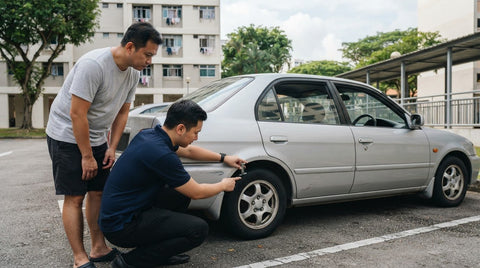
A consignment sale is more than placing a car online. Working with a professional car consignment agent like Carz World Pte Ltd helps arrange the sale on the owner’s behalf, with the asking price shaped by the vehicle’s condition, mileage, model, remaining COE and buyer demand. According to LTA, vehicle ownership must be transferred to the new owner within 7 days when it changes hands.
Before appointing a car consignment agent, clarify the asking price, where the car will be kept and what happens while it is being advertised. These details depend on the arrangement, so understanding each step helps you know what to expect before you proceed with Carz World Pte Ltd.
This guide explains how car consignment works in Singapore, what can influence the asking price, and how advertising and viewings fit into a sale. It also covers vehicle storage, related services and when a professional car-selling option may suit your needs.
Key Takeaways
- Consignment lets a professional manage key parts of the sale, while the owner agrees to the terms and price.
- A useful asking price reflects the car’s condition and market appeal, with a reserve price setting the minimum acceptable amount.
- Where the car is kept and how buyers view it are practical details to settle as part of the consignment arrangement.
- Advertising, buyer enquiries and sale coordination can shape how smoothly the process runs.
- Fee structures vary, so understand what work each charge covers before agreeing to a consignment arrangement.
What is car consignment in Singapore?
Car consignment is an arrangement in which an agent markets and coordinates the sale of an owner’s vehicle. The owner and agent agree on the sale terms, including the asking price and how enquiries and offers will be handled.
How Consignment Works in Singapore
The process usually begins with a review of the car’s details, condition and supporting documents. The owner and agent then agree on the asking price, sale arrangement and how the car will be presented to buyers. The agent advertises the vehicle and manages enquiries and viewings. Before proceeding, make sure each party’s role is clearly described.
For a Sembawang seller, practical viewing arrangements matter, especially for buyers travelling from nearby areas. Reviews describing a specific experience are more useful than brief ratings alone. Look for details about communication, appointment coordination and seller updates. These can show what the process was like, while recognising that each seller’s experience may differ.
Agreement Terms and Ownership Transfer
The agreement should clearly state the asking price, any minimum acceptable offer, the agent’s role and how either party can end the consignment. It should also explain how offers are presented and whether the owner must approve one before the sale proceeds. These terms distinguish an agent-managed sale from a direct dealer purchase, where the dealer buys the vehicle at an agreed amount.
According to LTA, a vehicle’s ownership must be transferred to the new owner within 7 days when it changes hands. If the car has an outstanding loan, the sale also needs to account for the lender’s settlement requirements. The agent can coordinate sale discussions, but the seller should understand how loan settlement and the ownership transfer fit into the agreed transaction.
Fees, Commission and Seller Risks
Consignment fees and commission rates vary by arrangement. The agreement should state how the agent is paid, when payment is due and whether separate advertising or handling charges apply. Without those details, it is harder to compare the net proceeds from consignment with a direct dealer offer.
Common risks include unclear offer approval, misunderstandings about the final payout and uncertainty over responsibility for the car while it is advertised. A written agreement can reduce these risks by recording the approved price terms, payment steps, vehicle-care responsibilities and handover process. For example, the owner should know whether an offer needs approval before the agent accepts it.
How a consignment agent values your car and recommends an asking or reserve price
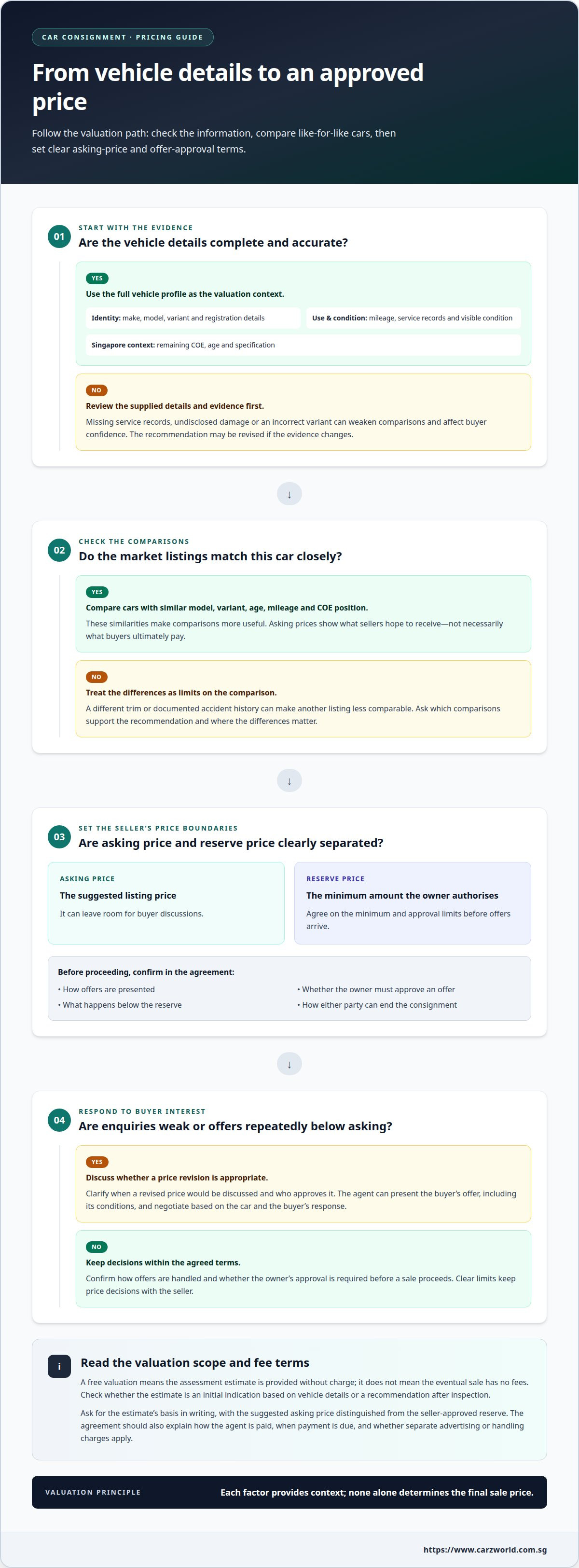
A valuation starts with the vehicle’s identity and condition, not just its model name. The agent considers its make, model, variant, registration details, mileage, service records and visible condition. In Singapore, the remaining COE period can also influence buyer interest, while the car’s age and specification help distinguish it from similar listings. Each factor provides context, but none alone determines the final sale price.
The agent can then compare the car with similar vehicles offered in the Singapore market. Asking prices show what sellers hope to receive, not necessarily what buyers ultimately pay. Comparisons are more useful when the cars have a similar model, variant, age, mileage and COE position. A different trim or documented accident history can make another listing less comparable. The agent should explain which comparisons support the recommendation and where differences matter.
The recommended asking price can leave room for buyer discussions, while a reserve price is the minimum amount the owner authorises. For example, an owner may allow negotiation above a stated minimum but require fresh approval for any lower offer. The agent can present a buyer’s offer, including its conditions, and negotiate based on the car and the buyer’s response. Agreeing on approval limits beforehand keeps price decisions with the seller.
A valuation also depends on accurate information. Missing service records, undisclosed damage or an incorrect variant can weaken comparisons and affect buyer confidence. The agent can assess the car’s condition, review the supplied details and revise the recommendation if the evidence changes. A complete service history, for instance, may help explain how the vehicle was cared for, but it does not erase visible wear or guarantee a particular offer.
A free valuation means an agent provides an estimate without charging for the assessment, but it does not mean the eventual sale carries no fees. The estimate’s scope should be clear: is it an initial indication based on vehicle details, or a recommendation after inspection? A written estimate should explain its basis and distinguish the suggested asking price from the seller-approved reserve. For a Sembawang owner, this provides a practical starting point when discussing terms with a car consignment agent in Sembawang.
Before accepting the recommendation, ask how the agent would respond if enquiries are weak or buyers repeatedly offer below the asking price. The answer should explain when a revised price would be discussed and who approves it. To consider the sale route alongside valuation, review car-selling options before deciding on your preferred arrangement.
Where a consignment agent keeps or displays your car during the sale
A consigned car may stay with its owner or be kept at a location arranged by the agent. The agreement should identify the vehicle’s location and who controls access while it is advertised. If the car stays at home, for example, the owner may need to coordinate viewing appointments. If it is displayed elsewhere, clarify how buyers arrange visits and who accompanies them.
Storage arrangements affect more than convenience. Record the car’s condition and mileage at handover, then agree how keys, access and viewing appointments will be managed. Clarify how the agent handles a buyer’s request to inspect or test-drive the vehicle. The written terms should also explain who is responsible for the car at the display location and how any damage or incident is reported.
A 30-day consignment arrangement describes an agreed marketing period, not a promise that the car will sell within that time. Before the period begins, the agreement should say when advertising starts, how enquiries are handled and what happens at the end of the 30 days. The parties can set a review point to discuss buyer interest, viewing feedback and whether to continue, revise the asking price or end the arrangement.
For example, if the car remains unsold after 30 days, the next step should follow the written terms. The owner and agent may agree to extend the arrangement, adjust the price or return the vehicle. Clarify whether the owner can end the arrangement earlier, how much notice applies and when the car will be available for collection. These details prevent uncertainty over possession and ongoing advertising.
Response times and sale timelines depend on practical steps such as preparing the listing, arranging access, responding to enquiries and coordinating viewings. The agreement can set expectations for updates, including reporting serious offers and sharing viewing feedback. It should explain how offers are sent to the owner for approval. Delayed replies from either party can slow negotiations, so agree how messages and approvals will be handled.
In Sembawang, a buyer may need an agreed appointment to view a car kept at a private residence or another display site. The agent’s process should make the meeting location, access arrangements and appointment confirmation clear. Before signing, confirm the storage address, the vehicle’s permitted use, responsibility during custody and the steps for collection if the sale does not proceed. A clear 30-day plan helps both parties manage the car and the sales process.
Consignment services and advertising
Advertising is one part of a consignment arrangement. The agent prepares a listing, presents the vehicle’s details and handles buyer enquiries according to the agreed scope. Before publication, the owner and agent should agree on the asking price, description and viewing arrangements. An inaccurate trim description, for example, can attract unsuitable enquiries and waste time.
A useful listing gives prospective buyers enough information to assess whether the car suits them. It can describe the make, model, variant, mileage, condition, service history and remaining COE, where relevant. The agent can arrange photographs showing the exterior, interior and visible wear. Clear details help buyers ask focused questions instead of making assumptions about the vehicle.
The service scope should explain who prepares the listing and where it will appear. It should also clarify who responds to calls or messages, arranges viewings and passes offers to the owner. If the agent writes the advertisement, the owner can review it for accuracy before publication. This helps prevent errors about specifications or condition.
- Vehicle details: Confirm the model, variant, mileage and condition shown.
- Photos: Use clear views of the cabin, exterior and notable marks.
- Enquiries: Agree who answers buyer questions and shares updates.
- Offers: Set out how proposals reach the owner for approval.
Advertising does not end when the listing is published. The agent may need to answer follow-up questions, arrange viewings and share buyer feedback. Repeated questions about a service record, for example, may show that the listing needs clearer information. The owner should know how often updates will arrive and which channel the agent will use.
Ask how the agent handles a weak response. The agreement can set a review point to assess enquiry quality, viewing requests and buyer comments. A price change should require the owner’s agreement, not happen automatically. If a listing is refreshed or revised, clarify what will change, such as its description, photos or asking price, and who approves those edits.
If the car may interest overseas buyers, clarify whether export-oriented enquiries are included in the advertising plan. Local and export buyers may ask different questions about the vehicle and transaction. The listing should still describe the car accurately, and the seller should understand who handles each enquiry and how offers are submitted.
Before signing, match each promised service to a clear task: listing preparation, enquiry handling, viewings, updates and offer communication. A Sembawang seller can then judge the arrangement by its actual scope, rather than broad claims about exposure. Written responsibilities make it easier to track what the agent handles from publication through buyer discussions.
Car consignment fees and commission rates in Singapore
Consignment costs depend on the written arrangement, so there is no single rate for every Singapore car sale. An agent may charge a fixed fee, a commission linked to the completed sale or a combination. The agreement should identify the fee structure, when payment is due and which services it covers. Without those details, comparing arrangements can be difficult.
For commission, clarify the amount used to calculate it. The basis might be the agreed sale price or another figure defined in the contract. The wording should also explain how a revised price or an offer below the asking price affects the calculation. If the owner approves a lower offer, for example, both parties should know how the commission changes before accepting it.
Payment timing matters too. The agreement should say whether a fee is payable only after a completed sale, and when the agent deducts or collects it. It should explain how the seller receives the remaining proceeds and which transaction steps happen first. A clear payment sequence can prevent confusion between accepting an offer, completing paperwork and receiving the net amount.
Check for charges separate from commission. The terms should specify whether listing preparation, advertising, vehicle display or other agreed work carries an additional fee. They should also explain what happens if the owner ends the arrangement before a sale, or if the car remains unsold when the term expires. These clauses matter because costs may apply even if no buyer completes a purchase.
- Fee structure: Identify fixed charges, commission, or both.
- Calculation basis: Define which sale figure the commission uses.
- Included work: List advertising and other covered services.
- Payment timing: Record when fees fall due and proceeds are paid.
- Ending the agreement: Explain any charges if the sale does not proceed.
To compare consignment with a direct dealer offer, focus on net proceeds rather than the headline sale figure. For each option, account for the agreed selling price, fees and any other deductions set out in writing. A higher asking price does not automatically leave the owner with more after costs. The comparison is useful only when both figures reflect the same vehicle and sale conditions.
Before signing, review the fee clauses alongside the agent’s responsibilities. Clear terms make it easier to understand what payment supports and what the seller receives in return. For help considering your car-selling options, explore the available sale options.
For help considering your car-consignment options, confirm where the company can discuss the arrangement in person. The company lists a showroom at WCEGA Plaza, 1 Bukit Batok Crescent, #05-61, Singapore, and a showroom at 7030 Ang Mo Kio Ave 5, Singapore. Use the written terms, not the location alone, to assess what assistance, fees and payment steps apply to your sale.
Carz World Pte Ltd
Carz World Pte Ltd is a useful next step if you are weighing consignment against other vehicle options. Its range includes pre-owned and brand-new cars, car rental and car export services. These may suit different plans, such as replacing a car, arranging temporary transport or considering an export route. The right choice depends on your vehicle and what you want to do next.
If you’re considering a sale, review the available car-selling options alongside the consignment terms and expected net proceeds. This helps you make a more informed decision about the route that fits your needs. Contact Carz World Pte Ltd to discuss your vehicle plans.
Choose the Next Step That Fits Your Plans
Your decision is not only how to sell, but also what you want to do after the car changes hands. A car consignment agent in Sembawang may suit owners who prefer an agent-managed sale. Other plans may involve choosing a replacement vehicle or arranging transport during the transition. Start with the outcome that matters most, whether that is reducing sale-related tasks or planning your next vehicle choice.
Carz World Pte Ltd offers Pre-Owned Cars, Brand New Cars and Car Rental as options to consider alongside your plans. The right direction depends on what you need next, not on choosing a route by default. Discussing your priorities can help you consider which vehicle option fits your circumstances and make a considered decision.
For a straightforward discussion about your vehicle plans, contact Carz World Pte Ltd. Take the next step at a pace that feels right and move forward with a clearer plan.
Frequently Asked Questions
How does car consignment work in Singapore?
In Singapore, the owner appoints an agent to market the car and help manage buyer enquiries and negotiations. The owner and agent agree on the sale terms, including who can approve an offer and how payment and handover will be coordinated. A buyer’s proposed collection date, for example, can affect the handover plan. Keep the agreed price, approval process and transaction steps clear in writing before marketing begins.
How long does it take to sell a car on consignment in Singapore?
There is no set sale period for every consigned car in Singapore. The timeline depends on how quickly the listing is ready, how its price matches buyer interest, and how soon viewings and offer discussions can be arranged. A car may attract enquiries before receiving a suitable offer. Agree how progress updates will be shared and what happens if the marketing period ends without a completed sale.
What documents are needed to consign a car in Singapore?
Prepare the vehicle’s registration details, available service records and information about any outstanding loan. These help the agent describe the car accurately and understand what needs to be addressed during the sale. The agent may also need the owner’s details to prepare consignment paperwork and coordinate the transaction. Requirements can depend on the vehicle and ownership arrangement, so the written agreement should identify what information is needed for that sale.
Car consignment agent reviews and customer experiences in Sembawang
Reviews describing specific experiences are more useful than brief ratings alone. Look for details about communication, appointment coordination and seller updates, while recognising that experiences can differ.
Disclaimer
This content is provided for general informational purposes only. Readers are encouraged to independently verify important information.
In Same Category
Related by Tags
- Compare car choices for a couple living in central Singapore
- Car Consignment Agent in Sembawang for Price Setting
- Practical cars for financial advisors sg: Check what you can afford
- Practical cars for insurance agents sg: compare car costs
- Car types and models for weekend drives, plus family outing ideas
- Second Hand Commercial Vehicle Singapore: Compare Prices and Checks
- Used Car Buying and Selling at a Car Dealership in Kallang
- Pre-owned cars with memory seats in Singapore: asking prices
- Save for a Car or Take a Loan in 2026? Compare the Costs
- Is a car a good investment in Singapore compared with other ways to travel?
- Sell My Car Fast in Punggol: A Practical Guide
- Best Cars for Home-Based Businesses in Singapore: 2026 Guide
- Best Time to Renew COE in 2026: A Practical Singapore Guide
- COE Renewal for 5 Years vs 10 Years: Pros and Cons in Singapore
- Pros and Cons of Buying a High PARF Car in Singapore
- Car Valuation Services in Bukit Merah: A Seller’s Guide
- Calculating the Breakeven Point for COE Renewal in Singapore