Choosing a Family Car for Elderly Parents in Singapore
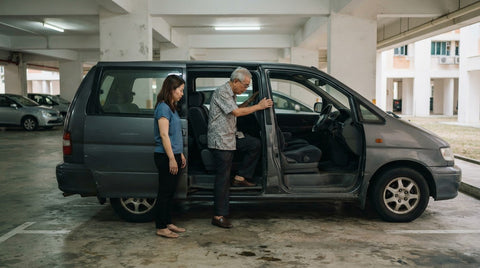
The biggest family car isn’t automatically the easiest for elderly parents to use. Choosing a car for a family with elderly parents in Singapore starts with access: check whether your parents can get in and out comfortably, then consider seating, legroom and boot space for everyone. The best fit is the car that works for your family’s everyday journeys, not simply the one with the most seats.
It’s natural to focus on passenger capacity, but seat height, door opening and boot space with the seats in use can matter just as much. This guide will help you assess passenger needs, compare access and seating, and test a family car for daily use. You’ll also learn what to notice in Singapore’s tight car parks and stop-start traffic, so you can make a practical, confident choice.
Key Takeaways
- Start with who travels regularly and how comfortably elderly passengers can enter, exit and sit.
- Compare door access, seat layout and usable boot space rather than choosing by vehicle size alone.
- For children under 1.35 m in private or private hire cars, follow the car-seat requirement stated by the Land Transport Authority.
- Test the car in everyday conditions, including parking, stop-start traffic and loading the boot.
- Use your family’s priorities to narrow the choice between a brand-new car, a pre-owned car or a rental.
1. Assessing household size and elderly passengers
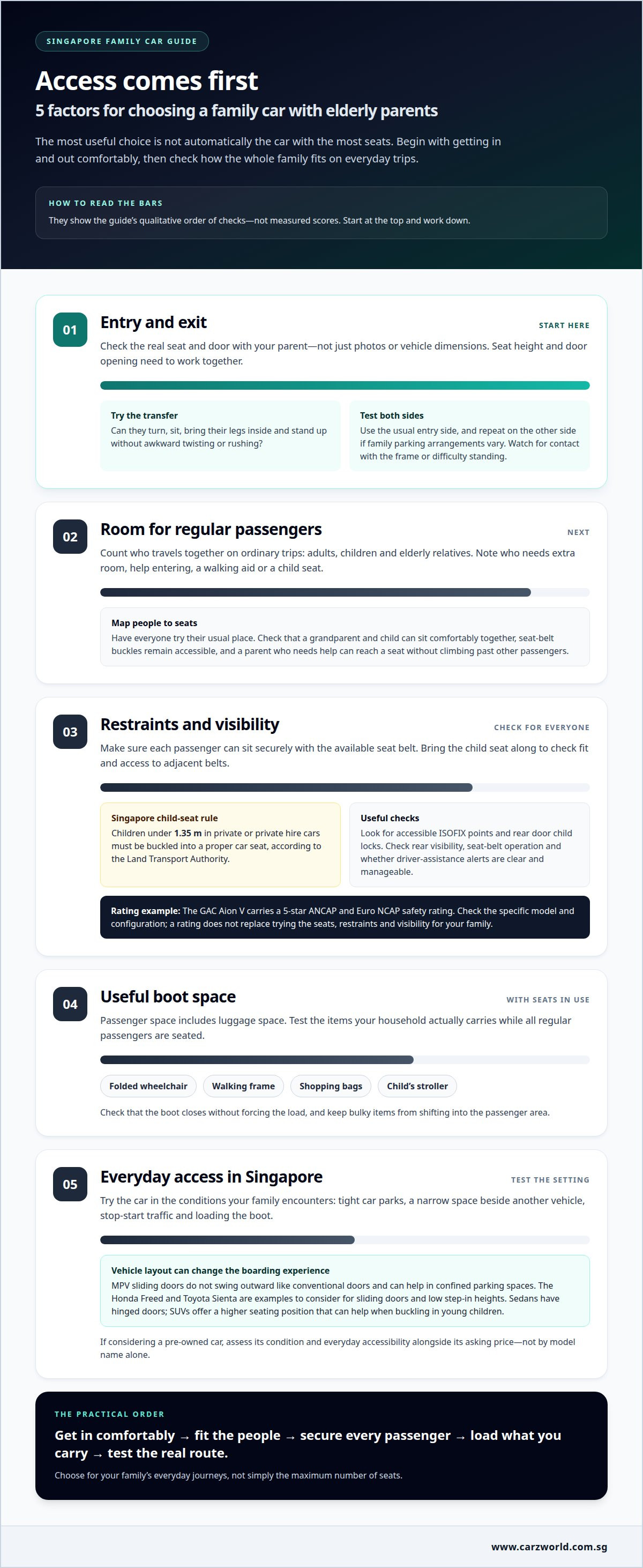
Start with the regular passenger list, not the maximum number in a brochure. Count the adults, children and elderly relatives who travel together on ordinary trips. A Singapore household with parents and one or two children may also take a grandparent to appointments or family visits. Note who travels most often, who needs extra room, and whether anyone brings a walking aid or child seat. This is a useful first step when choosing a car for a family with elderly parents in Singapore.
Next, consider how each person gets into the cabin. A seat that is too low can make standing up difficult, while a high step can also challenge passengers with limited mobility. Ask your parent to try the actual seat and door instead of judging from photographs. Check whether the door opens wide enough for them to turn, sit down and bring their legs inside without twisting awkwardly.
Seat height and door access need to work together. A wide opening is less useful if a passenger must climb onto a high seat, and an easy step-in height cannot make up for a narrow doorway. Have your parent get in and out from the usual side, then repeat from the other side if family parking arrangements vary. Watch for contact with the door frame, difficulty standing or pressure to rush.
What are Singapore rules for child seats, seat belts and transporting passengers with mobility limitations? According to the Land Transport Authority, children under 1.35 m tall riding in private or private hire cars must be buckled into a proper car seat. For other passengers, make sure each person can sit securely with the available seat belt; for mobility limitations, assess the transfer into the seat and space for any walking aid.
Now map the seats to real journeys. If a grandparent rides beside a child, check that both can sit comfortably without crowding each other or blocking access to a seat-belt buckle. If your parent needs help getting in, a seat near a wide door may be more practical than a rear seat reached past other passengers. Have everyone try their usual place before deciding.
Passenger space includes luggage space. A folded wheelchair, walking frame, shopping bags or child’s stroller can quickly take up boot room. Check whether everything fits with all regular passengers seated, not only after folding the rear seats. Keep bulky items from shifting into the passenger area, and make sure the boot closes without forcing the load.
Which affordable used cars in Singapore suit families with elderly passengers? The Honda Freed and Toyota Sienta are examples to consider for their sliding doors and low step-in heights. Affordability depends on the individual car, so compare its condition and everyday accessibility as well as its asking price, rather than choosing by model name alone. These practical checks can guide families choosing a car for elderly parents in Singapore.
2. Safety features and driver assistance
Safety starts with a suitable seat for every passenger. According to the Land Transport Authority, children under 1.35 m tall riding in private or private hire cars in Singapore must be buckled into a proper car seat. Bring the child seat along when assessing a car. Check that it fits the intended position and can be secured without obstructing another passenger’s seat belt.
For younger passengers, look for ISOFIX points, rear door child locks and clear rear visibility. ISOFIX uses clips to secure a compatible child seat. Check where the points are and whether you can fit the seat without blocking access to adjacent seats. Test the rear door locks, too, and confirm the driver can see the rear area clearly while driving.
Safety features should support the driver without adding distraction. During a test drive, notice whether alerts are clear, timely and easy to understand. A succession of unfamiliar warnings can compete for attention, especially in Singapore traffic. Try common driver-assistance functions in a quiet setting first, then assess whether their alerts remain manageable during everyday driving.
Compare safety ratings as one part of a wider assessment. The GAC Aion V carries a 5-star ANCAP and Euro NCAP safety rating. A rating can help narrow a shortlist, but it doesn’t replace checking how the seats, restraints and visibility work for your family. Review the rating for the specific model and configuration you’re considering, rather than assuming every version has identical equipment.
For a pre-owned car, consider its track record, maintenance costs and safety features together. A strong rating alone doesn’t show how well a specific vehicle has been cared for. Check that seat belts retract and fasten correctly, child-seat anchor points are accessible, and warning lights aren’t on. Also consider the warranty package and whether its coverage fits your ownership plans.
Driver assistance is most useful when it suits the person behind the wheel. Ask the driver to adjust the mirrors and seat, then check blind spots and rear visibility. Try parking assistance in a suitable space and note whether its alerts are easy to understand. A feature that feels confusing or distracting during practice may add little value to everyday family journeys.
Use these checks to compare safety equipment with the people who will use it. A family can continue comparing car options after identifying the restraint, visibility and assistance features that matter most.
3. MPVs and sliding doors
For families in Singapore, an MPV can make passenger access easier in tight parking spaces. Many MPVs have automatic sliding doors that don’t swing outward like conventional doors. This can help when a parent needs more room to turn and sit, especially beside another parked vehicle. Check the door opening from the pavement side and in a narrow car park space.
How do MPVs, SUVs and sedans compare for elderly passenger access and comfort in Singapore? MPVs with sliding doors can simplify boarding in confined spaces, while sedans have hinged doors and may suit families who prefer a lower vehicle. SUVs offer a higher seating position that can help when buckling in young children, but your parent’s comfort depends on the specific seat height and entry movement.
The Honda Freed and Toyota Sienta are examples of models with sliding doors and low step-in heights. These features can help older passengers who find a high step or narrow doorway difficult. Still, a model name alone can’t show whether its cabin suits your family. Have your parent practise getting in, sitting down and getting out, using the door they would use most often.
Try the sliding door in a realistic setting. Open it fully, then check whether your parent can approach the seat without stepping around another passenger. Make sure the opening gives them enough room to get in without twisting or reaching across. If a child uses the opposite rear seat, confirm that both passengers can get in and settle without blocking each other.
Think about the weekly routine, too. A school drop-off may involve children getting in from the kerb while a grandparent waits nearby. Sliding doors can reduce the space needed beside the car, but the driver still needs a safe place to stop and enough room for passengers to board. Practise the usual sequence, including securing a child and helping your parent into their seat.
Compare an MPV with an SUV or sedan by repeating the same entry test in each. Notice how far your parent must step up, bend or lower themselves, and whether they can stand steadily after sitting. Then assess the cabin from the passenger’s point of view. A convenient door is valuable only if the seat is comfortable to reach and use.
Finally, consider how often sliding-door access will matter. It may help on frequent family trips, school journeys or visits with an older passenger. If those trips are occasional, a sedan or SUV may still suit the household better. Choose based on repeated real-life movements, not body style alone, and include every regular passenger in the comparison.
4. Legroom and seating configurations
A larger body doesn’t guarantee a more usable cabin. Judge the space from the seats your family will occupy most often. For example, place an adult behind the driver, then adjust the driver’s seat to its usual position. Check whether the rear passenger has room for their knees and feet without sitting sideways or pressing against the seat ahead.
Repeat that check with the actual combination of passengers. A child seat behind the front passenger can limit that seat’s adjustment, while an adult beside it may need room to settle comfortably. Try each regular seating arrangement, including a grandparent travelling beside children. Notice whether passengers can sit naturally and reach their seat belts without squeezing between seats.
A third row is useful only if it suits the people who will use it. Consider who would sit there, how they would reach it, and whether that position works for the whole journey. If a grandparent needs a front or middle-row seat, a seven-seat layout may offer less flexibility than a roomier five-seat arrangement. Choose for the people travelling, not the seat count alone.
Check how adjustable the cabin is. Slide or fold the seats through their available positions, then see whether each change makes a regular trip easier. A split-folding rear bench, for example, may let you carry a bulky item on one side while passengers use the remaining seats. Confirm the arrangement still leaves a comfortable place for the family member who needs the most space.
Boot capacity needs the same practical test. Look at the space available with all regular seats upright, because a larger figure may apply only when rear seats are folded. Pack a representative load, such as groceries alongside a stroller or walking frame. A family car should have at least 300 litres of boot space, but usable shape and access also affect what fits.
Assess comfort through ordinary movements, not a quick glance. Sit in each row and check knee room, foot space and head clearance. Move the front seats to their usual driving positions, then ask rear passengers to settle in again. If someone has to keep their legs angled around a seat base, that arrangement may become tiring on a longer journey.
Make a simple seating plan before comparing cars: assign a seat to each regular passenger, then add child seats and everyday cargo. Test the complete arrangement in each shortlisted vehicle. This shows whether flexible seating genuinely helps, or whether folding seats removes the room needed for passengers and groceries. The most practical layout accommodates your family’s routine without constant rearranging.
5. Testing cars for everyday family use
A short drive around the block won’t show how a car fits your family’s routine. When choosing a car for a family with elderly parents in Singapore, test it with the passengers and items you carry regularly. Include tight car parks, residential roads and stop-start traffic in your assessment. The clearest answer comes from trying everyday tasks, not judging a car while it’s stationary.
Start with a family boarding routine. Have your parent get in, settle into their usual seat and get out at a realistic pace. Repeat with another passenger already seated nearby. Notice whether the door can open fully in a parking space and whether anyone needs to twist or reach awkwardly. These movements can reveal problems that a quick inspection may miss.
On the road, pay attention to ride comfort and cabin noise. A smooth suspension can matter on uneven surfaces, while traffic noise is easier to judge during peak-hour driving. Ask each passenger where the ride feels uncomfortable or noisy. If the route allows, include a residential area and a busier road to compare how the car feels in both settings.
Practise parking and turning in a familiar type of space. Check how clearly the driver can see around the car and whether its turning radius suits tight car parks. For a pre-owned car, try the same checks on uneven surfaces and in stop-start traffic. A car that feels manageable on an open road may be less convenient near home or during weekend errands.
Test the boot with your usual load, such as groceries, a stroller or a walking frame. Check whether a flat boot floor makes loading easier and whether folding the seats is straightforward. Then open and close the boot with the rear seats occupied. Rear air-conditioning vents are also worth assessing on a family journey, especially for passengers sitting behind the driver.
What is the price of suitable new family cars in Singapore, including COE and registration costs? The total depends on the vehicle you choose and the applicable COE and registration charges. Compare the complete quoted purchase amount for each model, rather than treating the vehicle price alone as the total.
What are the ongoing costs of owning a family car in Singapore, including road tax, insurance and parking? Include these recurring expenses in your ownership budget, along with fuel and maintenance costs. The total depends on the vehicle, insurance arrangements, usage and parking needs, so compare these categories with your household’s routine.
Write down what each test reveals: passenger comfort, visibility, parking ease and boot practicality. Use those notes to compare your shortlist, rather than relying on memory after several test drives. This practical approach to choosing a car for a family with elderly parents in Singapore makes it easier to weigh the trade-offs. Explore family car options and use your everyday test checklist to guide the decision.
Carz World Pte Ltd
Carz World Pte Ltd offers new and pre-owned vehicles to consider once you’ve identified your family’s passenger, access and space needs. Compare each option against the seating and everyday-use checks above. Car rental is also available for families who want to assess their needs before making a longer-term choice.
Bring your priorities into the conversation: who travels regularly, which seat your parent needs, and what you carry on typical journeys. This keeps the discussion focused on what practically suits your household, rather than vehicle size alone.
Contact Carz World Pte Ltd to discuss your family’s car requirements.
Make the next step a family decision
Before making a choice, agree on what a successful family journey feels like. Ask your elderly parent which parts of getting around matter most, then include those priorities in your final comparison. When choosing a car for a family with elderly parents in Singapore, the right choice is one your household can use comfortably in its regular routine, not just on an occasional outing.
Keep your test notes and shortlist together, and discuss any trade-offs openly. A different seating layout or vehicle type may better suit your family’s most common journeys. Giving everyone a voice can make the decision clearer and more practical.
When you’re ready to explore suitable options, contact Carz World Pte Ltd to discuss your family’s needs. Take the next step with your priorities in mind, and choose with confidence.
Frequently Asked Questions
So, What Is the Best Family Car?
There isn’t one best family car for every Singapore household. The right choice fits the people and journeys you actually have. Shortlist vehicles based on regular passengers, child-seat positions, any help needed during boarding, and the items carried on routine trips. Then compare them with your family aboard, including on a typical clinic visit or grocery stop. Practical comfort and manageable loading matter more than the body-style label.
What car features help elderly passengers get in and out safely and comfortably?
Look for an easy transfer that lets a passenger turn, sit, place both feet and fasten the seat belt without rushing. Check whether the buckle remains reachable after installing a child seat, and whether your parent can steady themselves while getting in. During a trial, repeat the movement from the kerbside and car-park side. A suitable seat should let them sit upright without bracing against the door.
Which cars in Singapore have wide door openings, low step-in height and supportive seats?
The Honda Freed and Toyota Sienta are examples in Singapore with sliding doors and low step-in heights. These details may help with access, but they don’t establish whether a particular car’s seat feels supportive or its opening suits your parent. Try the specific vehicle together. Have your parent sit for a few minutes, adjust their position and stand again, noting any discomfort or difficulty.
What are the best family cars in Singapore for carrying elderly parents and mobility aids?
The best fit is the vehicle that accommodates your passengers and mobility aid at the same time. Bring the actual folded walker or wheelchair when comparing cars, and check whether it can be loaded without removing a seat your family needs. Consider how easily the person using the aid can board while another passenger handles loading. A spacious cabin alone doesn’t prove that the complete arrangement will work.
What safety features should a car have for elderly passengers, such as side airbags and driver assistance?
Prioritise the safety equipment fitted to the specific vehicle, including side airbags where equipped, seat belts and driver-assistance functions. Don’t assume equipment is identical across every model version. Review the vehicle’s information, then sit in the usual driving position and assess whether alerts are clear and manageable. A system that confuses or distracts the driver may be difficult to use confidently in Singapore traffic.
How can families assess wheelchair, walker or walking-stick storage when choosing a car?
Bring the mobility aid and test the full loading routine, from lifting it into the vehicle to taking it out at the destination. Check that it fits without forcing, obstructing passengers or blocking access to everyday items. For a wheelchair or walker, try loading it with all regular passengers seated. Also consider who will handle it and whether they can retrieve it without rearranging the entire load.
Where can Singapore families test-drive or inspect cars for elderly passenger accessibility?
Singapore families can arrange a test drive or inspect cars through Carz World Pte. Bring the elderly passenger who will use the vehicle, along with any child seat or mobility aid needed for regular journeys. Use the visit to assess the actual car and its seating arrangement, rather than relying only on model descriptions. Carz World Pte provides a practical place to begin comparing suitable options.
Disclaimer
This content is provided for general informational purposes only. Readers are encouraged to independently verify important information.
In Same Category
Related by Tags
- Compare car choices for a couple living in central Singapore
- Choosing a Family Car for Elderly Parents in Singapore
- Practical cars for financial advisors sg: Check what you can afford
- Car types and models for weekend drives, plus family outing ideas
- Used SUV for Sale in Clementi: Compare Prices and Mileage
- Practical cars for toddlers, car seats, strollers and luggage
- What to check before buying a used MPV in Bukit Panjang
- Find reliable low maintenance second hand cars in Singapore by mileage
- Best Cars for Home-Based Businesses in Singapore: 2026 Guide
- Best Second Hand Cars for Malaysia: Singapore Buyer's Guide
- Financial Planning for Your First Car in Singapore
- Understanding the MAS Car Loan Restrictions in Singapore (2026)
- Pros and Cons of Buying a High PARF Car in Singapore