Scrapping Your Car Before 10 Years in Singapore: What Happens?

Scrapping your car before its 10-year mark does not necessarily mean giving up every rebate. If you're asking, “what happens if I scrap my car before 10 years sg,” the answer depends on your car’s age, COE balance and PARF eligibility. If you deregister early, you may receive a rebate for the unused COE, plus a PARF rebate if your car meets the eligibility rules. The PARF amount falls as the car gets older, so the deregistration date can affect what you receive.
Before deciding, compare scrapping with selling your car while it is still registered. Exporting or renewing the COE may also be options, but renewal means giving up the PARF rebate. The right route depends on your car’s condition, the verified figures and what you plan to do next.
This guide explains how PARF and COE rebates work, how scrapping compares with selling, exporting and COE renewal, and which checks to make before deregistration. It also covers why outstanding loans, road tax and fines matter before you proceed.
Key Takeaways
- For “what happens if I scrap my car before 10 years sg,” the answer depends on your vehicle’s details and current LTA rebate rules.
- Check how possible PARF and unused COE rebates may affect the amount you receive if you deregister early.
- Compare scrapping with selling your car while it is still registered, exporting it or renewing its COE before choosing a route.
- Use OneMotoring guidance to prepare for deregistration and complete the required disposal steps.
- Weigh your car’s condition, eligibility and ownership plans, and compare a sale with deregistration before committing to scrap.
What happens when you scrap a car before 10 years in Singapore?
If you scrap your car before it reaches 10 years, you must first deregister it with the Land Transport Authority (LTA), then complete an approved disposal route. Deregistration cancels the vehicle’s registration, so it can no longer be used or kept in Singapore as a registered vehicle. Any PARF or COE rebate depends on your car’s details and the LTA rules that apply at the time.
Deregistration and disposal are separate steps. Scrapping is one disposal route; exporting or temporary storage at an Export Processing Zone (EPZ) are others. Selling a car while it is still registered is different: ownership transfers, but the car is not deregistered as part of the sale. Compare a potential sale with the rebates and disposal options before you decide.
What does deregistering a car mean in Singapore?
Deregistration ends the car’s registration with the LTA. After that, it cannot continue to be driven or kept in Singapore as a registered vehicle, and you must arrange proper disposal. Decide whether you intend to scrap, export or temporarily store the car before applying. For background on the 10-year vehicle entitlement, see the Certificate of Entitlement (COE).
Does scrapping before 10 years guarantee a PARF rebate?
No. Being under 10 years old is important, but it does not automatically qualify every car. Eligibility also depends on factors such as how the vehicle was registered and whether it was laid up. LTA rules include conditions for cars registered as new in Singapore and certain used imported cars. Check your vehicle-specific estimate and the current eligibility criteria through OneMotoring before deciding.
So, what happens if I scrap my car before 10 years sg? You may qualify for a PARF rebate and a separate rebate for the unused portion of your COE, but check your vehicle’s record rather than assuming either applies. The relevant age is the car’s age on the deregistration date, so timing can affect the outcome. Confirm the applicable LTA figures, then compare them with the value you could receive by selling the car while it remains registered.
How PARF and COE rebates work when you deregister early
If you deregister a car before it reaches 10 years, two separate rebates may be relevant: PARF and COE. PARF is a possible rebate of the Additional Registration Fee (ARF) paid when the car was first registered. The COE rebate relates to the unused portion of the car’s Certificate of Entitlement. Eligibility and amounts are assessed separately, so qualifying for one does not automatically mean you qualify for the other.
No single rebate amount applies to every car. Your vehicle’s registration details, age on deregistration and remaining COE determine what may be payable under the rules in force.
What affects a car’s PARF rebate before 10 years?
The car must meet LTA’s PARF eligibility conditions, and its age at deregistration affects the calculation. Registration history matters too: eligibility can differ depending on whether the vehicle was registered as new in Singapore or is an eligible imported used car. Other conditions may apply, including whether the vehicle was laid up.
Rates and conditions can depend on the vehicle’s registration date and the rules applicable when it is deregistered. Check current LTA information and use the official tools to review your car’s details instead of relying on a general estimate. The official process to deregister your vehicle explains the available routes and requirements.
Can you receive a COE rebate when scrapping early?
A COE rebate is calculated separately from PARF. If the car is deregistered before its COE expires, the unused period may qualify for a rebate, calculated using the COE premium paid and the time remaining, subject to LTA rules. Check the vehicle record and current LTA tools for the applicable figure. The remaining COE period alone is not enough to determine a specific payment.
| Rebate | What it relates to | Factors to check | Where to verify |
|---|---|---|---|
| PARF | A possible rebate of the ARF | Vehicle age at deregistration, registration history and eligibility conditions | Current LTA information and vehicle-specific tools |
| COE | The unused portion of the COE premium | Premium paid, remaining COE period and vehicle record | OneMotoring and current LTA guidance |
Before deciding, compare the verified rebate figures with the value of selling your car while it is still registered. Carz World offers direct purchase and consignment options. Explore its car-selling options as part of that comparison. A sale may suit some owners, while deregistration may suit others; the figures and your plans will guide the choice.
Scrap, sell, export, or renew COE: compare your Singapore options
Scrapping is not the only way to move on from a car approaching 10 years. The key distinction is whether you deregister it or keep it registered. Scrapping and exporting are disposal routes after deregistration, while selling a registered car transfers it to another owner. Renewing the COE is different again: it lets you continue using the car, subject to renewal requirements and costs.
When might scrapping or exporting make sense?
Scrapping may suit an owner who has decided to deregister and wants to dispose of the vehicle through the scrap route. Exporting may be worth comparing if the car’s make, model and condition appeal to overseas buyers. Exporting involves different disposal arrangements and documentation, so review LTA’s current instructions before choosing this route.
For either option, consider the car’s condition, when you need to stop using it and your plans after disposal. Compare any offer for the vehicle with the rebates you are eligible for, using current LTA information on PARF and COE rebates. Looking at the overall outcome, rather than one figure alone, makes the comparison more useful.
When should you compare selling or renewing COE?
If your car is still in usable condition, compare deregistration with selling it while it remains registered. A sale transfers ownership; it does not deregister the car. Carz World offers direct purchase and consignment options. Explore how you could sell your car before committing to disposal.
Renewing COE is an option if you want to keep using the vehicle. It involves paying the prevailing quota premium and changes the rebate picture: renewing means forfeiting the PARF rebate. A five-year renewal can only be done once, while a 10-year renewal allows the vehicle to continue under a new COE period. Neither choice is automatically better. Weigh the renewal cost against your plans and the car’s condition.
So, what happens if I scrap my car before 10 years sg? Possible rebates are only one part of the decision. Compare them with a sale or export offer, or with the cost of keeping the car through COE renewal. Each route suits different ownership plans, so start with verified figures and a clear idea of what you want next.
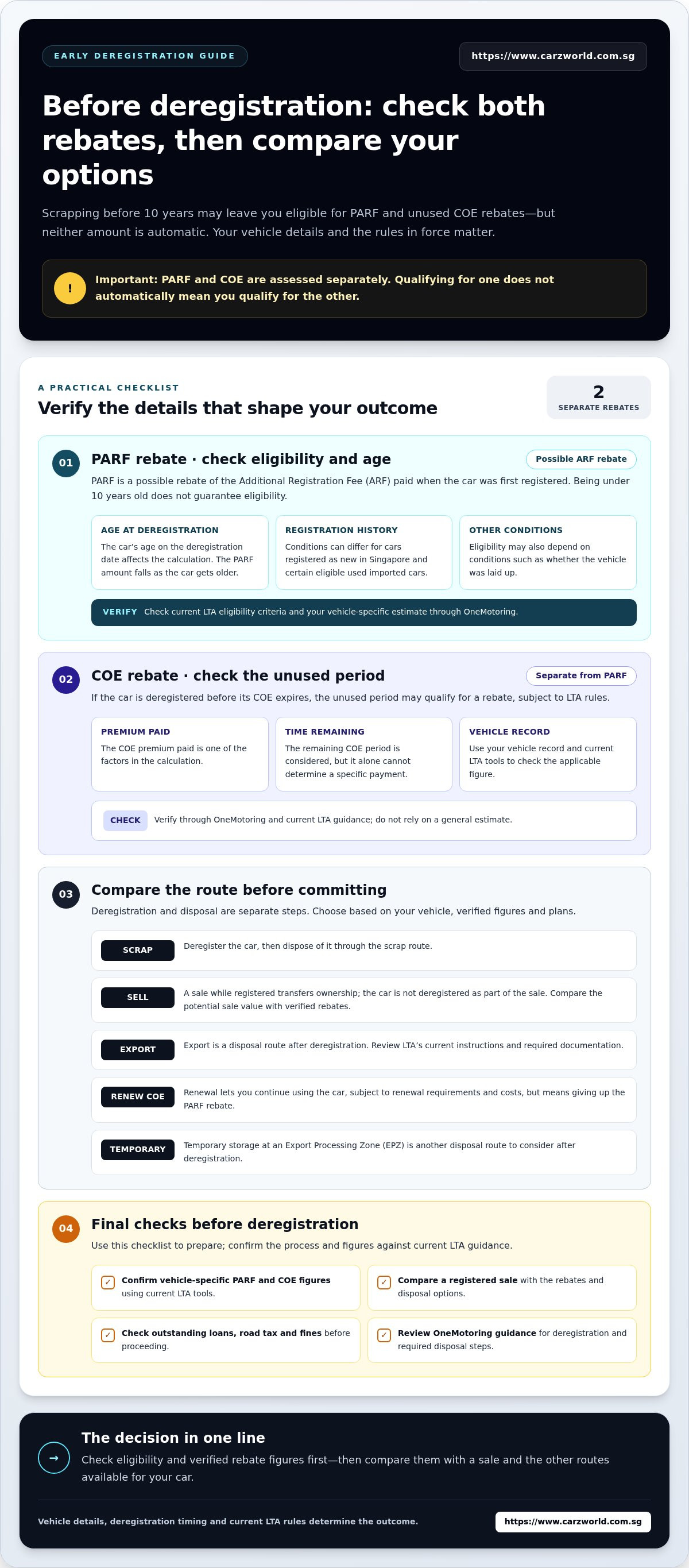
Steps to take before deregistering a car in Singapore
Prepare before committing to deregistration so you understand the possible rebates, alternatives and disposal requirements. Use this checklist, then confirm the latest instructions on OneMotoring before submitting an application.
- Check your vehicle’s rebate details. Use current LTA services to review possible PARF and COE rebates for your car. Eligibility and amounts depend on the vehicle record and applicable rules, so treat general estimates as a guide, not a confirmed entitlement.
- Compare your options. Decide whether to sell the car while it is still registered or proceed with deregistration. If you deregister, choose a disposal route: scrapping, exporting or temporary storage at an Export Processing Zone (EPZ) pending export. Check LTA’s current instructions for your chosen route. A motor dealer may assist where LTA guidance allows and it suits your circumstances.
- Clear outstanding matters and confirm how to apply. Check for outstanding road tax, fines and car loans, as these may need to be settled before deregistration. Owners can generally apply online through OneMotoring using Singpass 2FA. If you cannot access Singpass or have special ownership circumstances, follow LTA’s instructions for the correct application process.
- Deregister and complete disposal. After deregistration, the vehicle must not be kept or used in Singapore. Complete the selected disposal route and submit the required proof to LTA by the applicable deadline. LTA’s current guide states that disposal must be completed within one month of deregistration. Check the latest requirements and documents before relying on that timeline.
For official steps, disposal routes and document requirements, read LTA’s vehicle deregistration guidance and use OneMotoring for vehicle-specific rebate enquiries. Requirements can depend on your circumstances, so verify the current process before applying. This is especially useful if you are weighing what happens if I scrap my car before 10 years sg against selling or exporting it.
Compare the likely deregistration outcome with a sale while your car remains registered. Explore car-selling options with Carz World as part of your decision.
Make your next move after checking your car’s Singapore value
Put the figures and your plans side by side before deciding. The question “what happens if I scrap my car before 10 years sg” is only one part of the decision. Your car’s eligibility, condition and intended use all affect which option makes sense.
Use a simple decision checklist before choosing
- Confirm eligibility and timing. Check the car’s age on the intended deregistration date and review its vehicle-specific PARF and COE rebate information through LTA or OneMotoring.
- Assess its condition. Consider whether the car is still suitable for local use or whether its condition and model make export worth comparing. Treat a general estimate as a guide, not a confirmed offer.
- Match the option to your plans. Compare scrapping or exporting after deregistration with selling the car while registered. If you want to keep driving it, weigh COE renewal and its costs against your ownership plans.
- Verify every figure. Base your comparison on current LTA information and vehicle-specific details. Include applicable disposal requirements and any costs you have confirmed, rather than relying on assumptions.
This comparison helps you look beyond one rebate amount. If you no longer need a car in good condition, compare its sale value with the deregistration outcome. If you have already decided to stop using it, deregistration may fit your plans better. Neither route is right for every owner.
Explore selling before deregistering
Carz World offers car owners direct purchase and consignment options. These provide a way to explore selling before committing to deregistration. Compare the sale route with your circumstances and verified figures rather than assuming it will suit every vehicle or owner.
If you are considering a sale, explore selling your car. Compare that route with your LTA rebate information and disposal plans before making a decision.
Make a confident choice for your car’s next chapter
If you’re asking “what happens if I scrap my car before 10 years sg,” the answer depends on your vehicle’s eligibility, age at deregistration and remaining COE. Check current LTA information for your car before estimating any PARF or COE rebates. Then compare deregistration with selling the car while registered, exporting it or renewing the COE.
Scrapping and exporting are disposal routes after deregistration. Selling is separate and may suit owners whose car still has value to another buyer. COE renewal may let you keep using the car, but it changes the rebate picture. Let the car’s condition and your plans for your next vehicle guide the decision, not assumptions about which route pays more.
Carz World offers direct car purchase and consignment options, and sells pre-owned cars in Singapore. Explore the available options and decide what fits your circumstances. Explore your car-selling options with Carz World. With verified figures and a clear comparison, you can take your next step with confidence.
Frequently Asked Questions
Do I get a PARF rebate if I scrap my car before 10 years in Singapore?
You may qualify, but being under 10 years old does not guarantee a PARF rebate. Eligibility depends on details such as the car’s age on its deregistration date, its registration history and other LTA conditions. For “what happens if I scrap my car before 10 years sg,” check your vehicle’s record and current LTA rules before estimating any rebate.
What happens to my PARF rebate if my car reaches 10 years?
PARF eligibility generally ends once a car reaches 10 years, so a car deregistered at that point will not qualify for a PARF rebate under the current eligibility rules. The exact deregistration date matters. If your car is approaching the 10-year mark, check its vehicle-specific information through LTA or OneMotoring instead of relying on an estimate based on its age today.
Can I still get a COE rebate if I scrap my car early?
You may receive a COE rebate if you deregister before the COE expires and there is unused COE remaining. This is separate from PARF eligibility and is based on the unused period and the COE premium paid, subject to LTA rules. Check the vehicle-specific figure through OneMotoring. Qualifying for a COE rebate does not mean you will also qualify for PARF.
How do I check my car’s PARF and COE rebate in Singapore?
Use OneMotoring or current LTA services to check vehicle-specific rebate information and eligibility. Have your vehicle details ready, then confirm the relevant figures for your intended deregistration date. PARF depends on eligibility and vehicle age, while the COE rebate relates to unused COE. Treat general estimates as guidance and rely on current official information before deciding.
Is scrapping my car the same as deregistering it in Singapore?
No. Deregistration cancels the car’s registration with LTA. Scrapping is one disposal route after deregistration, alongside exporting or temporary storage at an Export Processing Zone pending export. The steps are related but distinct: cancelling registration does not complete the disposal requirements. Check LTA’s current instructions for your chosen route and any proof or document-submission requirements.
Can I sell my car instead of scrapping it before 10 years?
Yes. Selling a car while it is registered is different from deregistering it for scrapping, and may be worth comparing if the vehicle is still suitable for another owner. Carz World offers direct car purchase and consignment options. Compare a potential sale with your vehicle-specific rebate information and plans before deciding. Neither selling nor deregistration is automatically the better choice for every owner.
What happens if I keep or drive a deregistered car in Singapore?
A deregistered car cannot continue to be used or kept in Singapore as a registered vehicle. You must complete an approved disposal route, such as scrapping, exporting or temporary storage at an LTA-appointed Export Processing Zone, and submit the required proof within the current LTA deadline. Failure to meet disposal requirements can be an offence. Check OneMotoring for the current rules and steps that apply to your vehicle.
Disclaimer
This content is provided for general informational purposes only. Readers are encouraged to independently verify important information.
In Same Category
- Scrapping Your Car Before 10 Years in Singapore: What Happens?
- Calculating the Breakeven Point for COE Renewal in Singapore
- Financial Checklist Before Committing to a Car Purchase in Singapore (2026)
- COE Renewal Conditions and Eligibility in Singapore: 2026 Guide
- Balloon Scheme Car Loan in Singapore: Pros and Cons for 2026
Related by Tags
- Scrapping Your Car Before 10 Years in Singapore: What Happens?
- Calculating the Breakeven Point for COE Renewal in Singapore
- COE Renewal Conditions and Eligibility in Singapore: 2026 Guide
- Calculating the Real 5-Year Cost of Car Ownership in Singapore (2026 Guide)
- Buying a Used Car in Singapore: 2026 Ultimate Guide