Choosing a Car for Elderly Parents That Is Easier to Enter
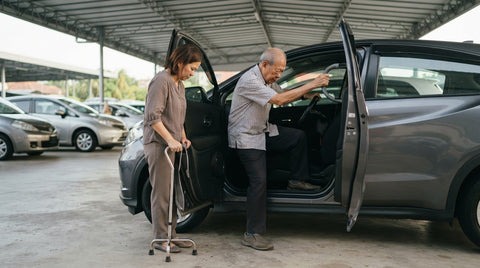
The easiest car for an older parent to enter isn’t automatically the tallest one. Choosing a car that is easy for elderly parents to get into means finding a comfortable seat height, a wide door opening, supportive seating, and enough room to move in and out without strain. A car can look spacious yet feel awkward when your parent tries it.
It makes sense to focus on entry and exit, but comfort, visibility, and everyday practicality matter too. Have your parent try getting in and out several times, then sit in the driver’s seat and use the controls to see whether the car feels natural and comfortable.
This guide explains what to look for in seat position, doors, visibility, and cargo space, including room for groceries or mobility aids. It also covers how to test a car against your parent’s needs, so you can make a considered choice rather than relying on appearance alone.
Key Takeaways
- Set the seat to your parent’s preferred position before assessing visibility, comfort and how easily they can reach the controls.
- Try entering and exiting several times; a single attempt may not reveal awkward door angles or difficult seat positioning.
- Consider how the boot handles everyday items. A low cargo floor and power liftgate can make loading and unloading easier.
- During a test drive, include familiar tasks such as parking and using the mirrors, climate settings and audio controls.
- Choose driver-assistance features as useful support, while keeping clear visibility and comfortable vehicle access at the centre of the decision.
1. Comfort and safety when choosing a car
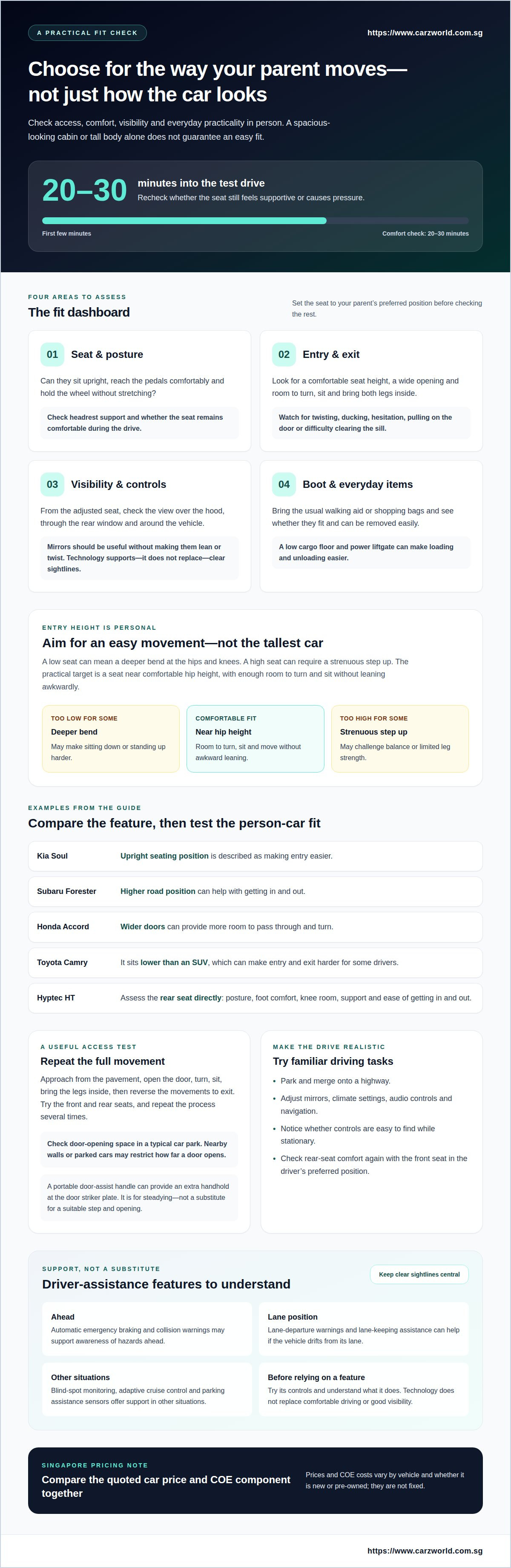
Start with the driver’s seat, not the car’s appearance. Adjust the seat and steering wheel so your parent can sit upright, reach the pedals comfortably, and hold the steering wheel without stretching. Then check whether the headrest supports the back of their head. These adjustments affect comfort and control during everyday driving.
Set the seat before judging visibility. From that position, check the view over the hood, through the rear window, and around the vehicle. The mirrors should provide a useful view without forcing your parent to lean or twist. Cameras and driver-assistance technology can support awareness, but they should supplement, not replace, good visibility.
Use an extended test drive to assess comfort beyond the first few minutes. After 20 to 30 minutes, notice whether the seat still feels supportive or causes pressure. Include ordinary driving tasks, such as parking, merging onto a highway, and adjusting the mirrors, climate settings, audio controls, and navigation. If a control takes effort to find while stationary, it may distract the driver on the road.
For the Hyptec HT, assess rear-seat comfort directly rather than assuming a spacious-looking cabin will suit every passenger. Have your parent sit in the rear and settle into their usual posture. Check whether their feet rest comfortably, their knees have room, and the seat feels supportive. Have them enter and leave the rear seat, then repeat the process after adjusting the front seat to the driver’s preferred position.
Safety features can help with specific driving tasks. Automatic emergency braking and collision warnings may support awareness of hazards ahead. Lane-departure warnings and lane-keeping assistance can help if the vehicle drifts from its lane. Blind-spot monitoring, adaptive cruise control, and parking assistance sensors offer support in other situations. Try the controls and understand what each feature does. Don’t treat technology as a substitute for comfortable driving or clear sightlines.
Prices and COE costs for senior-friendly cars in Singapore aren’t fixed. They vary by vehicle and whether it’s new or pre-owned, so compare the quoted vehicle price and COE component together.
2. Car design elements that affect ease of entry and exit
Seat height and door shape affect how easily someone can move between standing and sitting. The Kia Soul’s upright seating position is described as making entry easier, while the Subaru Forester’s higher road position can help with getting in and out. The Honda Accord’s wider doors provide more room to pass through. These examples are useful comparisons, but the best fit depends on your parent’s movement and comfort.
A low car may require a deeper bend at the hips and knees. The Toyota Camry sits lower than an SUV, which can make entry and exit harder for some drivers. A high vehicle can also be difficult if your parent needs to lift their feet substantially. The practical aim is a seat near comfortable hip height, with enough room to turn and sit without leaning awkwardly.
A car that’s too low may make standing up difficult; one that’s too high may require a strenuous step up. Either movement can challenge balance, especially if the passenger has limited leg strength or needs steady support. Watch for hesitation, pulling on the door, or difficulty clearing the sill. These are signs that the opening or seat position may not suit them.
Accessories can assist with entry. A portable car door assist handle fits into the door striker plate and creates an extra handhold beyond the built-in grab handle. It can help a passenger steady themselves while sitting down or rising. Use it only as a handhold, not as a reason to overlook a difficult step or narrow door opening.
Door design matters as much as seat height. Check how far each door opens and whether a nearby wall or another parked car could restrict it in a typical Singapore car park. A wide opening, such as the Honda Accord’s, may give more room to turn and bring both legs inside. Check the height and shape of the door sill, too.
Make the entry test practical. Have your parent approach from the pavement, open the door, turn, sit, bring their legs inside, and reverse the movements to exit. Repeat this for the front and rear seats. Notice whether they need to twist, duck, or use an unstable surface for support. A model that feels easy once may feel less manageable after several entries.
For a closer look at vehicle options, explore available cars with these entry and exit details in mind. Keep the decision centred on your parent’s actual movements, not just the vehicle’s body style or advertised height.
3. Cargo space for mobility aids and groceries
The boot should fit the items your parent actually carries, not just look spacious. Bring their folded walking frame, cane, or usual shopping bags when viewing a vehicle. Place each item inside, then remove it without shifting other belongings. This simple test shows whether the opening, floor height, and boot shape work for everyday trips around Singapore.
A low cargo floor can reduce the effort needed to lift groceries or a mobility aid. A power liftgate can also make opening and closing the boot easier, especially when hands are occupied. Check how it operates and whether your parent can reach its controls. The practical question is whether they can load a shopping bag without stretching, twisting, or lifting it high.
Test the boot with the rear seats in their usual position. A folded walker may fit in an empty cargo area but become difficult to load beside groceries or passengers’ belongings. Arrange the bags as they would sit after a supermarket visit. Keep heavier items close to the boot floor, where they’re easier to lift and less likely to shift during a journey.
Try loading a mobility aid in the order your parent would use it. Open the tailgate, lift the aid into the boot, and check whether it needs to be turned or folded further. Then take it out and set it up. If this requires repeated lifting or awkward bending, the cargo opening may not suit their routine, even if the boot has ample space.
For groceries, consider how bags can be placed without crushing fragile items or blocking access to a walker. A low floor helps with lifting, while a broad, usable opening makes arranging bags simpler. Check whether the boot has a lip that requires lifting a bag over it. The vehicle’s ground clearance doesn’t tell you the height of its cargo floor, so assess the boot itself.
Make the test reflect regular outings. Pack a mobility aid and a typical grocery load, then check whether passengers still have room to sit comfortably. If your parent uses a wheelchair, assess its folded dimensions and loading method in person. A vehicle that accommodates one aid easily may not suit a different model or additional bags.
Repeat the loading test after your parent has entered the vehicle. This shows whether the open tailgate, parked position, and available space let them manage the aid without rushing. In a Singapore car park, also consider whether another parked vehicle could restrict access to the boot. Ease of loading depends on the vehicle and the space around it.
4. Choosing a car for older drivers
A practical approach to choosing a car that is easy for elderly parents to get into starts with the older driver’s usual routine. Have them enter, settle into the seat, adjust their position, and get out several times. Repeating the movement can reveal awkward steps that one attempt misses. Look for a comfortable hip-height seat, supportive cushioning, wide door openings, and enough headroom to sit upright.
Compare the Toyota Camry and Lexus RX by trying both, rather than assuming one shape suits everyone. The Camry sits lower than an SUV, which may make entry and exit harder for some drivers. The Lexus RX is described as easy to get in and out of. Your parent’s height, flexibility, and preferred seating position still matter in practice.
Once seated, adjust the driver’s position before assessing visibility. Check the view around the vehicle, through the rear windows, and from the mirrors. Technology should supplement, not replace, a clear view. Features such as automatic emergency braking, collision warnings, lane-departure warnings, lane-keeping assistance, blind-spot monitoring, adaptive cruise control, and parking assistance sensors may support specific driving tasks.
Test the controls while parked, then use them during a drive. Have the driver adjust the mirrors, climate settings, audio controls, and navigation. Notice whether the buttons and screens are easy to understand without a lengthy search. A feature that’s difficult to operate can distract from driving, even if it looks useful on a specification list.
Make the test drive reflect familiar situations. Include parking, highway merging, and using the vehicle’s controls. During parking, observe whether the driver can judge the vehicle’s position and use the mirrors comfortably. On a highway merge, note whether their seating position and sightlines help them monitor surrounding traffic.
Passengers matter, too. Have your parent sit in the seat they’ll use most and check whether they can turn and settle comfortably. Then repeat the entry and exit. A parent who drives regularly may prioritise steering position and visibility, while someone who usually travels as a passenger may value easier rear-seat access.
When choosing a car that is easy for elderly parents to get into, weigh your parent’s own experience more heavily than a long feature list. Ask which part of the drive or entry felt awkward, then compare that response with the vehicle’s seating and controls. The Toyota Camry may feel too low for one person, while another may prefer its position. Choose based on the routine you tested.
5. What mobility or balance issues should I consider when choosing a car for elderly parents?
Start by observing how your parent moves during an ordinary entry and exit. Notice whether they can step over the sill, turn their body, lower themselves onto the seat, and bring both legs inside without rushing. A stiff knee, limited hip movement, or difficulty standing can make one part of this sequence harder than another. Identify which movement causes strain.
Balance matters during the transfer from standing to sitting. Watch whether your parent reaches for the door, roof, or another unstable surface for support. A built-in grab handle may offer a more secure hold, while a portable door assist handle can provide another handhold. Check that its placement allows a natural grip and doesn’t require a deep bend or awkward twist.
Leg strength and flexibility affect the step into a vehicle. A high sill can be difficult to clear, while a low seat can require more effort to stand from. Observe each movement rather than judging the car by its exterior height. If your parent needs to swing their legs inside one at a time, check whether the door opening leaves enough room to do so comfortably.
Hand strength and dexterity also shape the experience. During a test, have your parent operate the door handle, seat belt buckle, and any adjustment controls they’ll use regularly. Notice whether they can reach and operate each one while seated. A stiff latch or buckle that’s hard to grasp may cause frustration before the journey even begins.
If your parent uses a cane or walker, include the aid in the entry routine. Place it where they can reach it after sitting, then test how they retrieve it when exiting. Check whether the car door opens wide enough for them to turn with the aid. A mobility device that fits in the boot still needs a practical loading and unloading routine.
Consider fatigue over a whole outing, not just a single transfer. Have your parent enter and exit at the start of a test, then repeat the movement after a drive and a short stop. Look for changes in pace, balance, or reliance on handholds. A car that seems manageable once may feel demanding after shopping or several stops.
Choose based on the specific movements your parent can manage comfortably. A suitable vehicle should support their routine, from opening the door to settling into the seat and getting out again. Include the parent in each trial, and give them time to complete every step at their own pace.
Carz World Pte Ltd
Carz World Pte Ltd can help you consider vehicle options with your parent’s access, comfort, and everyday needs in mind. Its range includes brand-new and pre-owned cars, as well as car rental for those considering a rental vehicle. Bring practical points from your assessment into the conversation, such as preferred seat height, door opening, space for mobility aids, and who will usually drive. This gives you a clear basis for discussing which type of vehicle may suit your family. The decision still comes down to how your parent manages getting in, settling into the seat, and getting out. Contact Carz World Pte Ltd to discuss vehicle options.
Make the next step a shared decision
Choosing a car that is easy for elderly parents to get into should leave your parent feeling involved, not simply accommodated. Before settling on a vehicle, talk about how they want to use it and what makes a journey feel manageable. Their comfort with the final choice matters as much as its practical fit.
Keep the decision grounded in their routines today, while considering whether those routines may change. A car that works for regular family trips may need to serve different outings later. Give your parent room to express preferences, revisit the options together, and choose without rushing. That conversation can turn a major purchase into a decision the whole family understands.
Carz World Pte Ltd can help you explore vehicle options for your family’s needs. Contact Carz World Pte Ltd to discuss a suitable next step, and move forward with confidence.
Frequently Asked Questions
What car seat height is easiest for elderly passengers to get into and out of?
Choose a seat that lets your parent sit down and stand up without a deep squat or a high step. Their feet should reach the floor once seated, and they should be able to turn without pressing against the door frame. Seat height varies by person, so compare it with your parent’s leg length and usual movement. Test in their regular footwear rather than judging the cabin from outside.
Which cars in Singapore have wide door openings and low step-in height?
Consider trying the Honda Accord for its wide doors, the Kia Soul for its upright seating, and the Subaru Forester for its higher road position. These models illustrate different access advantages, not a universal ranking. On the exact car you’re considering, check the sill and door opening at both the front and rear seats. A parent who travels in the back may find the rear doorway more important than the driver’s entry.
Which SUVs, MPVs or hatchbacks are easiest for seniors to enter and exit?
No body style is easiest for every senior. An upright hatchback such as the Kia Soul or a higher-positioned SUV such as the Subaru Forester may be worth trying. An MPV can suit families who need rear passenger access, but its step height and doorway still matter. Compare the actual seat and opening, then choose the shape that lets your parent enter without awkward turning or reaching.
What features help elderly passengers get into a car safely, such as grab handles and sliding doors?
A firm grab handle or a portable door assist handle can offer a steady handhold during entry. A sliding door may help in a tight parking space because it doesn’t swing outward, if the vehicle has that design. Neither feature replaces a manageable step or a stable transfer. Keep the doorway clear, open the door fully where possible, and let the passenger use a support they can reach naturally.
How can I test a car’s ease of entry and exit before buying in Singapore?
Bring your parent to view the specific vehicle, ideally in a setting similar to their usual trips. Have them try both passenger and driver seats, then get out and repeat the movements at their own pace. Test the rear door too if they’ll often travel there. Observe whether they can manage the sill, turn, and sit without using an unstable surface for support. Their routine matters more than a showroom impression.
Disclaimer
This content is provided for general informational purposes only. Readers are encouraged to independently verify important information.
In Same Category
- Choosing a Car for Elderly Parents That Is Easier to Enter
- Cars with Isofix in Singapore and How to Choose a Child Car Seat
- Fuel-Efficient Cars for Food Delivery Drivers in Singapore
- Compare Car Options for Bulky Sports Equipment in Singapore
- Compare car choices for a couple living in central Singapore