Compare Car Options for Bulky Sports Equipment in Singapore
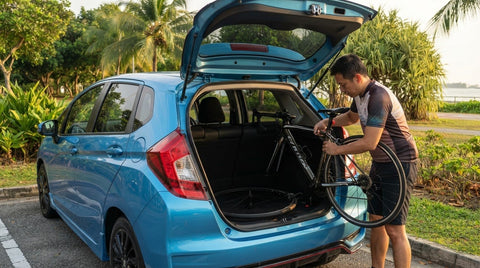
A bigger car isn’t automatically the best car for carrying bulky sports equipment in Singapore. The right choice depends on how many people are travelling, how much room their gear needs, and whether it fits through the loading opening. Golf clubs and bicycles may require more cargo space even when you’re travelling with few passengers.
It’s easy to focus on a car’s overall size, but the luggage area’s shape and the way the seats fold can matter just as much. Compare passenger space, cargo capacity and loading access for golf clubs, bicycles and other bulky sports equipment.
This guide compares common vehicle types and explains what to assess before deciding. Use equipment dimensions, seat use and safe placement to find a car that suits both your passengers and your gear.
Key Takeaways
- Match passenger numbers and luggage needs to usable cargo space, not just the vehicle’s seat count.
- Compare the loading opening, trunk floor and foldable rear seats to see how bulky gear fits in practice.
- Use equipment dimensions and whether items can be folded or separated to narrow down suitable vehicle options.
- Consider a family car or SUV when passenger comfort and room for sports gear both matter.
- Golf clubs and bicycles can require extra cargo room even when you’re travelling with only a few people.
Matching vehicle capacity to passenger and luggage counts
In Singapore, SUVs and MPVs are practical starting points for bulky sports gear. SUVs offer flexible cargo space, while MPVs can better suit groups travelling with bags. The Nissan Qashqai is an example of a roomy SUV, but compare each model’s boot with the rear seats up and folded to find the most usable space.
MPVs for Passengers and Bags
An MPV can suit a sports journey when several passengers need seats alongside equipment. A 6-seater MPV is described as suitable for four to six travellers with moderate luggage, but six adults carrying large suitcases may find the available space less practical. Count the passengers first, then consider the bags and equipment competing for the remaining capacity.
For five to six passengers with moderate luggage, an executive MPV is a suggested option in Singapore. An MPV prioritises space for a group, while an SUV may offer more flexibility for equipment. A full set of golf clubs can change the decision even when the number of passengers stays low. When arranging private travel or golf outings, premium chauffeur services such as BLACKWAZE™ similarly rely on spacious luxury SUVs and vans to maintain passenger comfort alongside bulky equipment.
SUV Boot Space With Seats Up or Folded
An SUV can offer more space and flexibility for sports equipment than a sedan. The Nissan Qashqai is described as having a roomy interior for passengers and luggage. Compare its boot with the rear seats up for a full passenger load, then consider the extra cargo area available when the seats fold.
There’s no model-by-model capacity ranking here, so don’t assume the Qashqai is Singapore’s largest. Compare cargo measurements with the seats up and folded, and check whether your equipment’s length and shape fit through the opening. A folded-seat figure is useful only if you can spare those seats for the journey.
Use this comparison to narrow down vehicle types before checking whether your equipment fits:
| Vehicle option | Passenger fit | Luggage and gear fit |
|---|---|---|
| 6-seater MPV | Four to six travellers | Moderate luggage; large bags can make a full passenger load less practical |
| 7-seater vehicle | Seven adults for a short local ride | Backpacks suit the example; occupied seats can reduce boot space |
| SUV | Compare seating with your group size | Flexible space; assess seats-up and folded layouts |
| Sedan | Compare passenger count with available luggage room | May be less flexible for bulky equipment than an SUV |
Choose the vehicle by matching passenger count, bag volume and equipment dimensions, not by seat count alone. For example, seven occupied seats in a Singapore maxi cab can substantially reduce boot space, while a 6-seater MPV with six adults and large suitcases may be less practical than a larger vehicle. Golf clubs and bicycles can also call for extra room despite a small group.
Before buying, compare the cargo area with your equipment’s dimensions and test how easily each item loads. Fold the rear seats only if passengers can still travel comfortably. Secure bulky gear to prevent shifting, and keep passenger entry and exit clear throughout the journey.
Honda Jazz interior versatility for bulky items and sports equipment
A Honda Jazz may suit sports gear if the items fit its cabin and cargo area. Focus on the loading opening, floor height and rear-seat layout rather than the model name alone.
Small cars can carry sports equipment when the items are compact, especially if the rear seats fold. A wide opening and low trunk floor can also make loading easier. These details matter for gear that needs to slide in flat, such as a folded frame or a long equipment bag.
For a Honda Jazz, compare the space with the seats in their normal position and with the rear seats folded. Choose the configuration that suits the people travelling: folding seats creates more storage space but reduces passenger seating. Check your item’s length, width and height against the available space, and consider whether its shape fits through the opening.
Before travel, make a simple loading plan:
- Measure the longest item, such as a bicycle or a golf bag.
- Note whether it can be folded or separated into smaller pieces.
- Place heavier gear low inside the vehicle, rather than in a roof box.
- Keep equipment clear of passenger entry and exit points.
For safety, secure bulky gear inside so it can’t shift while driving, and keep passenger access clear. A roof box needs a roof-rack system with crossbars; it suits lighter bulky items, while heavy equipment should stay inside.
Advance reservations are useful when an oversized item needs a particular vehicle layout. Share its dimensions and explain whether it folds or separates, so the vehicle’s usable space can be matched to the load. A bicycle that comes apart may fit differently from a rigid frame, even if both are similar in length. The same rule applies when scheduling a reliable airport pickup service, where coordinating luggage capacity beforehand prevents unexpected space shortages upon arrival.
In Singapore, suitable vehicles can be found through rental fleets and car-sharing options. Choose by passenger count, equipment dimensions and loading fit, rather than assuming every vehicle in a category offers the same space.
For occasional equipment transport, a rental may suit better than choosing a car around a single bulky item. If your needs include carrying goods alongside passengers, explore commercial vehicle options as another vehicle category to consider.
Sharing item dimensions and loading requirements
Clear dimensions help match sports equipment to a vehicle. Share each item’s length, width and height, plus its weight if known. Explain whether it folds, separates or needs to remain assembled. A bicycle with removable parts has different loading needs from a rigid canoe, even when both fit similar cargo areas.
Use a simple loading list for the driver:
- List every item, including bicycle wheels, golf bags and paddles.
- Give each item’s measurements and identify the longest piece.
- Explain which parts can be removed or folded for loading.
- State the passenger count and any luggage travelling alongside the gear.
- Describe child-seat or wheelchair requirements and the planned route.
Consider four practical factors together: passenger numbers, the number and size of bags, child or wheelchair requirements, and the route. For example, a wheelchair may need space that cannot also hold a bicycle frame. Account for both needs when planning how passengers and equipment will fit.
For bicycle transport, identify whether the bicycle stays assembled or can be separated into smaller parts. Protect exposed components and keep loose pieces together, then describe the packed dimensions. A bicycle may be handled as luggage or charged separately, depending on the transport arrangement, so include it clearly when discussing the load.
Canoes and kayaks need a different assessment because their length and rigid shape can determine whether they fit inside. Note the full length and widest point, and whether the item can be separated. A long item that cannot be folded may need a different vehicle or loading method from compact paddles and personal gear.
Roof boxes suit lighter bulky items, while heavy equipment should travel inside the vehicle. A roof box requires a roof-rack system with crossbars; one example of long gear suited to roof-box storage is skis up to 215 cm. Keep the load secure and positioned so it does not obstruct passengers or interfere with entry and exit.
Roof racks and external carriers have no blanket legality or universal size limit established here. In Singapore, an oversized vehicle movement permit is required when overall width exceeds 3 m, or 2.6 m on controlled roads; height exceeds 4.5 m; or rear overhang exceeds 40% of vehicle length or 1.8 m, whichever is less. The permit is required 3 days in advance when listed thresholds are exceeded.
Choose a loading plan that keeps passenger access clear and equipment stable. Consider dimensions, whether items can be separated, and any accessibility needs together, rather than assessing the sports gear alone. This gives a more useful picture of the complete journey.
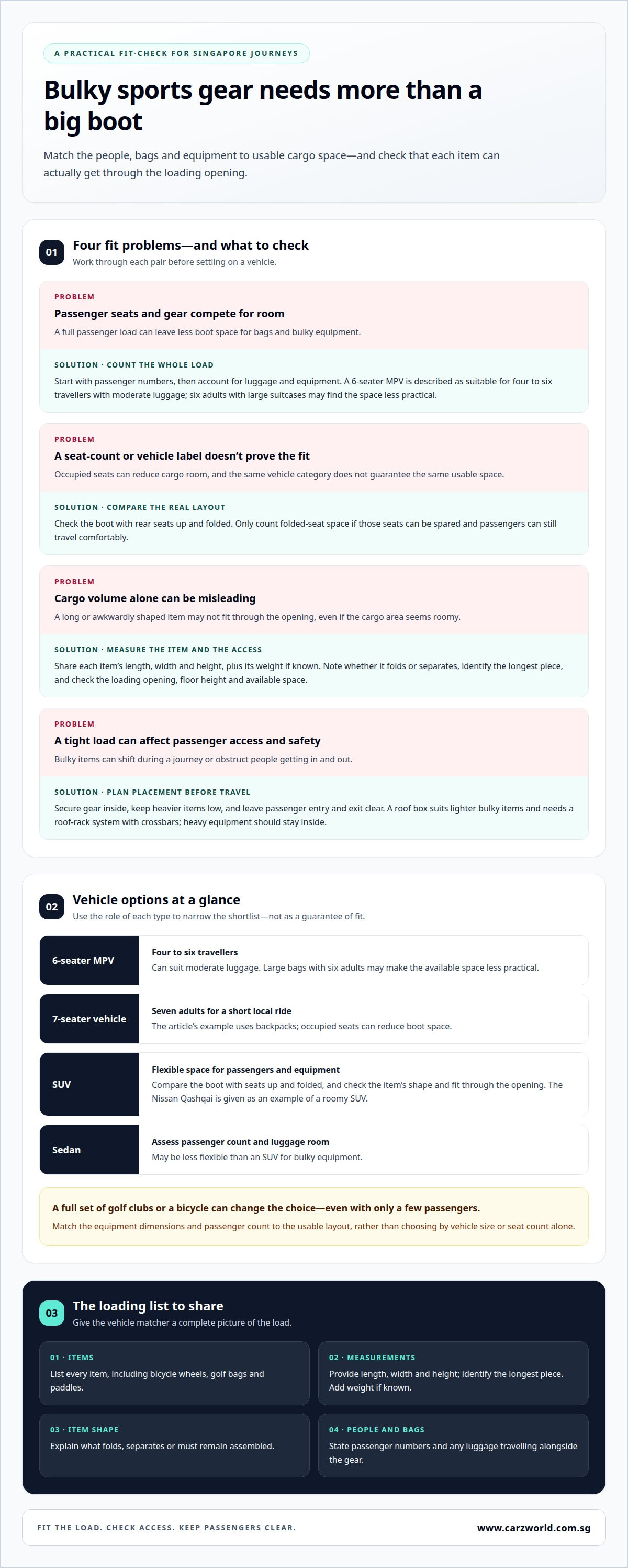
Family cars for sports activities
For a family sports trip in Singapore, choose a vehicle that balances passenger comfort with room for equipment. SUVs offer large cargo areas for bulky gear, while family vehicles can provide spacious interiors, comfortable seating and flexible luggage arrangements. The best place for each item depends on its shape and the seats passengers need.
Start with the people travelling, then account for equipment and everyday bags. A family car may carry passengers comfortably, but sports gear can compete with luggage for space. Picture a family taking bicycles and day bags to an outdoor activity: the vehicle should fit everyone without equipment blocking entry or passenger access.
An SUV can be useful when flexibility matters. Its cargo area may suit larger equipment, and SUVs can be used on city streets and outdoor roads. Some family models may also offer moderate fuel consumption. These considerations help narrow the options, but you still need to assess the actual interior layout and luggage load.
Compare the cabin in the configuration you expect to use. Keep the seats needed for passengers in place, then assess the remaining luggage area. If folding seats creates more room, decide whether the reduced seating works for the outing. Position larger items to use the available length efficiently, and fit smaller bags where they won’t restrict passengers.
If your family regularly drives to training sessions or competitions, consider more than the loading needs of one trip. Compare fuel efficiency between models, choose an engine suited to your driving routine, and account for future running costs. A car used regularly for sports travel has different priorities from one used for occasional equipment trips.
Pickup trucks can carry bicycles, camping equipment, large sports gear and heavy loads. However, their larger size and higher fuel use than some other vehicle categories may make them less suitable for daily city driving. For a family balancing Singapore commutes with sports activities, an SUV or family car may offer a more practical mix of cargo room and everyday flexibility.
Prices and COE-inclusive costs depend on the model, whether it’s new or pre-owned, and the COE value at purchase. Singapore’s Certificate of Entitlement allows a vehicle to be owned for ten years. Compare the full purchase cost with how long and how often your family expects to use the car.
To choose, picture your usual passenger count, sports gear and luggage together. Then compare family cars by usable cargo space, seating flexibility, driving needs and overall ownership cost. This gives you a clearer basis for choosing a vehicle suited to regular travel and sports outings.
Golf clubs, bicycles, and other bulky sports equipment
Golf clubs and bicycles can need more cargo room than their passenger count suggests. A solo golfer may have a long club bag, while a cyclist may bring a rigid bicycle that cannot easily fit around other luggage. The best vehicle depends on each item’s dimensions, shape and loading needs, not just the number of passengers.
Start with the equipment. A golf bag is long and narrow, so compare its length with the cargo area and opening. A bicycle takes up more width and may need to be turned or partly separated to load. If passengers are joining the trip, allow space for them and their bags before deciding whether the equipment can travel inside.
For bicycles, consider how the cargo area accommodates the frame and wheels together. If parts can be removed, account for that when planning the load. Pickup trucks can suit bicycles, camping equipment, large sports gear and heavy loads, though their size and fuel use may make them less convenient for everyday city driving than some other vehicle categories.
Roof boxes offer another option for lighter bulky gear. They can carry items such as camping equipment, sleeping bags, clothes, skis and snowboards. Some roof boxes accommodate skis up to 215 cm long. A roof box needs a roof-rack system with crossbars, and added air resistance may slightly increase fuel consumption, especially at high speeds.
Keep heavy equipment inside the vehicle to maintain a low centre of gravity and support roof-box performance. Secure gear to prevent it moving while driving, and position it so passengers can enter and exit safely. For example, don’t let a bicycle frame block a door or prevent someone from using their seat.
Use this quick comparison to narrow down the vehicle type:
- Golf clubs: Compare bag length with the opening and available cargo area.
- Bicycles: Consider frame width, wheel removal and passenger space.
- Camping gear: Put heavy items inside and reserve roof boxes for lighter bulky loads.
- Large or heavy equipment: Consider whether a pickup’s carrying ability outweighs its size for daily Singapore driving.
According to the equipment’s shape and weight, the most convenient choice may differ between a golf trip and a cycling outing. Match the vehicle to the full load, including passengers, rather than selecting by vehicle category alone. For a clearer comparison of vehicle options for your sports gear, explore the choices available for your needs.
Carz World Pte
Carz World Pte Ltd offers pre-owned and brand new cars, as well as car rental, to suit different travel needs. Compare vehicles by cabin layout and the space available for your gear. If you travel regularly, consider a car to own; for occasional outings, rental offers another option for choosing a vehicle for a particular trip. The right choice depends on how often you travel and what you need to carry.
Share your typical passenger count and equipment needs when discussing your options. That gives the comparison a practical starting point, whether you’re planning for golf clubs, bicycles or other bulky gear. Contact Carz World Pte Ltd to discuss your vehicle needs.
Make Your Next Trip Easier to Plan
Before choosing a car, picture the outing you make most often. A weekend golf trip, a cycling session and a family sports day can each call for a different balance of passenger space and cargo room. Start with your regular trip, then consider whether occasional larger loads change your priorities.
The best car for carrying bulky sports equipment in Singapore is one that suits your actual routine, not an imagined perfect load. Consider how often you carry the gear, who travels with you, and whether you prefer to own a vehicle or use one for selected trips. This practical approach can help you narrow your options without choosing more car than you need.
Carz World Pte Ltd can help you explore vehicle options around your requirements. Discuss your needs with Carz World Pte Ltd and take the next step with a clearer idea of what your sports trips require.
Frequently Asked Questions
How to Choose the Right Car for Your Needs?
Choose the best car for carrying bulky sports equipment in Singapore by starting with your usual trip, not an occasional maximum load. Note who travels, which equipment comes along, and whether it stays assembled. Then compare vehicle layouts with that combination. A cyclist travelling alone may prioritise bicycle loading, while a family heading to training may need to preserve more passenger seating.
What Features Should the Car Have?
Prioritise a wide loading opening, a low cargo floor and folding rear seats if your equipment needs extra room. Consider the cargo area’s shape too: a narrow space may take a golf bag but make a bicycle awkward to position. Securing points can help keep gear from shifting. Choose a configuration that carries the equipment without blocking passengers or requiring an unsuitable seating arrangement.
Which MPVs or vans in Singapore offer the most cargo space for sports gear?
For a larger group or substantial equipment, compare MPVs and vans by usable cargo room with the seats occupied, not just their maximum seating capacity. A 13-seater minibus is worth considering for groups of eight or more people or bulky belongings, but all 13 seats being occupied leaves luggage volume to consider. The deciding factor is how much space remains for the gear after passengers board.
What are the dimensions and cargo capacity of popular cars sold in Singapore?
Compare the exact model and seat configuration, because folding the rear seats changes cargo space. The Honda Jazz and Nissan Qashqai are useful examples to assess, but a model name alone doesn’t show whether a specific item fits. Compare each vehicle’s published dimensions and cargo measurements with your gear, then account for the opening shape and room needed to load it.
Which cars can fit bicycles, surfboards, kayaks, golf bags, or hockey equipment?
Fit depends on each item’s length, width, rigidity and ability to fold or separate. Golf bags and bicycles can require a larger vehicle even with few passengers. A long, rigid kayak or surfboard needs a suitable loading arrangement, while hockey equipment may be easier to position alongside luggage. Measure the item and assess the vehicle’s opening and interior layout before deciding.
How do fuel efficiency, road tax, and maintenance costs compare for these cars in Singapore?
Compare running costs for the specific model and your expected driving pattern. Fuel efficiency varies between vehicles, so it’s especially relevant if you regularly drive to training or competitions. Include road tax and maintenance in your ownership budget, alongside the purchase cost. Consider an engine suited to your use and future running costs, rather than judging a car by cargo capacity alone.
Disclaimer
This content is provided for general informational purposes only. Readers are encouraged to independently verify important information.
In Same Category
Related by Tags
- Compare Car Options for Bulky Sports Equipment in Singapore
- Compare car choices for a couple living in central Singapore
- Choosing a Family Car for Elderly Parents in Singapore
- Practical cars for financial advisors sg: Check what you can afford
- Car types and models for weekend drives, plus family outing ideas
- Used SUV for Sale in Clementi: Compare Prices and Mileage
- Practical cars for toddlers, car seats, strollers and luggage
- What to check before buying a used MPV in Bukit Panjang
- Find reliable low maintenance second hand cars in Singapore by mileage
- Best Cars for Home-Based Businesses in Singapore: 2026 Guide
- Best Second Hand Cars for Malaysia: Singapore Buyer's Guide
- Financial Planning for Your First Car in Singapore
- Understanding the MAS Car Loan Restrictions in Singapore (2026)
- Pros and Cons of Buying a High PARF Car in Singapore