What Happens to My Car Loan If I Lose My Job in Singapore? (2026 Guide)

What if losing your job changes your budget, but not your car-loan obligation? If you’re asking, “what happens to my car loan if I lose my job sg,” the key point is that job loss doesn’t automatically pause or cancel your repayments. Your loan agreement still applies, even when your income changes.
It’s understandable to worry about missing an instalment, repossession or damage to your credit record. Acting early can help you understand your options. Check your agreement for repayment terms and missed-payment consequences, then contact your lender with a realistic picture of your finances.
This guide explains what job loss does and doesn’t change, what to discuss with your lender, and how to weigh revised repayments, refinancing or selling the car. A sale may help repay the loan, but it won’t automatically clear the balance. Get the lender’s settlement figure and check for a possible shortfall before deciding what to do.
Key Takeaways
- To understand what happens to my car loan if I lose my job sg, start with your signed agreement: identify the lender, finance type, remaining term and instalment schedule.
- Check the agreement for what may happen after a missed payment. A missed instalment and later action by the lender are not the same thing.
- Compare keeping the car, discussing repayment options with your lender and selling it against your cash flow, transport needs and job-search outlook.
- Before considering a sale, get the lender’s settlement figure and assess whether the sale proceeds would leave a shortfall.
- Review your documents, map your budget, contact the lender, record any agreed terms and reassess your plan as your circumstances change.
What happens to your car loan if you lose your job in Singapore?
Losing your job doesn’t automatically pause or cancel your car-loan repayments. The instalment schedule generally remains in place unless your lender agrees to a change. Job loss affects your ability to pay, but it doesn’t by itself rewrite the loan terms.
If you’re asking “what happens to my car loan if I lose my job sg,” check your agreement and speak with your lender before the next instalment is due. Payment dates, late-payment terms and available assistance depend on your financing arrangement and lender. A temporary income gap is not the same as a formal change to your loan.
For a general introduction to contracts and the legal system in Singapore, see this background resource. Your agreement and circumstances determine what applies to your loan.
This video on refinancing explains one possible option, though refinancing may not be available or suitable for your circumstances.
Does job loss automatically pause or cancel car-loan repayments?
No. Employment status alone doesn’t establish a payment holiday or cancel your loan. Until your lender confirms a revised arrangement, use the existing due date and payment terms as your reference. Read the agreement for late-payment conditions and the lender’s contact details. Don’t assume that missing an instalment will count as an approved pause.
A revised schedule, deferment or other arrangement requires the lender’s agreement, and approval isn’t guaranteed. Ask what options may be available and get any changes confirmed in writing before relying on them.
What should you do before your next instalment is due?
Prepare before contacting the lender. Have your loan agreement and latest statement ready, note the next instalment date, and work out what you can realistically pay from available income and savings. Be specific about when your employment ended, any income you still expect and your essential monthly expenses.
Contact the lender promptly, explain the change and ask what steps they recommend. Keep notes of the conversation, including dates and instructions. If an option is discussed, request its terms in writing and review how it affects future instalments and the total amount owed. A clear budget makes the conversation more practical, even if the lender can’t offer a change.
How Singapore car-loan repayment terms affect your options
Your agreement is the starting point for understanding what you owe and what may happen if your income changes. Find the lender’s name, finance type, remaining term and instalment schedule. Hire-purchase and other car-financing arrangements can have different terms, so don’t assume a friend’s experience or a general online example applies to your loan.
Singapore’s MAS car loan regulations set rules for motor-vehicle loans, including a maximum loan tenure of seven years. Those limits don’t explain what hardship assistance your lender may offer. Separate the written terms of your agreement from any possible assistance, which the lender must explain and agree to directly.
Which clauses and figures should you find in the agreement?
Review the latest statement alongside the agreement. Locate the outstanding balance, payment dates, late-payment provisions and early-settlement section. Check how the documents describe ownership or any lender interest in the vehicle under your financing arrangement. These details can affect what steps are needed if you consider selling the car.
Don’t estimate a final settlement by multiplying the remaining instalments. Ask the lender for an up-to-date settlement figure, how long it remains valid, what it includes and how to request a revised figure if needed.
What can you ask the lender about financial difficulty?
Use the agreement and statement to prepare focused questions. Ask whether the lender may consider a revised repayment schedule, a temporary arrangement or another form of assistance. A discussion isn’t approval. Confirm any eligibility requirements, fees, start date and effect on future payments directly with the lender before making decisions based on the option.
Before calling, have these details ready:
- Your loan agreement, latest statement and instalment due date.
- The finance type, remaining term and amount shown as outstanding.
- A simple monthly budget, including available income and essential expenses.
- Questions about settlement, late-payment terms and possible assistance.
After the call, record the representative’s name, the date, what you discussed and any actions you agreed to take. Ask for proposed changes in writing and compare them with the original agreement before accepting or relying on them. If you assess a sale, first obtain the lender’s settlement figure and consider whether the proceeds could leave a shortfall. You can also review car purchase and sale options as part of weighing your next steps.
Missed payments, repossession, and outstanding balances: what to understand
A missed instalment is not the same as immediate repossession, and recovering or selling a car doesn’t automatically mean the loan is fully settled. If you’re searching “what happens to my car loan if I lose my job sg,” focus on the stages: what your agreement says after a missed payment, what the lender communicates, and how vehicle recovery or sale affects the balance.
The exact steps and timing depend on your finance arrangement, agreement and circumstances. Don’t assume every lender follows the same process after one missed instalment. Read notices carefully and contact the lender if you’re unsure what action is being taken. Ignoring messages can make it harder to understand deadlines or discuss options.
| Stage | What it means | What to check |
|---|---|---|
| Missed payment | An instalment wasn’t paid by its due date. This alone doesn’t establish that repossession has happened. | Your agreement’s late-payment terms and any communication from the lender. |
| Lender contact | The lender may contact you about the missed instalment or next steps. The terms and timing depend on your agreement and circumstances. | What the lender is requesting, any deadlines, and whether an arrangement is agreed in writing. |
| Vehicle recovery | If the lender proceeds to repossess the vehicle, specific requirements may apply. Verified Singapore guidance states the owner must provide written notice of at least seven business days before repossession. | Your financing type, the notice received and the current requirements that apply to your case. |
| Settlement | Recovery or sale of the vehicle doesn’t necessarily clear the full amount owed. | The lender’s settlement figure, sale outcome and any remaining balance or surplus. |
What can happen after a missed instalment?
Check the agreement rather than guessing at a fixed penalty or timeline. Late-payment provisions and the lender’s next steps can vary. If a notice arrives, note the date, read what it asks you to do and contact the lender promptly if anything is unclear. Keep copies of messages and call records. Ask the lender to explain the account’s status and any action you need to take.
Does giving up or selling the car clear the loan?
Not necessarily. The amount received from a vehicle sale may be less than the lender’s settlement figure, leaving a shortfall. A surplus or remaining amount depends on the agreement, sale outcome and applicable rules. Before agreeing to a sale, obtain the lender’s current settlement figure in writing and clarify how the proceeds will be handled. Hire-purchase and other financing arrangements can differ, so don’t assume the same process applies to every car loan.
If job loss has also made other debts difficult to manage, Credit Counselling Singapore offers information for people facing financial difficulty. Treat that as a separate support route, and confirm car-loan obligations directly with your lender.
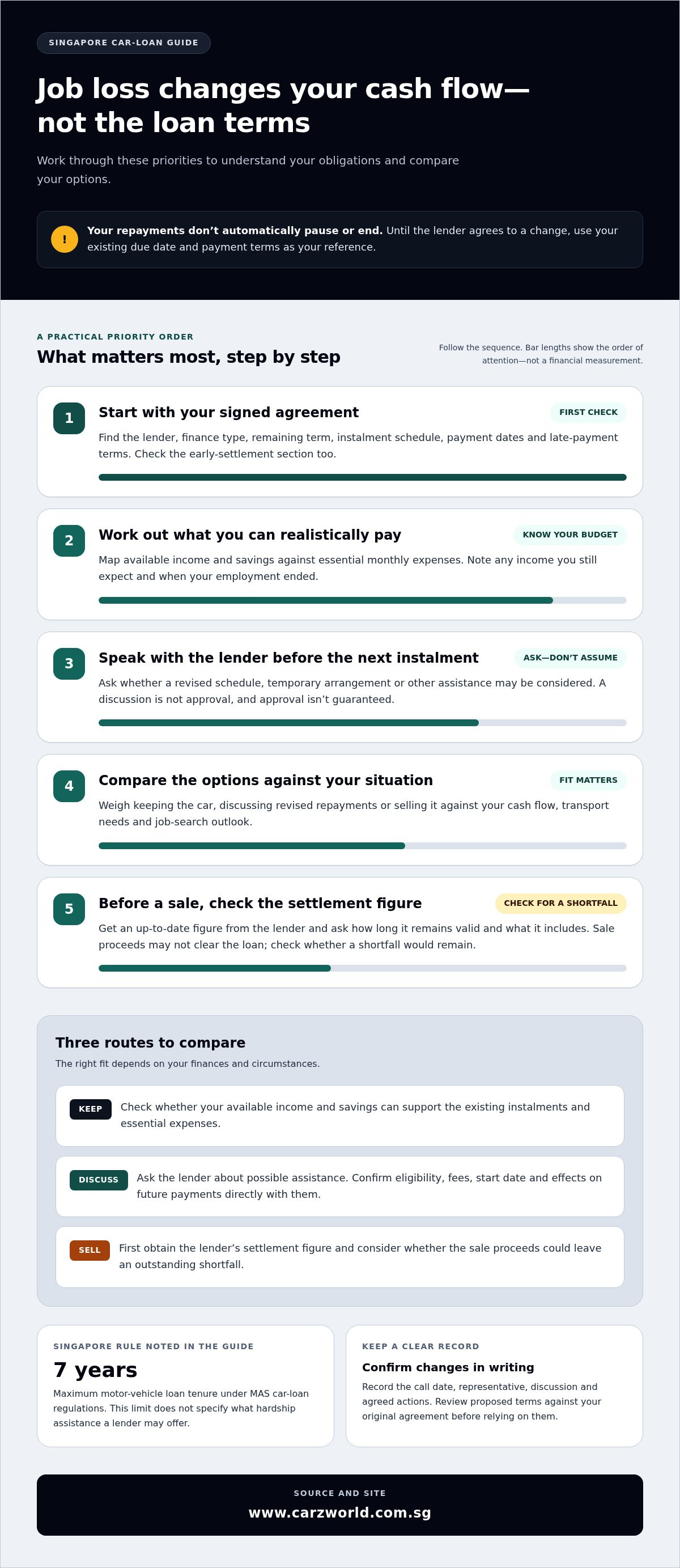
Keep the car, negotiate, or sell? Compare your options after job loss
There isn’t one right choice for every household. Compare what you can afford now, how long your income may be reduced, how essential the car is for work or family needs, and what you still owe. Start by speaking with your lender. They may explain possible arrangements, but assistance isn’t guaranteed, and a conversation doesn’t change your loan unless revised terms are agreed.
Use a cautious budget rather than relying on hoped-for income. For example, don’t build your plan around a job offer until it’s confirmed. Consider whether savings or other dependable income can cover instalments and running costs while you look for work. If the numbers remain uncertain, compare keeping the car with selling it before a payment problem worsens.
When might keeping the car remain practical?
Keeping the car may make sense if it meets an essential transport need and the full cost fits your revised budget. List each expense separately: loan instalments, insurance, fuel, parking and maintenance. Compare the total with reliable income after essential household bills. If the car is important for caregiving or reaching work opportunities, include that value in your decision, but still check affordability realistically.
Contact the lender early if the instalment is difficult to manage and ask what options may be considered. Confirm any proposed change in writing, including its timing and effect on later payments. If the budget only works if you find a job quickly, consider whether you could manage the costs if the search takes longer.
What should you calculate before selling a financed car?
Compare two current figures: the lender’s written settlement figure and a realistic estimate of what the car could sell for. If the estimated proceeds are lower, you may need to cover the shortfall. If they appear higher, confirm with the lender how settlement and any remaining proceeds would be handled. Don’t base a decision on the outstanding balance in an older statement, since it may not be the amount required to settle the loan.
Ask the lender how the financing must be settled as part of the sale and what needs to happen before ownership can be transferred. Selling can reduce ongoing car costs, but it doesn’t automatically clear the loan. If you’re weighing that route, learn more about how to sell your car in Singapore.
Compare the figures and your transport needs before deciding. To explore vehicle options, view Carz World’s car range.
A practical next-step plan for managing your Singapore car loan
If you’re still asking “what happens to my car loan if I lose my job sg,” focus first on the next instalment and the facts in your agreement. An organised plan can help you make decisions based on your actual budget. Work through these steps, then reassess as your income or circumstances change.
- Review your documents. Gather your loan agreement, latest statement and any lender notices. Note the finance type, upcoming instalment dates, late-payment terms and lender contact details.
- Map your cash flow. List essential household expenses, available savings, dependable income or support, and car costs. Include loan instalments, insurance, fuel, parking and maintenance. Use conservative figures, not income you hope to receive.
- Contact the lender early. Explain what has changed and ask about next steps or any assistance that may be considered. Don’t assume a revised arrangement is approved until the lender confirms the terms.
- Document the outcome. Keep letters, emails, call notes and payment receipts. Record the date and details of any conversation, and request proposed changes in writing.
- Reassess your plan. Check whether the car remains manageable as your job search and household budget evolve. If you don’t understand your obligations or a notice, seek qualified financial or legal guidance.
Your first week: organise the facts and speak to the lender
Put your documents and budget in one place before you call. Be ready to explain when your income changed, what funds are available and which instalment is due next. Ask the lender to clarify immediate steps, deadlines and whether an arrangement is being considered. Afterward, compare any written response with your agreement and keep a clear record.
If the car no longer fits your budget
Before making or accepting a sale offer, obtain the lender’s current settlement figure in writing. Compare it with a realistic estimate of the sale proceeds, and ask how settlement must be completed and any shortfall or surplus handled. A sale may be worth assessing, but it doesn’t automatically clear the loan. Use your agreement and lender’s information to check the terms that apply to your financing arrangement.
If selling is part of your plan, explore Carz World’s car purchase and consignment options in Singapore.
Take your next step with a clear picture of your options
If you’re wondering “what happens to my car loan if I lose my job sg,” remember that job loss doesn’t automatically change your repayment terms. Your agreement sets out your current obligations, and any revised arrangement depends on the lender’s agreement. Review your budget and speak with the lender early so you can make decisions with accurate information.
Keeping the car may still work if instalments and running costs fit your available income and transport needs. If you’re considering a sale, obtain the lender’s current settlement figure and compare it with realistic sale proceeds. A sale doesn’t automatically clear the loan, so understand any possible shortfall before proceeding.
Carz World offers car purchase and consignment services in Singapore, with locations at Vertex and Alexandra Central Mall. If a vehicle sale is one option you’re assessing, explore Carz World’s services.
With the agreement, budget and lender’s information in hand, you can assess your next move calmly and take it one step at a time.
Frequently Asked Questions
Do I still have to pay my car loan if I lose my job in Singapore?
Yes, losing your job doesn’t automatically pause or cancel your car-loan repayments. If you’re asking “what happens to my car loan if I lose my job sg,” check your agreement for instalment dates and missed-payment terms, then contact your lender promptly if you’re worried about paying. Any revised arrangement depends on the lender’s agreement. Ask for proposed terms in writing before relying on a payment change.
Can my car be repossessed if I cannot pay my car loan?
Repossession may be possible if payments are missed and the lender takes further action under the agreement and applicable rules. One missed instalment doesn’t always lead to immediate vehicle recovery. Singapore guidance cited in this guide requires written notice of at least seven business days before repossession. Read any notice carefully and contact the lender to understand your account status and the steps being taken.
What happens if I sell my car while I still owe a loan?
The sale proceeds may not cover the amount needed to settle the loan, so you could still owe a shortfall. Before accepting an offer, request the lender’s current settlement figure in writing and ask how settlement must be completed as part of the sale. Compare that figure with realistic sale proceeds. Selling the car doesn’t automatically clear the loan or release any lender interest in the vehicle.
Can I ask my lender to reduce or pause my car-loan payments after losing my job?
Yes, you can ask whether the lender may consider a revised schedule, temporary arrangement or other assistance, but approval isn’t guaranteed. Explain your income change and realistic budget, then ask about eligibility, timing, fees and how the arrangement could affect later payments. Keep making payments according to the existing terms unless the lender confirms a change. Request any agreed terms in writing before relying on them.
Will missing a car-loan payment affect my credit record in Singapore?
It may affect how your repayment history is recorded and assessed, but the outcome can depend on the lender, account history and reporting practices. Check your agreement for late-payment terms, and ask the lender how the missed instalment is being handled. Contact them early rather than ignoring reminders. If you’re concerned about your credit information, review the relevant report and raise questions with the lender or reporting agency.
Should I sell my car if I lose my job and cannot afford the instalments?
Selling may be worth considering, but compare it with your household transport needs, budget and job-search outlook first. Get a current settlement figure from the lender and compare it with a realistic estimate of sale proceeds. If proceeds fall short, you may need to cover the difference. Carz World offers car purchase and consignment services in Singapore, but a sale doesn’t automatically settle your loan.
Does returning the car mean I no longer owe anything?
No, handing back or surrendering a vehicle doesn’t necessarily end your financial obligation. The lender may need to account for the vehicle’s recovery and sale, and the outcome can depend on your agreement, sale proceeds and applicable rules. Ask the lender for a written breakdown of any remaining amount or surplus and how it was calculated. If you don’t understand the terms or notices, seek qualified financial or legal guidance.
Disclaimer
This content is provided for general informational purposes only. Readers are encouraged to independently verify important information.
In Same Category
- Calculating the Breakeven Point for COE Renewal in Singapore
- Financial Checklist Before Committing to a Car Purchase in Singapore (2026)
- COE Renewal Conditions and Eligibility in Singapore: 2026 Guide
- Balloon Scheme Car Loan in Singapore: Pros and Cons for 2026
- Getting Car Finance with a New Business in Singapore: A Practical Guide
Related by Tags
- Calculating the Breakeven Point for COE Renewal in Singapore
- What Happens to My Car Loan If I Lose My Job in Singapore? (2026 Guide)
- Pre-Owned Vehicle Showroom in Hougang: Your Complete 2026 Buying Guide
- Car Financing for Singapore Gig Workers: 2026 Guide
- 2026 Guide: Planning for a Second Family Car in Singapore
- Car Loan Singapore: The Complete 2026 Guide to Financing Your Vehicle