Comprehensive vs Third Party Insurance: Choosing the Best Car Coverage in Singapore

Could saving a few hundred dollars on your annual premium today actually cost you tens of thousands in lost resale value later? With car insurance premiums in Singapore projected to rise by 12% to 15% in 2026, many drivers are questioning if they should downgrade their coverage to save money. Deciding between comprehensive vs third party insurance is a significant financial choice that goes beyond just obeying the law. You want to protect your investment without overpaying for features you don't need.
We understand that the high cost of car ownership in Singapore makes every dollar count. You're likely looking for a way to lower your total cost of ownership while staying protected against the increasing severity of road accidents. This article will help you master the differences between various insurance types so you can protect your vehicle and your wallet effectively. We'll provide a clear framework based on your car's age and value, ensuring you understand exactly where the coverage gaps lie before you sign your next policy.
Key Takeaways
- Understand the legal requirements for Singapore roads and how TPFT serves as a practical middle ground for older vehicles.
- Learn why "Act of God" coverage is essential for vehicles parked in low-lying areas prone to sudden flash floods.
- Discover the 10-year rule and the 10% valuation threshold to help you decide between comprehensive vs third party insurance.
- Realize why even safe drivers risk high out-of-pocket costs when repair expenses for premium or continental cars are involved.
- See how choosing a reputable dealer for your next pre-owned or brand new car creates a more seamless insurance and ownership process.
Understanding the Tiers: TPO, TPFT, and Comprehensive Insurance
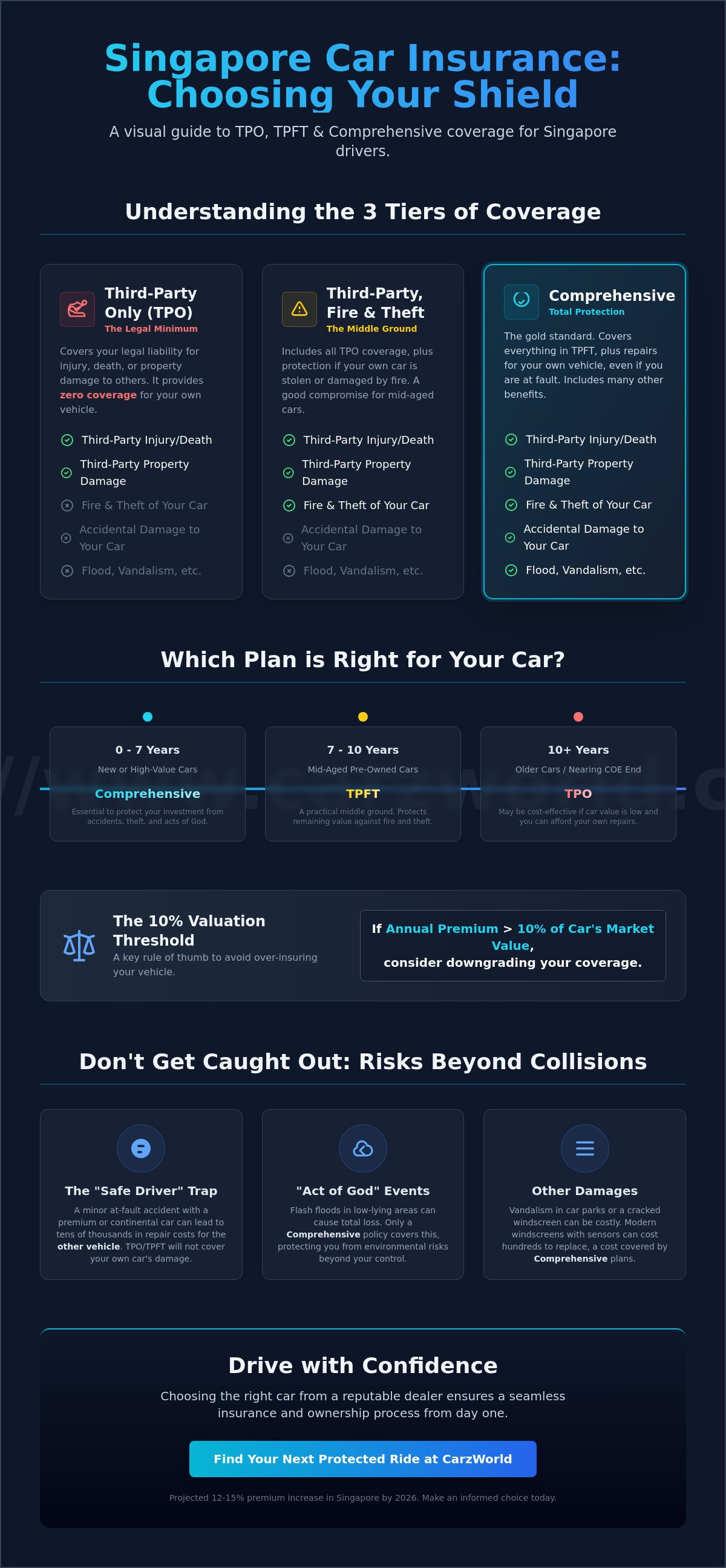
Every driver in Singapore must navigate the three primary tiers of motor coverage. This isn't just about finding the cheapest rate; it's about matching your policy to your car's age and your personal risk tolerance. Choosing between comprehensive vs third party insurance requires a clear understanding of what happens the moment an accident occurs. While the law mandates a minimum level of protection, the gap between that minimum and a full policy can be worth tens of thousands of dollars in repair costs.
The concept of Vehicle insurance is designed to protect you from catastrophic financial loss. In Singapore, the law is strict. You must have at least Third-Party Only (TPO) coverage to drive on public roads. However, the most critical distinction between these tiers is who pays for your own car repairs during an "at-fault" accident. With lower-tier plans, that bill belongs entirely to you. This is why many owners of brand new cars rarely consider anything less than a comprehensive policy.
To better understand this concept, watch this helpful video:
The Legal Minimum: Third-Party Only (TPO)
TPO is the bare legal minimum required by the LTA. It covers your legal liability for third-party bodily injury or death and damage to third-party property. It's often the go-to choice for drivers with cars nearing the end of their 10-year COE cycle. If your vehicle's market value is low, paying a high premium for full coverage might not make financial sense. The significant risk is that TPO provides zero payout for damage to your own vehicle. If you're involved in a collision where you're found liable, you'll have to fund your own repairs or scrap the car without compensation.
The Middle Path: Third-Party, Fire and Theft (TPFT)
TPFT acts as a compromise for vehicles that are roughly 7 to 10 years old. It includes everything in a TPO policy but adds protection against fire damage and vehicle theft. This is a popular choice if you frequently park in non-secured areas or if you're concerned about the rising instances of vehicle-related crimes. While it offers more peace of mind than TPO, it still doesn't cover accidental damage to your own car from a crash. It's a strategic way to protect the remaining value of mid-aged pre-owned cars without the full cost of a comprehensive plan.
Comprehensive insurance remains the gold standard for total protection. It covers everything from medical expenses to repairs for your own vehicle, even if you caused the accident. In a high-traffic environment like the PIE or AYE, this "all-encompassing" protection ensures that a single mistake won't lead to a total financial loss. When you weigh comprehensive vs third party insurance, remember that the "best" plan is the one that prevents an accident from becoming a financial disaster.
Is Comprehensive Insurance Worth the Higher Premium in 2026?
Deciding between comprehensive vs third party insurance often feels like a balancing act between immediate savings and long-term security. With premiums projected to rise by 12% to 15% in 2026, many drivers feel the pinch. However, comprehensive plans offer critical safeguards that basic policies lack. For instance, flash floods in low-lying areas of Singapore are a real threat. These "Act of God" events are covered under comprehensive plans, whereas a TPO policy would leave you with a total loss. Beyond environmental risks, multi-storey carparks present hazards like vandalism or windscreen damage. Replacing a windscreen on a modern vehicle can be surprisingly expensive due to integrated sensors.
The Motor Vehicles (Third-Party Risks and Compensation) Act ensures everyone has basic liability coverage, but it doesn't protect the driver's own medical costs. Comprehensive plans include personal accident benefits for you and your passengers. You also gain the ability to choose between authorized workshops or your preferred mechanic. This flexibility ensures your car receives high-quality parts and service, which is vital for maintaining the value of your vehicle.
Financial Safety Nets: Excess and NCD
Your total cost of ownership depends heavily on your "Excess". This is the amount you pay out-of-pocket before the insurer covers the rest. A higher excess usually means a lower premium, but it increases your risk during a claim. Safe drivers benefit from the No Claims Discount (NCD), which can slash premiums by up to 50%. In 2026, protecting this discount is more important than ever. An NCD Protector add-on is often worth the small extra fee. It allows you to make one at-fault claim without losing your hard-earned discount status.
The "New Car" Requirement
If you're financing your vehicle, the choice is often made for you. Banks and financial institutions typically require full coverage to protect their collateral. Comprehensive coverage is the standard for any vehicle under a financing agreement. This protection is equally important for a pre-owned car investment, as it ensures you aren't left paying a loan for a car that is no longer drivable. Whether you are browsing brand new cars or quality used models, having the right insurance tier is the foundation of a stress-free ownership experience.
The "Safe Driver" Trap: Why TPO Might Cost You More
Many experienced drivers believe that their clean record justifies a switch to Third-Party Only coverage. They view it as a reward for years of accident-free travel. However, Singapore's road conditions tell a different story. In the dense, fast-moving traffic of the PIE or KPE, a split-second distraction from another driver can force you into an "at-fault" position. When evaluating comprehensive vs third party insurance, it's vital to remember that "safe" doesn't mean "invincible." Accidents often involve factors entirely outside your control.
The financial reality of repairs in Singapore is often the biggest shock. For those driving continental vehicles, a minor bumper hit or a damaged headlight can easily result in a bill exceeding S$5,000. Under a TPO policy, you're responsible for every cent of that repair. As noted by AsiaOne, comprehensive car insurance provides a necessary buffer against these soaring costs. It ensures that your savings aren't wiped out by a single low-speed collision in a crowded carpark.
There's also the risk of the "uninsured or under-insured" driver. While insurance is mandatory, you might encounter a situation where the other party disputes the claim or lacks the means to compensate you quickly. Comprehensive policies offer legal aid and claims assistance as part of the package. Your insurer handles the heavy lifting, paying for your repairs first and then recovering the costs from the other party. This service alone saves hours of administrative stress and potential legal headaches.
Hidden Costs of Third-Party Only
Choosing the cheapest plan often leads to overlooked expenses. If your car is stuck in a workshop for two weeks, you still need a way to get around. Most TPO plans don't offer "loss of use" benefits. This means you'll be paying out-of-pocket for renting a car while yours is being fixed. These daily rental fees add up fast, often negating any savings you made on your insurance premium during the renewal period.
Basic plans also typically exclude roadside assistance and towing fees. If your vehicle breaks down on the Benjamin Sheares Bridge, the cost of a private tow can be significant. Managing a third-party claim without professional support is an exhausting process. You'll have to gather evidence, communicate with the other driver's insurer, and potentially represent yourself in a dispute. A comprehensive policy acts as a dedicated partner, ensuring you're never left stranded or overwhelmed by paperwork when you're already stressed.
Choosing the Right Plan for Your Vehicle Type
Your vehicle's age is the most significant factor in your decision-making process. In Singapore, the 10-year COE cycle creates a natural timeline for insurance needs. For cars in their first five years, comprehensive coverage is almost always the correct choice. The high market value and potential for expensive repairs make the higher premium a logical investment. As a car approaches the seven-year mark, many owners begin weighing comprehensive vs third party insurance to see if the protection still matches the car's depreciating value.
A practical rule of thumb is the 10% valuation rule. If your annual comprehensive premium exceeds 10% of your car's current market value, it might be time to downgrade to TPFT or TPO. For example, if your older vehicle is worth S$15,000 and your premium is S$1,600, you are paying a significant portion of the car's total worth just for one year of coverage. However, if you are driving a modern Electric Vehicle (EV), keep in mind that premiums for these models are typically 10% to 20% higher than internal combustion engines due to specialized battery components. Some insurers even cap battery damage payouts at 50% of the market value, making the choice of policy even more nuanced.
When you are selling your car or transferring ownership, you must cancel your existing policy. Most insurers provide a pro-rated refund for the remaining months, provided no claims were made during the policy year. This recovery of costs can be put toward the insurance for your next vehicle. If you are looking for your next ride, view our latest inventory of brand new and pre-owned cars to find a model that balances performance with manageable insurance costs.
Insurance for Used and Export Cars
Insuring high-mileage or older vehicles requires a different strategy. While comprehensive plans are available, the payouts for older cars are often limited to the current market value, which might be lower than you expect. For export cars that are awaiting shipment, specialized short-term coverage is often necessary. These policies protect the vehicle during the transition period without requiring a full annual commitment. It's a methodical way to ensure your asset is protected until it leaves Singapore's jurisdiction.
Fleet and Commercial Considerations
Commercial vehicles like vans and lorries face unique risks that private car policies don't cover. TPO is rarely sufficient for a business because any downtime directly impacts revenue. Commercial policies often have higher liability limits to account for the heavier weight and potential damage these vehicles can cause. If your business manages multiple drivers, ensure your policy allows for "Any Driver" coverage or specifically names every employee. This prevents a claim from being rejected because an unauthorized person was behind the wheel during a delivery.
The Seamless Path to Protected Car Ownership
Buying a vehicle is a significant commitment. Navigating the final choice between comprehensive vs third party insurance shouldn't be a solitary struggle. A reputable dealer acts as an experienced partner, streamlining the paperwork and ensuring you meet all legal requirements without the usual stress. This professional oversight is particularly valuable given the mandatory On-Board Unit (OBU) installations required by January 1, 2027. We help ensure your transition to the ERP 2.0 system is handled correctly from the start.
At Carz World, we ensure every vehicle is thoroughly vetted before it reaches the showroom floor. This process confirms the car is fully "insurable" at competitive market rates, free from the illegal modifications that saw increased penalties in early 2026. We provide "one-stop" bundles that integrate financing and insurance, so you don't have to manage multiple vendors. This methodical approach protects your car's future resale value and ensures your total cost of ownership remains manageable. Our team also provides post-purchase support, helping you navigate the renewal process when your policy expires.
Why Dealership Integration Matters
Sourcing external quotes for a brand new car can be time-consuming and confusing. By leveraging established relationships with top-tier insurers like NTUC Income, MSIG, and Liberty, we help you find coverage that fits your specific profile. This integration ensures your car's valuation is accurate for the Sum Insured amount, preventing issues during a total loss claim. It's a fluid process designed to get you on the road with confidence. You'll spend less time on administration and more time enjoying your new ride.
Final Checklist Before You Sign
Before you finalize your policy, look beyond the surface premium. The "Excess" amount is often more important than the annual cost. While a lower premium is attractive, an excess of S$3,000 for young or inexperienced drivers can be a heavy burden during a claim. Check the list of authorized workshops to ensure they are conveniently located near your home or office. Finally, verify if Malaysia coverage is included. Many Singaporeans enjoy North-bound road trips, and ensuring your protection extends across the border is essential for peace of mind. Taking these final steps ensures that your choice in comprehensive vs third party insurance truly serves your lifestyle.
Secure Your Driving Future with Confidence
Choosing between comprehensive vs third party insurance is a decision that impacts both your peace of mind and your long-term financial health. You've learned that the right policy depends on your car's age, its current market value, and your personal risk tolerance. While TPO meets the legal requirements, comprehensive plans provide a vital safety net against Singapore's unpredictable weather and high repair costs. Making an informed choice ensures that an accident won't lead to a total financial loss.
At Carz World, we make the path to ownership effortless. We're trusted by thousands of Singaporean drivers and provide expert assistance with all your financing and insurance paperwork. Every vehicle in our inventory undergoes a comprehensive 160-point inspection, so you can buy with absolute certainty. Browse our certified pre-owned cars and get a free insurance quote today!
Driving in Singapore is a significant investment. With the right coverage and a dependable partner by your side, you can enjoy every journey with total confidence.
Frequently Asked Questions
Is third-party car insurance mandatory in Singapore?
Yes, it is the legal minimum required by the Land Transport Authority. Every vehicle on the road must have coverage for third-party death or bodily injury at the very least. Driving without valid insurance is a serious offense that can result in a fine of up to $1,000, a three-month jail term, and a mandatory driving disqualification for at least 12 months.
Can I switch from comprehensive to third-party insurance mid-policy?
You typically cannot simply "downgrade" an active policy. Instead, you would need to cancel your current comprehensive plan and purchase a new third-party policy. Most insurers provide a pro-rated refund for the remaining months of your premium, provided you haven't made any claims during the policy year. It's a good idea to check for any administrative fees before you proceed with the cancellation.
Does comprehensive insurance cover my car if it floods in a basement carpark?
Yes, comprehensive policies generally include coverage for "Acts of God," which encompasses natural disasters like flash floods. If your vehicle is damaged by rising waters in a basement carpark, your insurer will cover the repair costs or provide a payout if the car is a total loss. Basic TPO and TPFT policies do not provide any protection for flood damage, leaving you to bear the full cost.
What is the "Excess" in a car insurance policy, and how much should it be?
The excess is the fixed amount you pay out-of-pocket before your insurer covers the rest of a claim. For example, if your repairs cost $2,000 and your excess is $600, you pay $600 and the insurer pays $1,400. While a higher excess can lower your annual premium, you should choose an amount that you can comfortably afford to pay upfront in the event of an accident.
Will my NCD be affected if I make a claim that is not my fault?
Your No-Claim Discount is usually protected if you are found to be 0% liable for the accident. If your insurer successfully recovers the repair costs from the other party's insurance company, your NCD will remain intact. However, if the other driver cannot be identified, such as in a hit-and-run case, or if the liability is shared, your NCD status may be affected during your next renewal.
Is it cheaper to buy car insurance through a dealer or directly from the insurer?
Buying through a dealer often provides better overall value through "one-stop" financing and insurance bundles. Dealers leverage corporate relationships with major insurers to secure competitive rates and handle all the complex paperwork for you. While buying directly is an option, a dealership ensures your car valuation is accurate and provides a more seamless experience, especially when dealing with claims or renewals later on.
Does third-party insurance cover fire damage or theft?
No, a standard Third-Party Only policy does not cover fire damage or vehicle theft. To protect your vehicle against these specific risks, you must opt for a Third-Party, Fire and Theft (TPFT) policy. This middle-tier option is a practical choice for owners of older cars who want to protect their asset's remaining value without paying the full premium required for a comprehensive plan.
How does the age of my car affect the choice between TPO and Comprehensive?
The age of your vehicle is a deciding factor when comparing comprehensive vs third party insurance. New cars almost always require comprehensive coverage to protect their high market value and satisfy bank loan conditions. As a car depreciates and approaches the end of its COE, the cost of a full policy may no longer be justified. Many drivers switch to TPO once the premium exceeds 10% of the car's total value.
In Same Category
- Sell My Car Fast in Punggol: A Practical Guide
- Toyota Prius in Singapore: A Practical Buyer’s Guide for 2026
- Best Cars for Home-Based Businesses in Singapore: 2026 Guide
- Risks of Buying a Car with 1 Year of COE Left in Singapore (2026 Guide)
- Best Second Hand Cars for Malaysia: Singapore Buyer's Guide