15 Warning Signs of a Bad Used Car Dealer: Your 2026 Safety Checklist

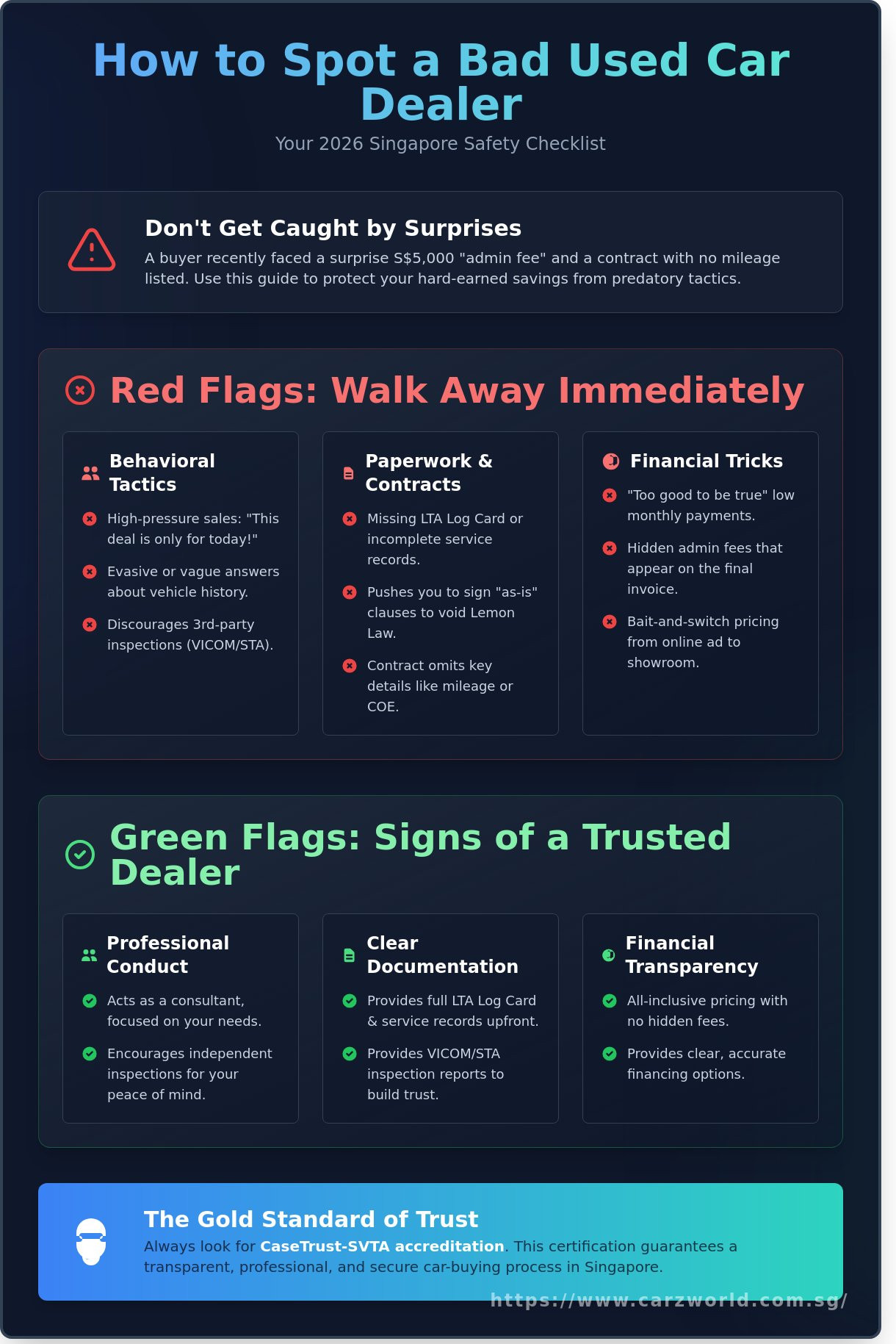
Last Tuesday, a buyer we spoke with walked into a showroom in Ubi expecting a dream car but left with a S$5,000 "admin fee" surprise and a contract that failed to mention the vehicle's actual mileage. Buying a pre-owned vehicle in Singapore should feel like a milestone, not a gamble. It's completely normal to feel anxious about hidden repair costs or whether a salesperson is being fully transparent with you. We want to change that experience by showing you the clear signs of a bad used car dealer so you can protect your hard-earned savings.
You'll learn how to identify predatory tactics and dishonest practices before you ever sign on the dotted line. This 2026 safety checklist covers fifteen red flags, from missing LTA documentation to high-pressure financing tricks. By the time you're finished reading, you'll have the confidence to walk away from a bad deal and the knowledge to demand the right paperwork for a seamless transaction. We've designed this guide to ensure your next car purchase is professional, honest, and entirely stress-free.
Key Takeaways
- Learn to identify high-pressure sales tactics and evasive answers about a vehicle's history before you are pressured into a quick decision.
- Discover how to verify essential Singapore-specific documents like the LTA Log Card and service records to spot the common signs of a bad used car dealer.
- Uncover the truth behind "too good to be true" monthly installments and learn how to detect hidden admin fees that can inflate your total cost in S$.
- Find out which industry certifications, such as CaseTrust-SVTA accreditation, guarantee a transparent and professional car-buying process in the local market.
- Equip yourself with a comprehensive 2026 safety checklist to ensure your next pre-owned vehicle purchase is a seamless and secure experience.
What Defines a "Bad" Used Car Dealer in 2026?
In 2026, identifying the signs of a bad used car dealer requires looking beyond superficial friendliness. The traditional "shady" dealer has evolved into a modern entity that thrives on a lack of transparency. With COE premiums frequently crossing the S$100,000 mark for larger vehicles in recent years, buying a car in Singapore is a significant financial commitment. A bad dealer doesn't just sell you a faulty vehicle; they expose you to massive financial risks that can last for years.
Reputation is everything in a high-cost environment. When you're spending six figures on a pre-owned vehicle, you aren't just buying metal and rubber. You're buying the dealer's promise of quality. A dealer who lacks a solid track record or hides behind vague contract terms is a liability. They often prioritize quick commissions over long-term customer satisfaction, leaving you to deal with the fallout of a poor purchase.
To better understand how to approach these interactions, watch this helpful video:
Many buyers fear ending up with what the industry calls a "lemon." Understanding What is a 'lemon' car? is vital because Singapore's Consumer Protection (Fair Trading) Act, known as the Lemon Law, provides clear rights for buyers. A bad dealer will often try to circumvent these protections by pressuring you to sign "as-is" clauses or indemnity forms. These documents are designed to waive your legal rights, making it harder to seek recourse if the car fails within the first six months of ownership.
Financial risks associated with bad dealers include:
- Hidden administrative fees that suddenly appear on the final invoice.
- Inaccurate loan calculations that lead to higher-than-expected monthly installments.
- Failure to clear outstanding finance on a trade-in vehicle, leaving you legally responsible for the old debt.
Salesperson vs. Consultant: The First Interaction
The first interaction often reveals the dealer's true colors. A "pushy" salesperson focuses on closing the deal today, while a professional consultant focuses on your long-term needs. In modern car testimonials, "not pushy" is consistently the top compliment given to reputable firms. If a salesperson doesn't know their own inventory or can't explain the specific service history of a car, it's a major red flag. They're likely prioritizing volume over quality and don't care about the vehicle's actual condition.
Why Transparency is the New Gold Standard
Trustworthy dealers use data, such as VICOM or STA inspection reports, to build your confidence. Guarded information is a hallmark of a dealer you should avoid. Transparency in used car sales is the open sharing of all costs and history before a deposit is requested. If they hide the number of previous owners or the exact remaining COE value until the last minute, walk away. Spotting these signs of a bad used car dealer early saves you from making a costly mistake in a market where every dollar counts.
Behavioral Red Flags: Sales Tactics that Scream "Stay Away"
Buying a pre-owned vehicle should be a calm, methodical process. If a salesperson uses high-pressure tactics, such as claiming "this car will be gone by evening" or "another buyer is coming with a deposit in 30 minutes," it's one of the most obvious signs of a bad used car dealer. These artificial deadlines are meant to rush your decision and prevent you from conducting proper research. Industry reports on common car dealer scams highlight that urgency is a primary tool for predatory sellers to hide unfavorable terms or mechanical flaws.
Price consistency is another major indicator of a dealer's integrity. If a car is listed on SGCarmart for S$95,000 but the showroom price suddenly includes "unspoken administrative fees" that push the total to S$102,000, you're dealing with a lack of transparency. Any dealer who discourages or refuses a third-party inspection at VICOM or STA is likely hiding a history of chassis damage or poor maintenance. A professional dealer will always support an independent evaluation to confirm the vehicle's condition before you sign any paperwork.
The "Missing" Information and Deflection
Dishonest dealers often use deflection to avoid accountability. When you ask about specific mechanical issues or the car's accident history, they might claim the "mechanic is out for lunch" or the "boss has the records in another office." This is a tactic to wear you down. Refusing a test drive is an immediate deal-breaker; you shouldn't commit thousands of dollars to a vehicle you haven't personally tested on the road. In Singapore, the LTA Log Card is the ultimate proof of a car's history. If a dealer won't show it to you, they might be hiding that a car has had 5 owners in just 3 years. At Carz World, we believe in a transparent used car buying process where every document is available for your review.
Digital Red Flags: Fake Reviews and Ghost Inventory
A dealer's digital presence can tell you a lot about their ethics. Be wary of "Bait and Switch" tactics where a low-priced, attractive car is advertised to get you into the showroom, only for the salesperson to claim it was "just sold" and push a different, more expensive model. Check Google and Facebook reviews for inorganic patterns. If a dealer has 40 five-star reviews all posted within a single 24-hour window in early 2024, they're likely bought. These are significant signs of a bad used car dealer that prioritize short-term sales over customer satisfaction. Always verify that the business has a physical, well-maintained showroom and consistent contact details across all digital platforms.
The Administrative Checklist: Paperwork Red Flags in Singapore
In Singapore, the LTA log card is your most valuable tool for verification. A dealer who hesitates to show you the original digital document is likely hiding something. Check the number of previous owners carefully. A high ownership count, such as four owners within just three years, often indicates recurring mechanical issues that prompted previous buyers to sell quickly. You should also demand the full service history. If a dealer claims records are "private" or "lost," they're often obscuring a lack of maintenance or skipped intervals. This lack of transparency is one of the clearest signs of a bad used car dealer and aligns with FTC consumer advice on used car dealers regarding seller reputation and history verification.
Transparency regarding PARF and COE rebates is non-negotiable. Bad dealers might quote a "nett price" while keeping the scrap value details vague to inflate their profit margin. Always ask for a clear breakdown of the remaining paper value. If the numbers don't match LTA's official rebate schedules based on the car's registration date, it's time to walk away. Professional dealerships will provide these figures upfront to ensure a seamless and pleasant experience for the buyer.
The Lemon Law and Warranty Loopholes
Singapore's Lemon Law protects you against defective goods for up to six months after purchase. Some dealers use "as-is-where-is" clauses in the sales agreement to trick buyers into thinking they've waived these rights. These clauses are often legally unenforceable for retail consumers, yet they remain common signs of a bad used car dealer. Be wary of "Dealer Warranties" that only cover the engine and gearbox. These are internal promises that depend entirely on the dealer's own workshop. Instead, you should browse certified pre-owned cars that come with verified histories and third-party insurance warranties for true peace of mind.
Inspection Denials: The Ultimate Warning
Never skip a professional evaluation. If a dealer refuses to let you take the car to VICOM or STA for a pre-purchase inspection, they're likely hiding structural damage or odometer tampering. Some insist you use "their own" mechanic only. This is a major red flag designed to hide inconsistencies in chassis numbers or poor paintwork. In the Singapore context, checking for flood damage is also vital. Look for silt in the spare tyre well or corrosion under the seats from previous flash flood incidents. A dependable expert will always encourage an independent 120-point check to prove the car is high quality and well maintained.
Financial Red Flags: Hidden Fees and Predatory Financing
The most common financial trap involves the "Too Good to Be True" monthly installment. A dealer might advertise a low monthly payment of S$1,100 to make an expensive car look affordable. However, they often achieve this by stretching the loan tenure to the maximum 7 years or using "balloon scheme" financing that leaves you with a massive lump sum at the end. This lack of transparency is one of the clearest signs of a bad used car dealer. Always calculate the total cost over the entire loan period rather than focusing on the monthly outflow.
You should also watch for hidden "Admin Fees" that only surface during the final signing. While a standard administrative fee is common, some predatory dealers add "agreement fees" or "processing charges" ranging from S$500 to S$2,000 without prior mention. Honest dealers disclose every cost upfront. Furthermore, check the interest rate versus the Effective Interest Rate (EIR). A nominal rate of 2.78% might sound low, but the EIR, which accounts for compounding and fees, provides the true cost of your debt. If a dealer refuses to show you the EIR breakdown, they're hiding the real cost of your loan.
COE and Insurance Traps
In Singapore, COE management is a frequent source of hidden profit for dishonest sellers. Some dealers hide the actual COE rebate value. If you export or scrap the car later, you might find the rebate is significantly lower than what you were led to believe. Another red flag is the forced insurance package. Bad dealers often mandate a specific insurer because they receive high kickbacks, even if the premium is S$400 higher than market rates. A professional dealer allows you to compare quotes or choose your preferred provider. Ensure all LTA-related costs, such as the S$25 transfer fee, are clearly listed in the sales agreement.
The Deposit Trap: Non-Refundable Terms
Never place a deposit before a full professional inspection is agreed upon. Dishonest dealers often pressure buyers to "lock in the price" with a S$500 or S$1,000 deposit, only for the buyer to discover mechanical issues later. If the dealer refuses to put verbal promises, like "engine overhaul included" or "refund if inspection fails," into a written sales agreement, do not hand over any cash. Verbal promises are legally difficult to enforce in Singapore's used car market.
"A reputable dealer will always provide a detailed breakdown of the total purchase price, including COE, GST, and all administrative fees, before asking for a single dollar."
To avoid these financial headaches, always look for sellers who prioritize documentation and clear communication. You can browse our selection of high quality used cars to see how transparent pricing and professional service should look.
Choosing a Reputable Partner: The "Green Flags" to Look For
Identifying the signs of a bad used car dealer is only half the battle. To secure a safe investment in 2026, you must also recognize the hallmarks of a professional operation. In Singapore, the gold standard for reliability is the CaseTrust-SVTA accreditation. This joint certification between the Consumers Association of Singapore and the Singapore Vehicle Traders Association ensures the dealer follows transparent business practices and offers clear dispute resolution mechanisms. It's a badge of honor that separates fly-by-night operations from established professionals.
Longevity matters in the local automotive scene. A dealership with a long-standing physical presence at major hubs like Ubi or Leng Kee suggests stability. These businesses rely on repeat customers and word-of-mouth referrals. They handle trade-ins and sales with a documented, step-by-step approach. A professional handover process includes a formal checklist, ensuring you receive all keys, service logs, and ownership transfer documents immediately upon payment. This level of organization prevents the common headaches associated with poorly managed dealerships.
The Anatomy of a Trustworthy Dealer
- Inspection Readiness: Reputable dealers encourage third-party scrutiny. They'll facilitate inspections at independent centers like VICOM or STA without hesitation.
- Plain Language Contracts: You won't find "fine print" surprises or hidden admin fees. Every cost, from the COE to the insurance premium, is itemized in S$ before you sign.
- After-Sales Commitment: The relationship doesn't end when you drive off the lot. Trustworthy partners offer clear warranty terms and have dedicated staff to assist with post-purchase queries.
Why Carz World Sets the Standard
Carz World focuses on creating a seamless and pleasant experience for every visitor. Our "not-pushy" philosophy means our consultants, like Ryan or Carson, focus on your needs rather than hitting a sales quota. We maintain a diverse inventory that caters to different lifestyles and budgets. You can explore everything from brand new cars in pristine condition to high-quality, quality pre-owned models that have passed rigorous checks.
Transparency is the core of our business model. For those looking to upgrade, our valuation process for those looking to sell or trade-in is straightforward and based on current market data. We provide an honest assessment of your vehicle's worth, ensuring you get a fair deal without the typical stress. By prioritizing long-term reputation over short-term gains, we help you avoid the signs of a bad used car dealer and enjoy the excitement of your new vehicle instead.
Drive Away with Absolute Confidence
Buying a car in Singapore is a significant financial commitment. You've now equipped yourself to recognize the signs of a bad used car dealer, whether they're using aggressive behavioral tactics or burying hidden costs in confusing administrative paperwork. Keeping a sharp eye on predatory financing ensures you don't overspend your S$ budget on a vehicle that doesn't meet your standards.
Finding a reliable partner makes all the difference in your journey. Carz World stands out as a CaseTrust-SVTA Accredited Dealer, which is a vital benchmark for consumer protection in the local automotive industry. Our reputation is backed by hundreds of 5-star customer testimonials that specifically name our consultants for their patient and honest guidance. We focus on a transparent, seamless process that handles everything from trade-ins to handovers without the typical industry stress. We've simplified the car buying and selling experience to ensure it's both professional and pleasant for every driver.
Discover transparent, high-quality pre-owned cars at Carz World
Your next vehicle should provide peace of mind from the moment you step onto the showroom floor.
Frequently Asked Questions
Can a used car dealer in Singapore refuse a third-party inspection?
A used car dealer in Singapore can technically refuse a third-party inspection, but this is a major warning sign. Transparent dealers usually welcome inspections at centers like VICOM or STA to build trust with their customers. If a seller insists you rely only on their in-house checklist, it's one of the clearest signs of a bad used car dealer. You should prioritize your peace of mind by walking away if they block an independent mechanical assessment.
What is the "Lemon Law" in Singapore and does it apply to used cars?
Singapore's Lemon Law protects you against defective goods, including used cars, for up to 6 months after delivery. It requires the dealer to repair, replace, or refund the vehicle if it doesn't meet the standards of quality or performance reasonably expected. However, it doesn't cover standard wear and tear or faults the dealer pointed out before the purchase. Always ensure the sales agreement clearly lists any existing issues to avoid disputes later.
How much are the typical admin fees when buying a used car from a dealer?
Typical admin fees for used car transactions in Singapore generally range from S$500 to S$1,000. These fees cover essential paperwork like LTA ownership transfers and loan processing. Be wary of dealers who charge agreement fees or processing fees exceeding S$2,000 without providing a clear breakdown. Honest dealerships provide a transparent invoice that separates the car price from these administrative costs so you know exactly what you're paying for.
Is it a red flag if the dealer has many cars on consignment?
A high number of consignment cars isn't necessarily a red flag, but it changes your legal protection. In a consignment sale, the dealer acts as an agent for a private owner, meaning the Lemon Law won't apply if the contract is between you and the individual seller. While consignment allows for a wider variety of high quality vehicles, it requires more thorough documentation to ensure your interests are protected during the handover process.
What should I do if a dealer asks for a deposit before showing the Log Card?
You shouldn't pay a deposit before the dealer shows you the LTA Log Card. This document verifies the car's engine number, chassis number, and the actual manufacture year. A dealer who hides this information until they receive cash is likely hiding the car's true history or ownership status. Professional consultants will always present the Log Card and service history upfront to ensure a smooth and honest transaction for every buyer.
How can I verify if a used car dealer is CaseTrust accredited?
You can verify a dealer's CaseTrust-SVTA accreditation by searching the official CaseTrust registry on the Consumers Association of Singapore website. Accredited dealers must follow strict transparency rules and maintain a S$50,000 security bond to protect your deposit. Checking this registry helps you avoid common signs of a bad used car dealer by ensuring the business adheres to high ethical standards and proven consumer protection practices.
Is a high number of previous owners always a bad sign?
A high number of previous owners isn't always a bad sign, but it requires closer inspection of the service records. If a car has changed hands 4 times in 2 years, it might indicate recurring mechanical issues. However, for performance cars or short-term leases, frequent ownership changes are common in Singapore's market. Focus on the vehicle's maintenance history and current condition rather than just the number of owners listed on the Log Card.
In Same Category
- Compare car financing options with no credit history in SG
- Find reliable low maintenance second hand cars in Singapore by mileage
- Car Trade-In Services in Sengkang for Comparing Offers
- Car Loan Hidden Fees: Which Application and Setup Charges Are Reasonable
- What to Do If Your Car Loan Is Rejected and Find Options