Direct Owner vs Dealer for Used Cars in Singapore: The 2026 Comparative Guide
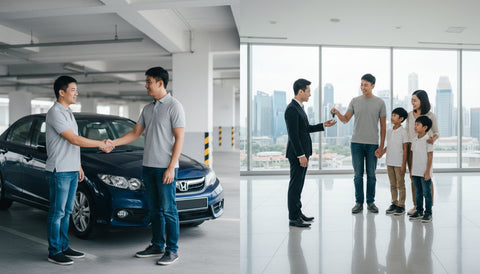
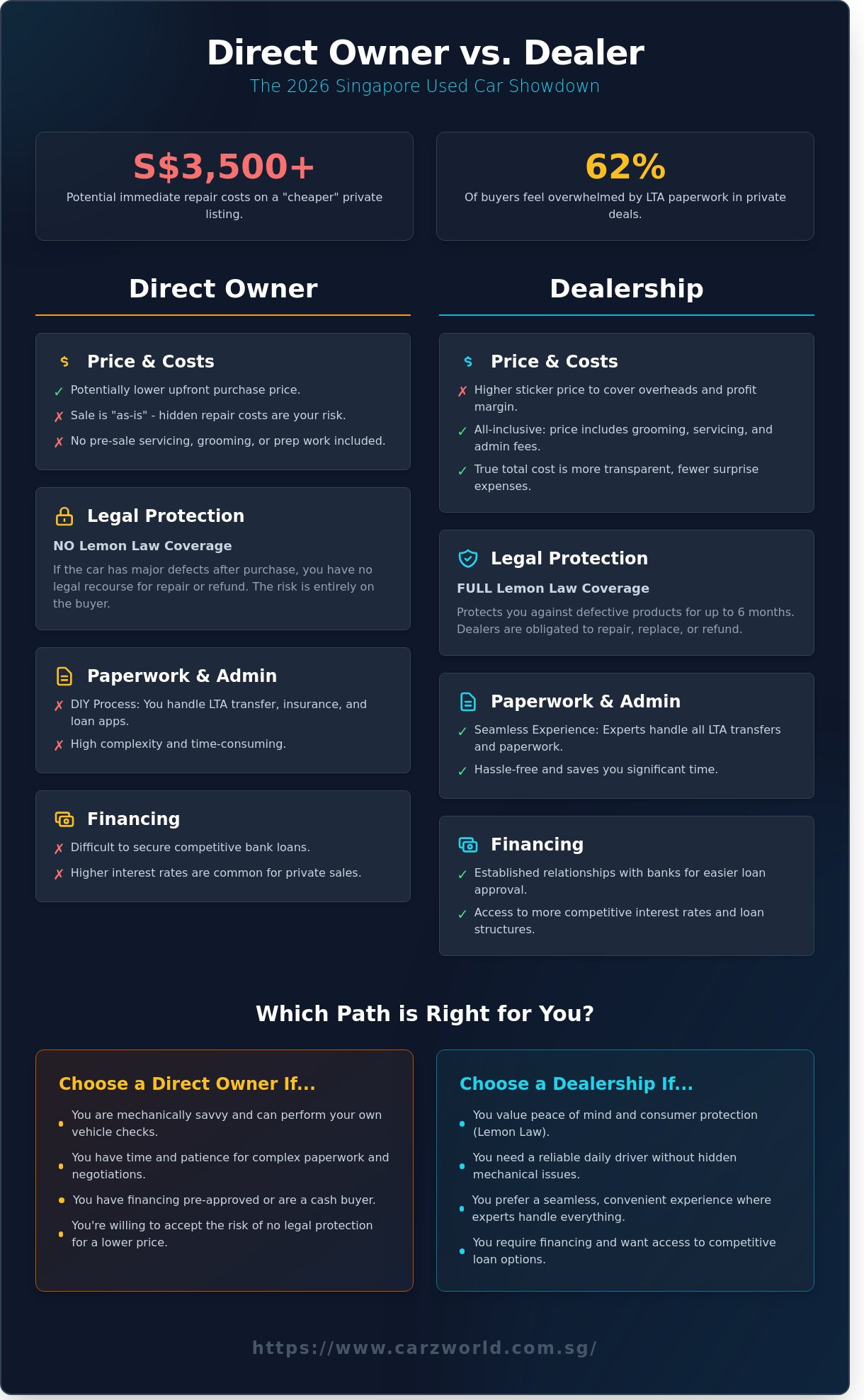
That "steal" of a deal on a private listing might actually cost you S$3,500 more than a showroom model once you factor in immediate wear and tear repairs. While the upfront price of a direct owner vs dealer used car often favors the individual seller, the true value lies in the safety net you get after the sale. It's a common dilemma in Singapore, where a 2024 industry report found that 62% of buyers feel overwhelmed by LTA transfer paperwork and the difficulty of securing competitive bank loans for private deals.
You're right to be anxious because a vehicle is often your largest monthly commitment after housing. We'll help you cut through the noise by comparing these two paths for the 2026 market. You'll discover how to secure a well maintained car and a seamless administrative experience without the usual risks. We're going to break down the differences in interest rates, Lemon Law coverage, and how to ensure your next ride doesn't come with hidden mechanical baggage.
Key Takeaways
- Identify the core differences between peer-to-peer transactions and professional dealerships to find the best balance of value and security for your next vehicle.
- Understand the vital role of Singapore’s Lemon Law in protecting your investment against mechanical defects for up to six months after your purchase.
- Analyze the financial breakdown of a direct owner vs dealer used car to uncover the truth about interest rates, hidden admin fees, and loan structures.
- Learn how to simplify your car-buying journey by having experts manage the time-consuming LTA transfers, insurance applications, and loan approvals for a seamless experience.
- Use our tailored decision matrix to choose the right path based on your technical expertise and your need for a reliable, well-maintained daily driver.
Buying a Used Car in Singapore: Direct Owner vs Dealer Defined
In 2026, the Singapore car market remains defined by high Certificate of Entitlement (COE) costs. With Cat A premiums consistently staying above the S$92,000 mark since late 2025, the demand for pre-owned vehicles is at an all-time high. Deciding between a direct owner vs dealer used car determines your level of legal protection and the amount of legwork you'll need to do. A direct owner sale is a private transaction between two individuals, whereas a dealer sale involves a registered business entity. You can find a broader Used car market overview to see how these channels differ globally, but Singapore’s specific regulations add unique layers to both paths.
To better understand how these two options compare in a local context, watch this helpful video:
The consignment model is a popular hybrid in the local market. In this setup, the owner uses a dealer's floor space and marketing reach to sell the car. While the dealer facilitates the viewing and paperwork, the transaction is often still treated as a private sale between the owner and the buyer. This allows the owner to potentially get a better price than a traditional trade-in while the buyer gets the convenience of a showroom visit. It's a common choice for high-end luxury vehicles where buyers expect a professional viewing environment.
The Direct Owner Model
Transactions in this model usually happen on marketplaces like Sgcarmart or Carousell. Owners often choose this path to avoid the lower trade-in offers from showrooms, aiming to pocket the middleman's margin. For the buyer, this might mean a slightly lower purchase price. However, these sales are strictly "as-is." This means once the LTA transfer is complete, any mechanical failures are your responsibility. You won't benefit from the Lemon Law protection that applies to business-to-consumer sales. Owners won't provide grooming or servicing before the hand-over, so the car's condition is exactly what you see on the day of the test drive.
The Dealership Ecosystem
Singapore’s dealership scene includes Authorized Distributors, Parallel Importers, and Independent Dealers. Many reputable firms are members of the Singapore Vehicle Traders Association (SVTA), which promotes ethical trading standards and dispute resolution. When you browse high quality used cars at a dealership, the price includes professional preparation. This usually covers mechanical servicing, interior grooming, and handling the road tax renewal. Choosing a direct owner vs dealer used car often comes down to how much you value peace of mind. Dealers handle the complex paperwork, including LTA transfers and insurance, making the process seamless. They also offer financing options that are difficult to secure in a private sale.
The Direct Owner Route: Transparency vs. Complexity
Choosing to buy from a private seller is often seen as the most authentic way to shop. It's a central pillar of the direct owner vs dealer used car debate because it removes the middleman. You get to speak with the person who actually sat behind the wheel for the last three years. This direct line of communication offers insights that no sales brochure can replicate. However, this path requires you to be your own investigator, clerk, and negotiator.
The biggest risk involves the lack of legal protection. Singapore's Lemon Law protects consumers against defective products, but it only applies to transactions between a consumer and a registered business. If you buy from a direct owner and the engine seizes a week later, you have no legal recourse to demand a repair or refund. You're essentially buying the car "as is," which makes a pre-purchase inspection at a workshop like STA or VICOM absolutely vital.
Transparency and Maintenance History
One of the biggest green flags in a private sale is seeing the owner's home environment. Meeting at a well-maintained residence gives you a subtle hint about how the car was treated. You can verify service booklets and physical receipts from specific workshops, ensuring the car didn't just receive "cheap" oil changes. Building a rapport with the seller often leads to a more honest disclosure of the car's quirks, such as a temperamental infotainment system or a specific rattling sound at 80km/h. This level of personal history is something you rarely find in a commercial showroom.
The DIY Administrative Burden
The complexity of the direct owner vs dealer used car choice often peaks during the paperwork stage. When you buy privately, you're responsible for every administrative hurdle. You'll need to coordinate a visit to the LTA customer service centre at Sin Ming to finalize the transfer. Before that happens, the seller must settle their existing hire purchase (HP) loan, which can be a tense process if they don't have the cash on hand to "clear" the log card.
You'll also need to be proactive about your own finances. This includes sourcing your own motor loan and securing insurance before the transfer can even be processed. When calculating the total costs of buying a used car, remember to factor in the S$25 transfer fee and potential administrative charges from banks. If you prefer a process that's handled by experts, you might consider browsing high quality pre-owned cars where the paperwork is managed for you.
Negotiation dynamics also differ wildly with owners. Unlike a dealer who looks at market data and depreciation curves, an owner might have an emotional attachment to the vehicle. They might insist on a higher price because they spent S$5,000 on a custom paint job or premium tyres in 2024, even if those additions don't technically raise the car's resale value. You'll need patience and firm data to navigate these "emotional" price tags.
The Dealer Advantage: Consumer Protection and Convenience
Choosing a dealership offers a layer of security that a private transaction simply cannot match. When weighing the direct owner vs dealer used car debate, the primary benefit is the statutory protection provided under Singapore law. Dealers act as a one-stop hub, handling the complex LTA ownership transfers, motor insurance applications, and bank loan submissions. These administrative tasks can take several days of coordination if you do it yourself, but a dealer settles them in a single sitting. You can browse our curated used cars collection to see how we simplify this entire journey for you.
Inventory variety is another major factor. Instead of traveling to multiple residential car parks to see different models, you can test drive five or six different cars at one location. This side-by-side comparison is vital for making an informed decision about cabin comfort and handling. Deciding between a direct owner vs dealer used car often comes down to how much risk you're willing to manage yourself, and for most Singaporeans, the convenience of a professional middleman is worth the premium.
Consumer Protection and CaseTrust
The Lemon Law is your strongest shield. It protects you for up to six months against manufacturing defects or issues that weren't disclosed at the time of sale. If a car has a significant fault within this window, the dealer is legally obligated to repair, replace, or refund the purchase. This protection doesn't apply to private sales. To ensure maximum safety, look for CaseTrust-SVTA accredited dealers. These businesses follow strict codes of conduct and offer transparent fee structures. We recommend using the CASE SAFE Checklist for used cars to verify the vehicle's condition before signing the Sales Agreement. If a dealer misrepresents a car, you have clear recourse through CASE or the Small Claims Tribunal.
Professional Refurbishment and After-Sales
Reputable dealers conduct a 160-point Pre-Delivery Inspection (PDI) to ensure every component, from the brake pads to the air-conditioning compressor, meets safety standards. While a direct owner sells the car "as-is," a dealer often invests S$1,500 to S$3,000 in refurbishment before the car hits the showroom floor. Many buyers choose brand new cars or certified pre-owned units specifically for the long-term warranty benefits. Dealer-backed warranties often cover the engine and gearbox for 12 to 24 months. This provides a safety net that third-party extended warranties might not fully match in terms of claim speed and component coverage.
Practical Showdown: Financing, Insurance, and Total Costs
Total Cost of Ownership for used cars includes the purchase price, annual depreciation, and a dedicated maintenance reserve for unexpected repairs. Understanding these variables is the only way to determine if you're actually getting a bargain.
The financial landscape for a direct owner vs dealer used car purchase changed significantly by 2026. While the sticker price from a private seller looks lower, the backend costs often tell a different story. Dealers act as intermediaries who streamline the heavy lifting of Singapore's car ownership regulations, providing a layer of financial security that private transactions lack.
Financing the Purchase
Securing a loan for a direct owner purchase is notoriously difficult. Most major banks in Singapore prefer the security of a licensed dealer's guarantee. If you buy from an individual, you'll likely face a lower loan-to-value (LTV) limit, often capped at 60% of the car's valuation. This means you need a much larger cash downpayment upfront.
Dealers offer more flexibility through in-house financing and "balloon scheme" options. These structures allow you to defer a portion of the principal to the end of the loan term, keeping your monthly installments manageable. In the 2026 interest rate environment, where used car loan rates average between 3.15% and 3.45%, these flexible repayment structures are vital for maintaining healthy personal cash flow. Our team ensures the process remains a smooth one, handling the MAS limit calculations so you don't have to.
Hidden Costs and Valuation
The "Admin Fee" is often misunderstood as a penalty. In reality, a reasonable fee of S$500 to S$800 covers essential services that a direct owner cannot provide. This includes:
- Electronic LTA ownership transfer processing and fees.
- Comprehensive background checks for outstanding financing or traffic fines.
- Professional grooming and mechanical detailing that adds roughly S$1,200 in perceived value.
- Assistance with motor insurance fleet-rate quotes.
Dealers benefit from high-volume partnerships with insurers. This allows them to secure premiums that are often 10% to 15% lower than the quotes an individual buyer would get on the open market. A "cheaper" direct owner car might actually cost more within the first 90 days if it requires a major service or new tires, which are costs already factored into a dealer's high-quality, well-maintained inventory.
If you're currently between vehicles or waiting for the perfect listing to appear, consider our car rental options to bridge the gap without rushing into a bad deal. Making a rushed decision in the used car market often leads to buyer's remorse.
Decision Matrix: Which Path Should You Choose?
Deciding between a direct owner vs dealer used car boils down to your personal risk tolerance and how much time you can spare. Your choice should align with your specific lifestyle needs and technical comfort level in Singapore's 2026 market. We've broken down the three most common profiles to help you identify your best route.
If you can identify a worn CV joint or a failing alternator by sound alone, buying direct is a viable option. You'll likely save between S$3,000 and S$5,000 by cutting out the middleman. You're comfortable managing the LTA e-transfer yourself and have a trusted workshop ready to handle any immediate repairs. For you, the lack of a warranty isn't a dealbreaker because you know exactly what you're looking at.
Scenario B: The Busy Professional
You need a reliable daily driver for the commute to Raffles Place or Jurong East. You don't have hours to spend browsing forums or meeting strangers in HDB carparks. A reputable dealer provides a "one-stop shop" experience. They handle the S$25 LTA transfer fee, arrange your S$1,200 insurance premium, and secure a 2.78% interest rate for your car loan. The convenience and peace of mind are worth the slightly higher price tag.
Scenario C: The Budget Conscious
When every dollar counts, the direct route offers the lowest entry price. However, this path requires discipline. You must set aside a "repair fund" of at least S$2,500. Without a dealer's Lemon Law protection, you're 100% responsible for any mechanical failures the moment the transaction is complete. If the gearbox fails two weeks later, those initial savings will vanish quickly.
The final verdict is simple. While direct deals save money upfront, trust and reputation often outweigh minor price gaps. A reputable dealer protects your investment through legal accountability and professional mechanical preparation.
Checklist Before You Buy
Before you commit to a direct owner vs dealer used car, use these specific criteria to protect your interests and your bank account.
- 3 Questions for Direct Owners: Ask for the full service history from the last 24 months, confirm if the car has any outstanding finance with a bank, and ask why they're selling. If they can't provide service receipts, proceed with caution.
- 3 Documents from Dealers: Demand the latest LTA Log Card to verify ownership history, a detailed Sales Agreement (SA) that clearly lists warranty exclusions, and a signed Lemon Law disclosure form.
- Third-Party Inspection: Never skip a VICOM or STA evaluation. A S$200 investment can save you from a S$10,000 mistake by identifying hidden structural damage or chassis issues that aren't visible to the naked eye.
Why Carz World is the Middle Ground
We've designed our process to eliminate the stress of the used car market. We provide the transparency you expect from a direct owner with the professional security of an established dealership. Our consultants, including Ryan, Carson, Adam, and Ben, act as your guides rather than just salespeople. They ensure every vehicle is high quality and well maintained before it ever reaches our showroom floor.
We handle the complex administrative work, from bank loan approvals to insurance renewals, making the entire transition effortless. We value long-term reputation over short-term sales tactics. If you're looking for a smooth, honest process that values your time, Sell or consign your car with us to experience a higher standard of service in Singapore.
Secure Your Best Drive for 2026 and Beyond
Deciding between a direct owner vs dealer used car requires weighing the potential for upfront savings against the necessity of consumer protection. Buying from a direct owner often means managing complex LTA paperwork and technical inspections on your own. Conversely, a professional dealership provides essential safeguards like the Singapore Lemon Law and streamlined financing options that save you hours of administrative stress.
At Carz World, we've refined the car-buying journey to ensure it's both seamless and transparent. As a CaseTrust-SVTA Accredited Dealer, we prioritize your peace of mind with transparent pricing and zero hidden gimmicks. Our track record is backed by over 500+ 5-star customer testimonials, reflecting our commitment to high-quality vehicles and honest service. Whether you're looking for a well-maintained sedan or a family SUV, our team ensures every handover is a pleasant experience.
Discover Your Next Reliable Ride at Carz World
Take the next step toward a dependable vehicle today; our experts are ready to help you find the perfect match for your lifestyle and budget.
Frequently Asked Questions
Does the Lemon Law apply when I buy from a direct owner in Singapore?
No, the Lemon Law doesn't apply when you buy from a direct owner. This consumer protection law only covers "Business-to-Consumer" (B2C) transactions. If you find a hidden defect after the sale, you won't have the legal protection provided by the Consumer Protection (Fair Trading) Act. Buying from a reputable dealer ensures your vehicle is covered for 6 months against specific manufacturing defects, providing a safety net that private sales lack.
Why are car dealer interest rates sometimes lower than bank rates?
Dealers often secure lower interest rates because they maintain high-volume partnerships with banks and finance houses. While a direct bank loan might sit at 3.18%, a dealer can often offer promotional rates as low as 2.48% for specific models. These subsidized rates make the overall package more attractive for buyers weighing the costs of a direct owner vs dealer used car. Dealers also have access to in-house finance options that provide more flexibility than traditional banks.
What is the standard admin fee for a used car purchase from a dealer?
The standard admin fee for a used car purchase typically ranges from S$500 to S$1,000. This fee covers the professional handling of the LTA ownership transfer, loan processing, and insurance sourcing. At Carz World, we believe in transparency, so we always provide a clear breakdown of these costs in the sales agreement. This ensures you aren't surprised by hidden charges during the handover process.
Can I buy a used car from a direct owner if I need a 70% loan?
You can get a 70% loan for a direct owner purchase if the car's Open Market Value (OMV) is S$20,000 or less. For cars with an OMV exceeding S$20,000, MAS regulations cap the maximum loan at 60%. When buying directly, you'll need to manage the bank application and valuation yourself. Dealers simplify this by handling all the paperwork and leveraging their relationships to secure the maximum allowable loan for your profile.
Is a "Consignment Car" considered a direct owner or dealer sale?
A consignment car is a hybrid, but it's technically processed as a dealer sale. The car belongs to a private owner, but the dealership facilitates the transaction, marketing, and paperwork. This gives you the professional security of a dealership environment while often finding a car that's been well-maintained by a single owner. It's a popular middle ground in the direct owner vs dealer used car debate, offering convenience and reliability.
How do I check if a used car dealer in Singapore is CaseTrust accredited?
You can verify accreditation by searching the official CaseTrust website directory for the dealer's registered business name. Look for the "CaseTrust-SVTA" mark, which is currently held by approximately 300 motortraders in Singapore. This accreditation confirms the dealer follows ethical sales practices and maintains a transparent dispute resolution mechanism. Dealing with an accredited business means your deposit and purchase are protected by rigorous industry standards.
What happens to the remaining COE when I buy a second-hand car?
The remaining COE stays with the vehicle and is automatically transferred to you upon the change of ownership. You don't need to pay for a new certificate unless the current 10-year cycle is expiring. The value of this remaining COE is factored into the car's list price, calculated by dividing the original premium by the 120-month lifespan. This ensures you only pay for the exact amount of "car life" left on the road.
Is it mandatory to go to LTA for the ownership transfer?
It's no longer mandatory to visit the LTA Sin Ming office because the process is now completed online via the OneMotoring website. Both the buyer and seller use their Singpass to initiate and confirm the transfer, which carries a S$25 fee. When you work with a professional dealer, they handle this entire digital process for you. This eliminates the risk of errors and ensures the legal transfer is logged in the system immediately.
In Same Category
- Compare car financing options with no credit history in SG
- Find reliable low maintenance second hand cars in Singapore by mileage
- Car Trade-In Services in Sengkang for Comparing Offers
- Car Loan Hidden Fees: Which Application and Setup Charges Are Reasonable
- What to Do If Your Car Loan Is Rejected and Find Options