Buy vs Lease Car in Singapore (2026): Which Financial Path Wins?

That shiny new sedan in your driveway might look like a proud asset, but in Singapore's 2026 market, it could be your biggest financial liability. With Category A and B COE premiums frequently crossing the S$100,000 threshold, the traditional dream of car ownership is becoming a complex math problem. It's completely normal to feel overwhelmed by the 30% to 40% downpayment requirements that lock up your liquid cash for years.
We understand that you want a reliable way to get around without the constant anxiety of car depreciation or the technicalities of PARF rebates. This guide settles the buy vs lease car singapore debate by analyzing the total cost of ownership against the flexibility of modern leasing. We'll provide a clear monthly cost comparison and explain exactly who handles the insurance and maintenance. By the end, you'll have the specific data needed to choose a path that fits your 5-year financial plan with total confidence.
Key Takeaways
- Compare the significant upfront capital required for a 30-40% downpayment against the accessible one-month deposit model of modern leasing.
- Evaluate your long-term goals using our 2026 decision matrix to settle the buy vs lease car singapore debate based on your residency and driving habits.
- Learn how to avoid the steepest depreciation curves by identifying high-quality pre-owned vehicles that offer the best COE value for your budget.
- Contrast the personal responsibilities of car ownership, including servicing and repairs, with the "zero-hassle" logistics handled by professional leasing providers.
- Navigate the latest MAS loan restrictions and market regulations to ensure your chosen path aligns with Singapore’s evolving financial landscape.
Understanding Car Ownership vs. Leasing in Singapore’s 2026 Market
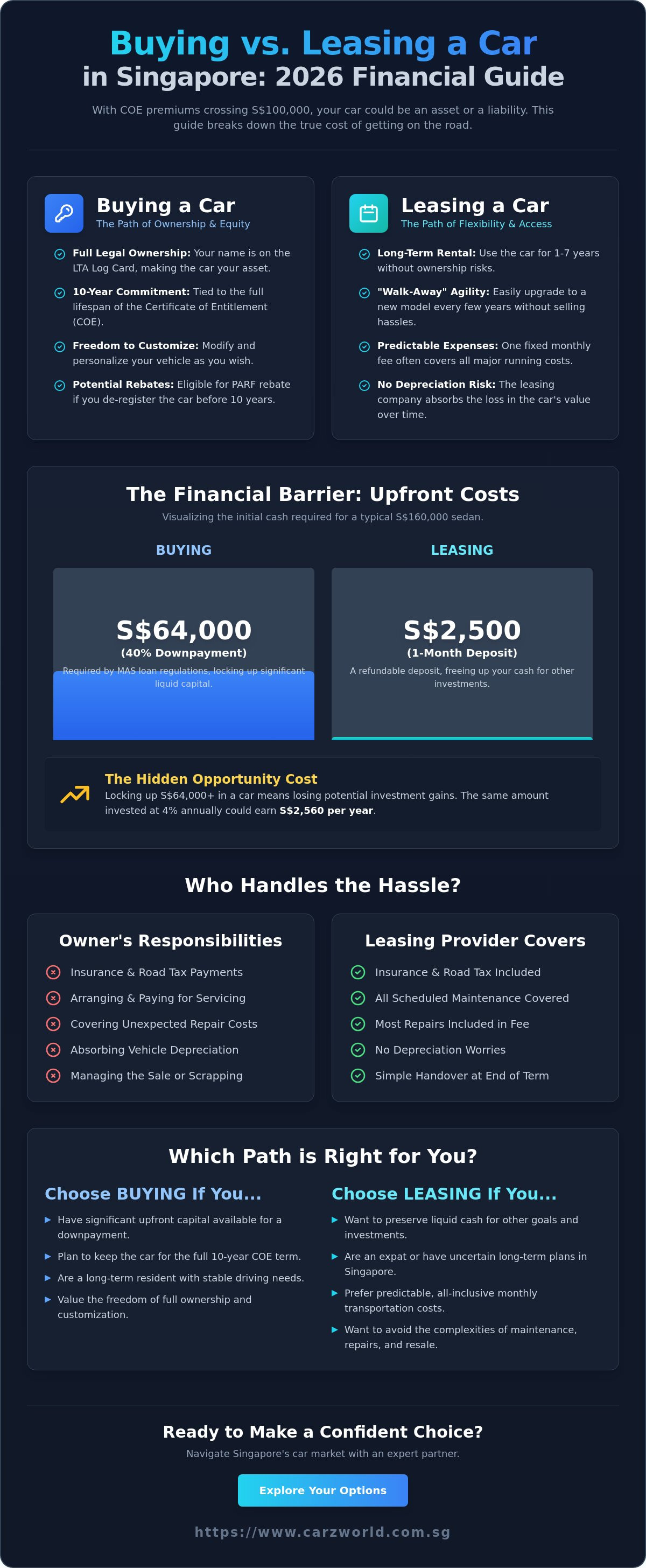
Deciding between the "buy vs lease car singapore" path is a major financial milestone in 2026. Buying a vehicle involves full legal ownership. You pay for the vehicle's Open Market Value (OMV) and secure a Certificate of Entitlement (COE), which grants you the right to use the car for 10 years. This path requires significant upfront capital for the downpayment, usually 30% to 40% of the purchase price. If you prefer long-term stability and the ability to customize your ride, browsing brand new cars remains the traditional choice for many Singaporeans. Leasing serves as a long-term rental service, typically ranging from 1 to 7 years. In this arrangement, the leasing provider bears the risks of ownership, including depreciation and resale value. You pay a fixed monthly fee that often covers insurance, road tax, and maintenance. To get a better grasp of how these contracts work globally, you can review vehicle leasing fundamentals. The 2026 COE landscape remains competitive, making the choice between high upfront costs and monthly cash flow flexibility more critical than ever. To better understand this concept, watch this helpful video:The Legal and Financial Definitions
The Land Transport Authority (LTA) regulates both ownership and leasing. When you buy, your name appears as the registered owner on the LTA Log Card. In a lease, the leasing company remains the registered owner. This distinction is vital for insurance claims and legal liabilities. By 2026, the Singapore Green Plan has shifted car availability significantly. Most new registrations are now Electric Vehicles (EVs) or hybrids, as the government has increased incentives for cleaner energy models while tightening emissions standards for internal combustion engines.
The "Commitment" Factor
Buying a car is a 10-year commitment tied to the COE lifespan. Selling early often results in financial loss due to heavy initial depreciation. Leasing offers a "walk-away" option. You can choose to upgrade to a newer model every 2 or 3 years without worrying about selling the old one. If you value variety, rental cars and long-term leases provide that agility. Total Cost of Ownership (TCO) is the only metric that truly matters in Singapore. It combines the purchase price, interest, maintenance, and taxes against the eventual scrap value or PARF rebate.
- Buying: Best for those with available capital who plan to keep a car for the full 10-year COE term.
- Leasing: Ideal for expats or professionals who want predictable monthly expenses without the burden of maintenance.
The Financial Breakdown: Upfront Costs and Monthly Math
Deciding between ownership and a rental agreement requires a cold look at the numbers. In the buy vs lease car singapore debate, the initial cash outlay is often the deciding factor for most drivers. Buying a car in 2026 remains a capital-intensive endeavor due to strict Monetary Authority of Singapore (MAS) regulations. These rules dictate that your loan amount depends entirely on the Open Market Value (OMV) of the vehicle. If the OMV is S$20,000 or less, you can borrow up to 70% of the price. If it exceeds S$20,000, your loan cap drops to 60%.
This means you must prepare a cash or CPF-equivalent downpayment of 30% to 40%. For a mid-sized sedan costing S$160,000, you're looking at an immediate upfront cost of at least S$48,000. When you add in understanding car loans in Singapore and the associated interest rates, the barrier to entry is high. Leasing offers a starkly different entry point; most agreements only require a one-month security deposit, keeping your liquid capital free for other uses.
Calculating the Upfront Barrier
Locking up S$80,000 to S$150,000 in a depreciating asset creates a significant opportunity cost. If you placed that same S$100,000 into a conservative investment yielding 4% annually, you'd earn S$4,000 a year. By buying, you're not just spending that money; you're losing what that money could have earned elsewhere. If you prefer ownership but want to manage your cash flow, you can explore the financing options at Carz World to find a structure that fits your budget.
Depreciation: The Silent Killer
Depreciation is the most substantial cost of car ownership in Singapore. To find your annual hit, use this formula: (Total Purchase Price - PARF Rebate) / 10 years. With 2026 COE prices expected to stay at premium levels, annual depreciation for a standard vehicle often hovers around S$15,000 to S$18,000. This is a guaranteed loss that owners must absorb.
Leasing simplifies the math by bundling all ownership costs into a single monthly fee. Your payment typically includes:
- Comprehensive motor insurance premiums.
- Annual Road Tax payments.
- Regular preventative maintenance and servicing.
- Replacement of wear-and-tear parts like tires and batteries.
While a lease payment might look higher than a monthly loan installment, it removes the volatility of repair bills and the long-term risk of falling ARF (Additional Registration Fee) values. It provides a predictable, all-in cost that helps with precise monthly budgeting. If you're unsure which path suits your lifestyle, a professional car consultation can help clarify your options based on current 2026 market data.
Maintenance, Insurance, and the "Hassle" Factor
Deciding on the buy vs lease car singapore path requires looking beyond the monthly installment. The hidden cost of vehicle ownership is often measured in time and stress. While owning a car provides a sense of permanent possession, it also places the full burden of technical and administrative upkeep on your shoulders. In contrast, the leasing model is built around a "zero-hassle" philosophy where the provider absorbs the logistical weight of the vehicle's lifecycle.
The Ownership Burden
Singapore's tropical environment is surprisingly harsh on vehicles. Constant 30-degree heat and high humidity accelerate the wear on rubber seals, belts, and specialized electronics. Owners must stay disciplined with 10,000km oil changes and more intensive 40,000km major services that involve transmission fluids and brake pad replacements. Neglecting these milestones leads to expensive repairs down the road.
The paperwork is equally demanding. You're responsible for annual Road Tax renewals, which require valid insurance and, for cars older than three years, a passing grade at mandatory VICOM or STA inspection centers. It's a lot to track. Carz World’s professional team assists buyers by providing clear maintenance schedules and guidance, ensuring your vehicle stays in pristine condition without the guesswork.
The Leasing Convenience
Leasing shifts the responsibility of maintenance back to the dealer. Most comprehensive contracts include 24/7 roadside assistance and free towing, which is a lifesaver during a peak-hour breakdown on the PIE. A standout feature of premium lease packages is the "Replacement Car" benefit. If your primary vehicle needs a multi-day repair, you're given a temporary car immediately. Your daily life doesn't skip a beat.
This model also protects you from "claims anxiety." Singapore’s motor insurance premiums have seen steady increases, and a single at-fault accident can tank your No Claims Discount (NCD). When you lease, the insurance is typically bundled into the fixed monthly fee, shielding you from sudden premium spikes.
For the expat community, leasing solves the "fire sale" problem. Selling a car in a hurry before a relocation often means losing thousands of dollars in a forced transaction. With a lease, you simply return the car at the end of the term. Our staff is patient and not pushy; we focus on helping you choose a lease duration that aligns with your employment pass or stay. This ensures a smooth process from the day you pick up the keys until the day you hand them back.
The Strategic Middle Ground: Buying Pre-Owned
Choosing between a new purchase and a long-term rental often feels like a binary choice. However, the pre-owned market represents a powerful middle ground in the buy vs lease car singapore debate. For many drivers, this path combines the ownership benefits of buying with a significantly lower monthly commitment. It's the most effective way to secure a vehicle without the heavy financial burden of a brand-new registration.
Beating the Depreciation Curve
A new car in Singapore typically loses 20% to 30% of its value the moment it leaves the showroom. By the end of year three, that figure often exceeds 50%. When you buy a car that's 3 to 5 years old, the previous owner has already absorbed this massive financial hit. You're essentially buying into a vehicle with a high PQP (Prevailing Quota Premium) already paid, but at a fraction of the original price tag.
The "Well maintained" status of a vehicle is our brand signature and the primary driver of your long-term ROI. A car that's been cared for properly will retain its resale value much better than a neglected one. Consider the monthly math: a lease for a standard sedan in 2024 might cost S$2,800 monthly. Financing a five-year-old certified pre-owned car of the same class could result in loan installments closer to S$1,300 to S$1,500. Even after accounting for road tax and insurance, the monthly cash flow remains significantly more favorable for the buyer.
Quality Assurance at Carz World
Our "High quality and Well maintained" promise ensures that "used" doesn't mean "unreliable." We subject every vehicle to rigorous inspection standards before it reaches our floor. This methodical approach is why our customer reviews frequently highlight the transparency of our handover process. Sales consultants like Ryan and Adam focus on making the transition smooth and honest; they ensure you know exactly what you're driving home.
We believe in proof-based service. Every car in our inventory comes with a documented history to eliminate guesswork. You don't have to worry about hidden mechanical issues or inflated prices. Our team handles the complex paperwork and transfers to make the experience as seamless as possible. Explore our current pre-owned inventory to see how we maintain these standards across our entire fleet.
Decision Matrix: Is Buying or Leasing Right for You?
Choosing between a purchase and a lease depends on your specific lifestyle and financial goals. In the current 2026 market, where COE prices remain a significant variable, your residency status and annual mileage are the most reliable indicators. If you drive more than 20,000km annually, leasing often protects you from the heavy depreciation that high-mileage cars face in the resale market. Conversely, if you plan to keep a car for the full 10-year COE cycle, buying is typically the more cost-effective route.
For business owners, leasing provides distinct advantages. You can often claim lease payments as deductible business expenses under Singapore tax regulations, which isn't possible with private car ownership. This makes the buy vs lease car singapore debate a simple matter of tax efficiency for many SMEs. By opting for a corporate lease, you preserve your company's debt-to-equity ratio, keeping your credit lines open for other operational needs.
Scenario A: The 2-Year Expat
If you're in Singapore on a short-term contract, leasing is the logical choice. You avoid the massive upfront downpayment of 30% to 40% required for a car loan. You also skip the stress of selling the vehicle before you leave. The "Return and Fly" process means you simply hand back the keys at the end of your term. You can check our rental and leasing options to find a model that fits your stay.
Scenario B: The Long-Term Family Driver
For families planning to stay for a decade, buying a car, especially a high-quality pre-owned one, offers better long-term value. Ownership allows you to benefit from the Preferential Additional Registration Fee (PARF) rebate when the COE expires. This rebate can return thousands of dollars to your pocket at the end of the 10th year. If you're ready to upgrade your current ride, you can start the process with a trade-in or valuation to see how much equity you have.
The right choice is rarely universal. It requires a detailed look at your monthly cash flow and your risk tolerance regarding COE fluctuations. The buy vs lease car singapore decision involves calculating the total cost over several years, including maintenance and insurance premiums. Our team, including professional consultants like Ryan and Carson, can run a personalized calculation for you. They'll help you compare the total cost of ownership against a fixed-rate lease so you can move forward with confidence.
Every driver has unique requirements. Whether you prioritize the flexibility of a lease or the long-term equity of ownership, we're here to ensure the process is seamless. Talk to us today to find the path that best suits your financial journey in Singapore.
Secure Your Best Financial Path on Singapore's Roads
Choosing your next vehicle in 2026 requires balancing upfront capital against long-term flexibility. Buying offers the benefit of asset ownership once the loan is cleared, while leasing provides a predictable monthly expense with maintenance and insurance already handled. If you're looking for a balance, high-quality pre-owned cars remain a powerful way to avoid the steepest years of depreciation. Navigating the buy vs lease car singapore debate is easier when you have data-driven insights tailored to your specific budget.
Carz World serves as your trusted one-stop shop for buying, leasing, and exporting. With over 1,000 successful handovers in Singapore, our team focuses on a seamless process that puts your needs first. Verified customers frequently praise our "excellent service and not pushy" style, ensuring you never feel pressured into a decision. Whether you're eyeing the latest model or a well-maintained pre-owned vehicle, we provide the clarity you need to move forward.
Talk to our friendly experts for a personalized cost comparison today. We look forward to helping you find the perfect car with total peace of mind.
Frequently Asked Questions
Is it cheaper to lease or buy a car in Singapore for a 3-year stay?
Leasing is generally more economical for a 3-year stay because it avoids the steep initial depreciation and the 30% to 40% downpayment required for a purchase. When you evaluate the buy vs lease car singapore debate for short durations, the fixed monthly fee covers maintenance and road tax. This protects you from the volatility of the resale market and the financial risks of a 10-year COE commitment.
Does car leasing in Singapore include insurance and road tax?
Yes, most professional leasing agreements include comprehensive insurance, annual road tax, and regular servicing. This all-inclusive model provides a seamless experience for drivers who prefer predictable monthly costs. It eliminates the need to track renewal dates or manage unexpected repair bills. At Carz World, we focus on making the process pleasant by handling these administrative details so you can enjoy your vehicle without the stress of ownership paperwork.
Can I buy the car at the end of my lease period?
You can often purchase the vehicle at the end of your term through a "lease-to-own" arrangement or a pre-agreed purchase option. The price is typically based on the car's residual value at that time. This is a great way to test a specific model's performance and reliability before committing to full ownership. It's a flexible path for those who aren't ready to pay a large upfront sum immediately.
What is the minimum downpayment for buying a used car in 2026?
The Monetary Authority of Singapore (MAS) sets the minimum downpayment at 30% for cars with an Open Market Value (OMV) of S$20,000 or less. If the OMV exceeds S$20,000, you must provide a 40% downpayment. These regulations apply to both new and used car purchases in 2026. This ensures buyers maintain a healthy financial buffer while managing their monthly loan installments and overall debt levels.
Are there tax benefits for companies leasing cars in Singapore?
Companies can often claim leasing payments as tax-deductible business expenses under Section 14(1) of the Income Tax Act. This is a significant advantage over buying, where capital allowances for private cars are generally restricted. Leasing helps businesses manage cash flow while reducing their taxable income. It's a methodical way to provide staff with high-quality transport while keeping the company's balance sheet efficient and professional.
What happens if I want to terminate my car lease early?
Early termination usually requires you to pay a penalty, which is often a percentage of the remaining contract value. Most contracts specify a fee ranging from 50% to 100% of the outstanding lease payments. It's vital to review these terms before signing to ensure the lease duration aligns with your plans. Our consultants are always patient and clear when explaining these clauses to help you make an informed decision.
Does leasing a car affect my Total Debt Servicing Ratio (TDSR)?
Leasing a car doesn't impact your Total Debt Servicing Ratio (TDSR) because it's classified as a rental expense rather than a debt obligation. The current MAS guidelines limit your total monthly debt repayments to 55% of your gross income. Since a lease isn't a loan, it keeps your borrowing capacity clear for other major financial milestones, such as securing a home mortgage or expanding a business portfolio.
Why are pre-owned cars considered a "middle ground" in the buy vs lease debate?
Pre-owned cars serve as a middle ground because they provide ownership benefits with a lower entry price and slower depreciation than new vehicles. When weighing the buy vs lease car singapore options, a well-maintained used vehicle from a trusted dealer offers excellent value. You benefit from a lower loan amount while avoiding the higher long-term premiums. It's a dependable choice for those seeking a high-quality car without the new-car price tag.
In Same Category
- Calculating the Breakeven Point for COE Renewal in Singapore
- Financial Checklist Before Committing to a Car Purchase in Singapore (2026)
- COE Renewal Conditions and Eligibility in Singapore: 2026 Guide
- Balloon Scheme Car Loan in Singapore: Pros and Cons for 2026
- Getting Car Finance with a New Business in Singapore: A Practical Guide