Balloon Scheme Car Loan in Singapore: Pros and Cons for 2026

Could a lower monthly car instalment leave you with a bigger financial decision later? That’s the trade-off behind the balloon scheme car loan pros and cons sg. Smaller payments can ease pressure on your monthly budget, but a substantial amount is deferred until the end of the loan.
It’s reasonable to focus on what you can comfortably pay each month. But the instalment alone doesn’t show the full cost or tell you whether you’ll be ready for the final payment. Depending on the agreement, you may need to pay the balloon amount, refinance it or trade in the car. Your plans for the vehicle matter too.
This guide explains how balloon scheme car loans work in Singapore and compares their repayment structure with conventional car loans. You’ll learn what to include when comparing total borrowing costs, which loan terms to review, and how the final payment could affect your options if your finances or ownership plans change. The aim is to help you weigh lower instalments against the commitment waiting at the end.
Key Takeaways
- A balloon loan defers part of the repayment, so understand how the final amount is set and when it falls due.
- Singapore loan limits and downpayment requirements depend on factors such as the car’s Open Market Value; lender and vehicle terms may also vary.
- Use the balloon scheme car loan pros and cons sg to weigh monthly cash flow against total payable and the lump sum at the end.
- Compare balloon and conventional offers using the same vehicle, downpayment, tenure and interest assumptions.
- Before signing, identify a realistic way to settle the balloon, and note the due date and end-of-term conditions.
What is a balloon scheme car loan in Singapore?
A balloon scheme car loan defers part of the repayment until the loan ends. You make regular instalments during the loan term, usually lower than they would be if the full amount were repaid through those instalments. At the end, you settle a larger final payment called the balloon.
The written agreement sets the balloon amount, interest rate and end-of-loan terms. A lower monthly instalment doesn’t automatically mean a cheaper loan. To assess the balloon scheme car loan pros and cons sg, look beyond monthly cash flow and compare the total amount payable with that of a conventional loan.
For a straightforward explanation of the structure, see this overview of a balloon payment mortgage. The principle is similar: scheduled payments don’t fully clear the amount owed, leaving a larger balance due at the end.
Watch this video for another overview of balloon payment car loans:
How does the deferred final payment work?
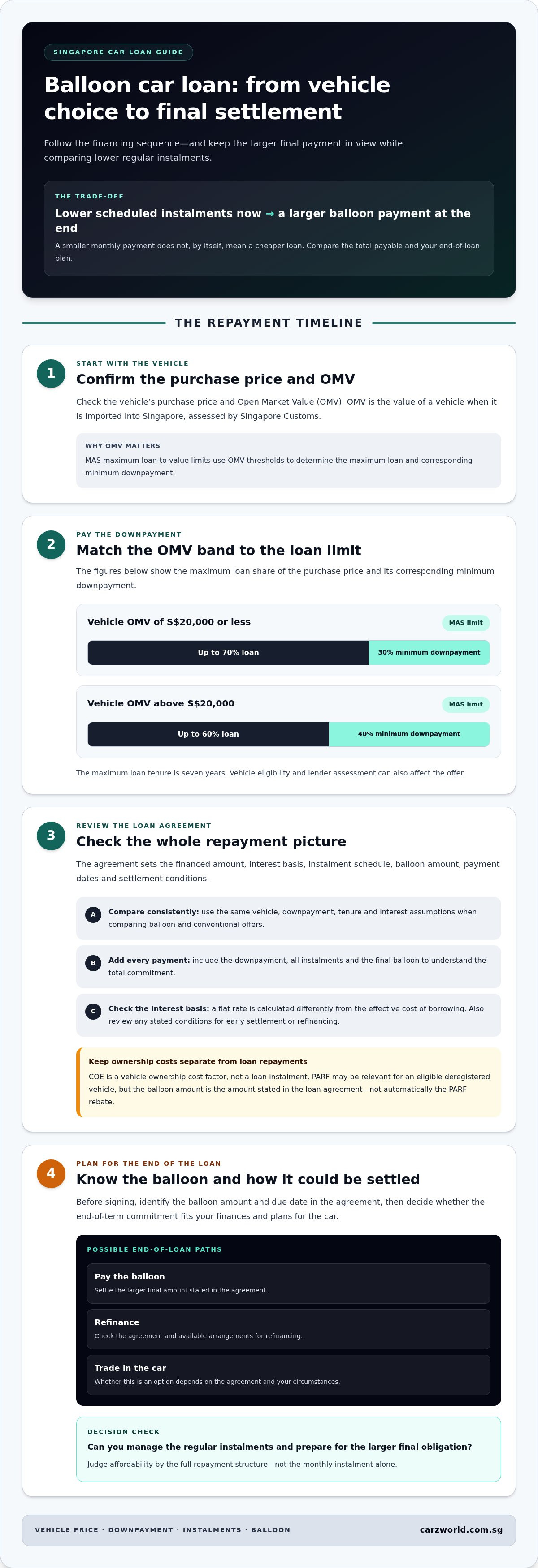
Think of repayment in three parts. First, you pay the agreed downpayment when buying the car. Next, you make regular instalments throughout the loan term. At the end, you pay the balloon amount stated in your agreement. This is a simplified timeline, not a quote: the figures and payment schedule depend on the specific loan.
When comparing offers, add the downpayment, every instalment and the final balloon to understand the overall commitment. Don’t judge affordability by the monthly instalment alone. Check the total payable and the final payment date before deciding whether the structure fits your budget.
Why do Singapore car loans mention PARF and COE?
PARF, or Preferential Additional Registration Fee, is a potential rebate linked to a vehicle’s deregistration. Eligibility and rebate amounts are subject to the rules in force. Some loan discussions refer to PARF when explaining a deferred amount, but a balloon payment isn’t automatically equal to a PARF rebate. The agreement sets the amount you owe.
COE means Certificate of Entitlement. It’s a vehicle ownership cost factor in Singapore, not a loan repayment. Keep these concepts separate when reviewing the figures: check the car’s costs, the loan repayment schedule and the contract’s stated balloon amount individually.
How does a balloon scheme car loan work under Singapore rules?
The process starts with the vehicle’s purchase price and your downpayment. The remaining amount is financed under a loan agreement, which sets the regular instalments and defers an agreed portion to a final balloon payment. The contract specifies the interest calculation, payment dates, balloon amount and settlement conditions. Lower regular payments don’t remove the need to meet the applicable motor-vehicle loan rules.
In Singapore, MAS rules set maximum loan-to-value limits based on the vehicle’s Open Market Value (OMV), as well as a maximum loan tenure. The current limits are up to 70% of the purchase price for a vehicle with an OMV of S$20,000 or less, and up to 60% where OMV is above S$20,000. The corresponding minimum downpayments are 30% and 40%. The maximum tenure is seven years. Review the latest Singapore car loan regulations, since vehicle eligibility and lender assessment also affect the offer.
A balloon structure doesn’t by itself mean these limits are different. The lender’s quotation and agreement show how the deferred amount fits into the financing arrangement. Use this sequence to follow the transaction:
- Choose the vehicle: Confirm its purchase price and relevant details, including OMV.
- Pay the downpayment: The required amount depends on the applicable rules and transaction.
- Review the loan: Check the financed amount, interest basis, tenure and regular instalment schedule.
- Plan for settlement: Confirm the balloon amount, due date and settlement options stated in the agreement.
Which figures should a buyer compare in a loan quotation?
Compare the financed amount, tenure, instalments and total payable, including the balloon. Check whether the quoted interest is a flat rate, which is calculated differently from the effective cost of borrowing, and compare offers on a consistent basis. Also note the balloon’s due date and any conditions for early settlement, refinancing or other repayment arrangements. A smaller instalment can look manageable while leaving a larger amount to plan for later.
How do OMV, PARF, and COE affect the decision?
OMV is the value of a vehicle when it is imported into Singapore, assessed by Singapore Customs. It matters because MAS loan limits use OMV thresholds. PARF, or Preferential Additional Registration Fee, may be relevant if an eligible vehicle is deregistered; eligibility and rebate amounts depend on current rules. COE, the Certificate of Entitlement, is a vehicle ownership cost factor, not a loan instalment. Check current loan requirements with MAS and PARF and deregistration guidance with LTA. Compare these figures with the car you intend to own, whether new or pre-owned, as you explore vehicle options.
Balloon scheme car loan pros and cons: what is the real trade-off?
The main advantage is lower scheduled instalments, which can leave more room in your monthly budget. The compromise is a larger payment at the end. That obligation doesn’t disappear because the regular repayments feel manageable. Whether the loan costs more overall depends on its interest rate, fees and repayment structure. Compare written offers rather than assuming a balloon scheme is cheaper or more expensive.
A balloon payment car loan example from The Business Times illustrates how a lower monthly instalment can sit alongside a substantial final sum. Treat examples as illustrations, not current offers: your agreement’s rate, financed amount, tenure and balloon determine your actual cost.
| Potential advantages | Potential drawbacks |
|---|---|
| More monthly cash flow: Regular instalments may be lower than under a comparable conventional loan, depending on the agreement. | A large final commitment: The balloon is still payable by its stated due date, under the contract’s terms. |
| Room for other priorities: Lower scheduled payments may help with short-term budgeting if you have a credible plan for the final amount. | Total cost may be higher: Interest and other charges vary by offer, so compare the total payable, not just instalments. |
| Potential fit for a shorter ownership plan: The structure may suit someone intending to change cars before the loan ends, if the agreement supports the planned settlement. | Less certainty at the end: Resale value, rebate eligibility and settlement conditions may not match your assumptions. |
When might lower monthly instalments be useful?
This structure may be worth considering if monthly cash flow is a priority and you already have a realistic way to meet the balloon. Think about expected income, savings you can set aside, and how long you plan to keep the car. A future pay rise or hoped-for sale proceeds aren’t a dependable plan on their own. The balloon scheme car loan pros and cons sg depend on whether the end payment works for your circumstances, not simply on the lower instalment.
What risks should buyers plan for before signing?
If income falls or savings are needed elsewhere when the balloon becomes due, the lump sum can put pressure on your finances. Refinancing depends on future approval and terms, while selling the car may not raise enough to clear the outstanding amount. Vehicle value and any expected PARF rebate can also differ from assumptions. Read the agreement for the balloon amount, due date, settlement conditions and how any vehicle value or rebate is treated. Plan for the final payment without relying on an uncertain resale or refinance.
Balloon scheme vs conventional car loan: how to compare your options
A fair comparison starts with matching assumptions. Use the same car, downpayment, loan tenure and interest basis for both quotations. Otherwise, a lower monthly instalment may reflect different loan terms rather than a better deal. For each offer, compare the total payable, including the downpayment, all instalments, the balloon if applicable, and any disclosed fees.
| What to compare | Balloon scheme | Conventional loan |
|---|---|---|
| Monthly instalment | May be lower because part of the repayment is deferred, subject to the agreement. | Typically spreads repayment across scheduled instalments, according to the agreement. |
| Total payable | Add the downpayment, all instalments, balloon and disclosed fees. | Add the downpayment, all instalments and disclosed fees. |
| Balloon amount | A larger final amount is due as specified in the contract. | No balloon payment unless the agreement states otherwise. |
| End-of-term flexibility | Options depend on the lender’s settlement terms. Don’t assume refinancing or trade-in will be available. | Check the remaining balance and settlement conditions in the agreement. |
Then test your likely ownership plan. If you’ll keep the car, consider whether you can build up funds for the balloon while making regular payments. If you plan to sell or change vehicles, check how the loan must be settled and don’t rely on the future sale price to cover what you owe. If your income is uncertain, consider which repayment schedule would remain manageable if your circumstances change.
Which loan structure fits your ownership plans?
Choose based on the whole repayment path, not just the first few years. A balloon structure may ease monthly cash flow, but the final payment still needs a credible funding plan. A conventional loan may offer a more even repayment pattern, while a planned vehicle change requires careful attention to settlement terms under either option.
How can buyers compare loan offers fairly?
Request the full repayment schedule for each offer. Compare the interest basis, total payable, fees, early settlement conditions and treatment of the final payment. Keep the vehicle and financing assumptions consistent, whether you’re considering Singapore used-car listings or brand-new car options. This gives the balloon scheme car loan pros and cons sg a practical context: the right structure depends on both the written offer and how long you intend to own the car.
Explore vehicle options with Carz World as you consider which car and repayment structure fit your plans.
How to decide on a balloon car loan and prepare for the final payment
Before signing, make sure the lower monthly instalment fits into a complete repayment plan. The final payment can fall due at a time when your income, savings or plans have changed. Reviewing the key terms now helps you decide whether the structure will remain manageable beyond the early months.
Use this checklist to examine the written offer:
- Final amount: Confirm the exact balloon payment and whether the agreement explains how it is calculated.
- Due date: Note when payment is required and set reminders well ahead of that date.
- Total payable: Add the downpayment, scheduled instalments, balloon and any disclosed fees.
- Settlement conditions: Review the terms for early repayment and any options at the end of the loan.
- Payment source: Identify where the balloon will come from, rather than relying only on a hoped-for sale or future refinancing.
What repayment plan should you have before committing?
Set a regular savings target that works towards the balloon by its contractual due date. Stress-test the plan: could you still meet it if your income fell, your expenses rose or you decided to keep the car longer than planned? Treat refinancing, a trade-in or a vehicle sale as possibilities, not guaranteed solutions. Keep a contingency plan for what you’ll do if the expected option isn’t available or the sale proceeds don’t cover the balance.
This practical check brings the balloon scheme car loan pros and cons sg into focus. Lower instalments may suit your current budget, but the final payment should also be achievable under less favourable circumstances. If the plan depends on everything going exactly as expected, reconsider whether another repayment structure or vehicle better fits your finances.
How can Carz World help with the vehicle decision?
Carz World sells brand-new and pre-owned cars and provides vehicle financing. Your intended ownership period and overall budget can help guide your vehicle selection. Consider the car alongside its financing structure, so your choice reflects both your monthly capacity and your plan for the end of the loan.
Explore Carz World’s vehicle options to compare cars and consider how they align with your financing needs.
Choose a repayment plan that fits your ownership goals
A balloon scheme can ease monthly cash flow, but the larger final payment remains part of the commitment. Compare written offers by total payable, not instalments alone, and make sure you have a realistic plan for the balloon if your income or vehicle plans change.
The right choice depends on how long you expect to keep the car and how confidently you can manage the final settlement. Reviewing the balloon scheme car loan pros and cons sg alongside your budget can help you decide whether a balloon structure or conventional loan better suits your circumstances.
Carz World sells pre-owned and brand-new cars in Singapore, with vehicle financing available as a related service. As you weigh your budget and intended ownership period, explore Carz World’s vehicle options and consider which car may fit your plans. Compare the details and take a measured next step by exploring Carz World’s vehicle range.
Frequently Asked Questions
Is a balloon scheme car loan cheaper than a conventional car loan?
Not automatically. A balloon loan may have lower monthly instalments, but the total cost depends on the interest rate, fees, repayment schedule and final balloon amount in the written offer. Compare it with a conventional loan using the same vehicle, downpayment and tenure. The balloon scheme car loan pros and cons sg depend on your actual quotations, not the smaller instalment alone.
How does a balloon payment work for a car loan in Singapore?
A balloon payment is a larger final amount due at the end of the loan. The loan agreement defers part of the repayment, which can make regular instalments lower than under a comparable conventional structure. The contract states the balloon amount, due date and settlement terms. Review these alongside the full repayment schedule so you know what you’ll owe throughout the loan and at maturity.
Can I refinance a balloon payment when my car loan ends?
Possibly, but refinancing isn’t guaranteed. It depends on the lender’s terms and assessment at that time, as well as your circumstances and the vehicle’s details. A future offer may have different costs or repayment conditions. Before taking a balloon loan, make a plan that doesn’t rely solely on refinancing. Check the agreement for the due date and settlement conditions, and build savings towards the final amount where possible.
What happens if I cannot pay the balloon amount at the end of the loan?
If you can’t pay by the due date, you may be in breach of the loan agreement, and the lender may take steps set out in its terms. The consequences depend on the contract, so don’t assume an extension or refinancing will be available. If repayment looks uncertain, review the agreement and your settlement options before the due date. Planning ahead is safer than relying on a last-minute vehicle sale.
Does a balloon scheme car loan affect my PARF rebate in Singapore?
A balloon loan doesn’t by itself determine whether you qualify for a PARF rebate. PARF eligibility and any rebate amount relate to the vehicle and its deregistration under the rules in force. Some financing arrangements may refer to an expected rebate, but don’t assume it matches the balloon or will cover it. Check the loan contract and current Land Transport Authority guidance when assessing the vehicle’s future value.
Can I get a balloon scheme car loan for a pre-owned car?
For a pre-owned car, eligibility and terms depend on the lender, vehicle and loan application. Don’t assume every used car qualifies or that its balloon structure will match a new-car offer. Compare the financed amount, tenure, interest basis, instalments and final payment in writing. Carz World sells pre-owned cars in Singapore and offers vehicle financing as a related service.
How should I compare the total cost of balloon and conventional car loans?
Use offers based on the same car, downpayment and loan tenure. For each, add the downpayment, all scheduled instalments, any balloon payment and disclosed fees to calculate total payable. Compare the interest basis and check early settlement terms as well. A balloon offer can look easier month to month while requiring a large final sum, so assess both the overall cost and whether you can meet payments when due.
Disclaimer
This content is provided for general informational purposes only. Readers are encouraged to independently verify important information.
In Same Category
- Calculating the Breakeven Point for COE Renewal in Singapore
- Financial Checklist Before Committing to a Car Purchase in Singapore (2026)
- COE Renewal Conditions and Eligibility in Singapore: 2026 Guide
- Balloon Scheme Car Loan in Singapore: Pros and Cons for 2026
- Getting Car Finance with a New Business in Singapore: A Practical Guide