Most Reliable Japanese Cars in Singapore (2026 Edition): A Complete Buying Guide
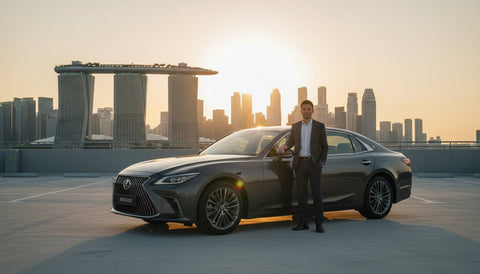
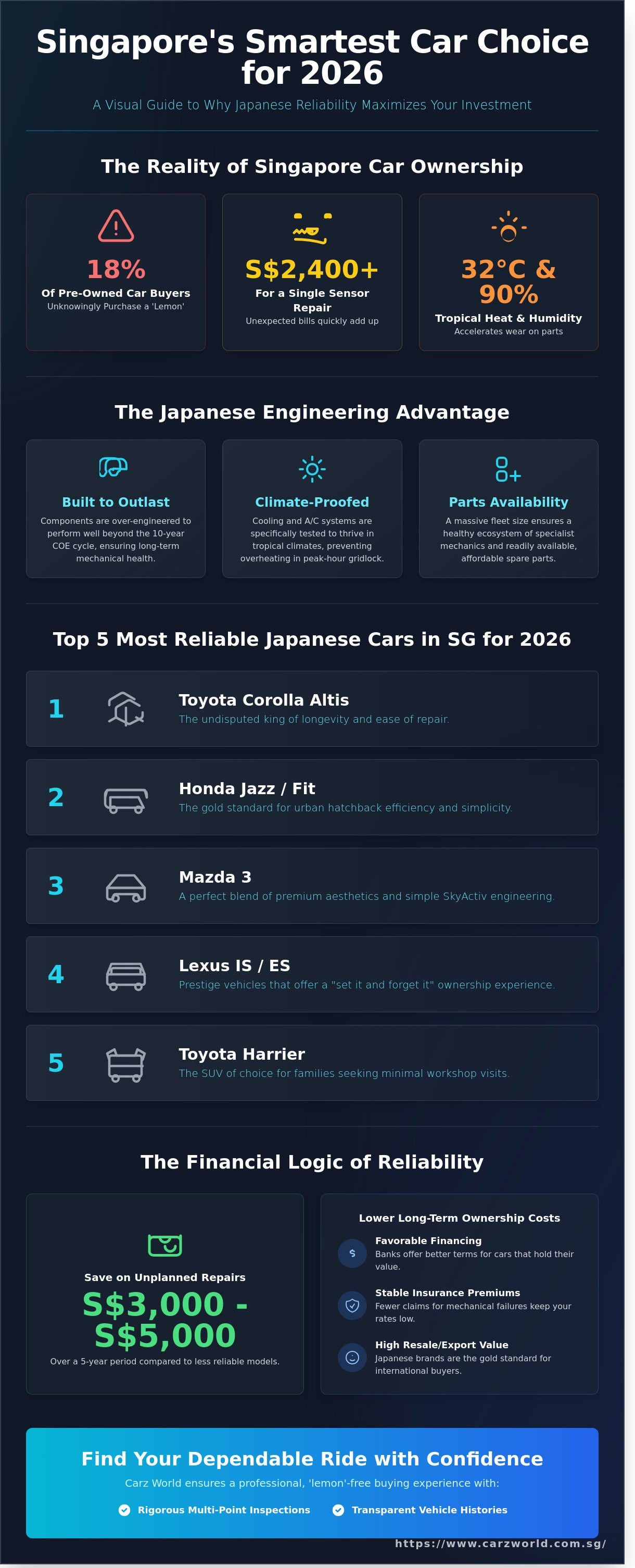
Imagine paying S$103,000 for a Category A COE only to find your vehicle stuck in the workshop while repair bills for specialized sensors climb past S$2,400. This is a stressful reality for the 18% of Singaporean car owners who unknowingly purchase a 'lemon' in the pre-owned market. You likely already feel that owning a car here is a massive financial commitment that requires careful planning. Choosing from the most reliable japanese cars sg has to offer is the only way to combat rising petrol prices and the constant pressure of a ten year COE cycle.
This 2026 guide identifies the specific models that keep annual maintenance bills below S$600 and retain maximum value in our unique market. We'll show you which brands consistently top the reliability charts and why these choices lead to a seamless, pleasant ownership experience. From superior fuel efficiency to high export demand, we've analyzed the latest data to ensure your next vehicle purchase is a truly dependable one.
Key Takeaways
- Understand how Singapore’s 10-year COE cycle and tropical humidity make Japanese engineering the smartest choice for long-term value.
- Discover the top-ranked models for 2026, including the most reliable japanese cars sg that consistently deliver high resale prices.
- Get the facts on hybrid battery life and how local spare part availability significantly impacts your maintenance costs and repair speed.
- Learn the essential steps for inspecting pre-owned units, focusing on cooling systems and air-con health to avoid costly "tropical wear" repairs.
- Find out how Carz World’s multi-point inspections and transparent vehicle histories ensure a professional and dependable buying experience.
Why Japanese Reliability is King in the Singapore Car Market
Singapore's car market is unique because of the Certificate of Entitlement (COE) system. Since a COE lasts exactly 10 years, every breakdown or day spent in the workshop feels like a wasted investment. Owners need a vehicle that stays on the road for the full decade without major mechanical failures. This is why many drivers search for the most reliable japanese cars sg offers. The Japanese automotive industry built its global reputation on "Kaizen" or continuous improvement; this ensures that brands like Toyota and Honda handle our local demands with ease. Reliability directly dictates your car's value when the 10-year mark approaches. In Singapore, a well-maintained Japanese car often fetches a higher body price because these units are highly sought after in overseas markets. If you plan to export your car at the end of its life, Japanese brands are the gold standard for international buyers.
To see how different models stack up for long-term use, watch this breakdown of top-rated vehicles:
The Economic Impact of a Reliable Car in SG
Choosing a reliable model can save you approximately S$3,000 to S$5,000 in unplanned repairs over a 5-year period. Beyond parts, reliability lowers your long-term ownership costs. Local banks and in-house dealers often offer more favorable financing terms for brands with proven track records because the collateral holds its value better. Insurance premiums also stay stable when your car isn't prone to electrical fires or frequent mechanical stalls that lead to accidents.
Japanese Engineering vs. Singaporean Driving Conditions
Singapore's 32-degree heat and 90% humidity levels destroy rubber seals and batteries in many European makes. Japanese manufacturers specifically test their cooling systems to thrive in tropical climates. When you're stuck in peak hour gridlock on the CTE or KPE, the stop-start technology in the most reliable japanese cars sg has available won't strain the engine. Brands like Lexus and Toyota use an over-engineering philosophy. This means their components are designed to last far longer than the standard 10-year COE cycle, ensuring the air-conditioning stays ice-cold even after 150,000 kilometers of city driving.
Ranking the Most Reliable Japanese Cars in SG for 2026
Selecting the most reliable japanese cars sg requires a look at workshop data and resale market trends. Our 2026 rankings prioritize vehicles that maintain mechanical integrity well beyond their first five years. These models consistently show lower failure rates in Singapore’s humid, stop-start driving environment.
- Toyota Corolla Altis: The undisputed king of longevity and ease of repair.
- Honda Jazz/Fit: The gold standard for urban hatchback efficiency.
- Mazda 3: A perfect blend of premium aesthetics and simple SkyActiv engineering.
- Lexus IS/ES: Prestige vehicles that offer a "set it and forget it" ownership experience.
- Toyota Harrier: The SUV of choice for families seeking minimal workshop visits.
Toyota: Why the Altis and Harrier Dominate the Roads
The Corolla Altis remains a fixture on our roads because its 1.6L engine is built for simplicity. Finding spare parts in Ubi or Sin Ming is never a challenge, which keeps repair costs low. According to official Singapore vehicle statistics, Toyota’s massive fleet size ensures a healthy ecosystem of specialist mechanics. The Harrier is equally impressive; it's the most reliable SUV for families who don't want to deal with the frequent sensor issues common in European rivals. Expect maintenance costs to be roughly 20% lower than average luxury brands.
Honda: The Engineering Edge of the Civic and Vezel
The Honda Vezel has been Singapore's most popular SUV for years. Data from local workshops suggests that the non-hybrid variants are particularly robust after the 5-year mark. While the Jazz Hybrid is excellent for fuel savings, the standard petrol Jazz is often preferred by long-term owners for its mechanical simplicity. The VTEC engines are famous for their durability, though you should check for minor issues like power-folding mirror motor wear. If you're searching for a dependable daily driver, you can discover high quality pre-owned cars that have passed our rigorous multi-point inspections.
Mazda and Lexus: The Alternative Reliability Powerhouses
Mazda has moved toward a premium feel, but they haven't compromised on what matters. Their SkyActiv-G engines avoid turbocharger complexities, leading to fewer oil leaks as the car ages. Lexus remains the top brand in global reliability studies, and this holds true in the local context. The IS and ES sedans provide a "bulletproof" luxury experience that few can match. Owners can easily find expert help at specialized workshops in Sin Ming, ensuring these prestige cars stay on the road for the full 10-year COE cycle and beyond.
Key Reliability Factors: Hybrids, Spare Parts, and Local Support
Reliability in Singapore involves more than just a durable engine. The island's unique environment, characterized by 30°C+ temperatures and stop-start city traffic, puts immense stress on cooling systems and electrical components. Data from the Consumer Reports reliability survey consistently places Japanese manufacturers at the top of the charts because their engineering philosophy prioritizes proven tech over experimental features. This makes them the most reliable japanese cars sg owners can depend on for a full 10-year COE cycle.
Local petrol quality also plays a silent but vital role. Singapore's 95 and 98 octane fuels contain high levels of detergents that prevent carbon buildup in modern direct-injection engines. While cars in other regions might struggle with clogged injectors, Japanese models in Singapore often reach 150,000km with minimal top-end engine issues. If you are looking for a long-term investment, browsing high-quality used cars with documented service histories is a smart starting point.
The 2026 Hybrid Battery Longevity Report
In Singapore's tropical climate, the average lifespan for Toyota and Honda hybrid batteries ranges from 8 to 10 years. Heat accelerates chemical degradation, but most units comfortably last the duration of their first COE. Replacement costs for a new NiMH or Lithium-ion pack at an independent specialist typically fall between S$2,200 and S$4,500. Refurbished batteries are a growing trend, costing around S$1,100 to S$1,500, though they offer shorter warranty periods of 6 to 12 months.
The battery Z-score serves as a vital metric for used car buyers to determine how many standard deviations a battery's current capacity sits away from its original factory performance.
Workshop Accessibility and Parts Availability
Japanese cars dominate the "grey market" parts ecosystem in Singapore. This means workshops can source OEM (Original Equipment Manufacturer) parts directly from Japan or Thailand without the 40% markup typically added by authorized agents. This keeps repair costs low and ensures that your car isn't stuck in the workshop for weeks waiting for a shipment from Europe.
If you need a specialist, three primary hubs define the Singapore automotive landscape:
- Ubi/Kaki Bukit: The largest cluster of independent Toyota and Honda specialists.
- Sin Ming: Known for precision engine work and hybrid system diagnostics.
- Toh Guan: A key location for West-side drivers seeking quick turnarounds on common Japanese models.
Part commonality is the secret weapon of Japanese reliability. Toyota, for instance, uses the same oil filters, brake pads, and sensors across multiple models like the Corolla, Noah, and Harrier. Because these parts are stocked in high volumes across every neighborhood workshop, you'll rarely face a "part out of stock" situation that results in lengthy downtime.
Buying Guide: How to Inspect for Long-Term Reliability
Finding the most reliable japanese cars sg drivers recommend is only half the battle. You must verify the specific condition of the unit you intend to buy. Singapore's unique driving environment, characterized by constant stop-start traffic and 90% humidity, affects vehicle longevity differently than in other markets. A systematic inspection ensures your investment lasts the full 10-year COE cycle.
- Verify Service History: Demand the full service logbook. While Authorized Agent (AD) records are the gold standard for the first 3 to 5 years, high-quality exterior workshops are acceptable if they provide itemized receipts. Check that oil changes occurred every 10,000km.
- Monitor Tropical Wear: Our 32°C average daytime temperature puts immense pressure on cooling systems. Inspect the radiator plastic tanks for hairline cracks or discolouration. Ensure the air-conditioning reaches 16°C within two minutes of operation.
- Flood Damage Check: Inspect the seat rails, spare tyre well, and under-dash wiring for fine silt or premature corrosion. This is vital given Singapore's occasional flash floods in low-lying areas like Bukit Timah or Pasir Ris.
- Computer Diagnostics: Use an OBD-II scanner to check for "pending" codes. These are errors the car's computer has detected but hasn't yet triggered a dashboard warning light for.
- LTA Ownership Logs: Use the Singpass portal to check the number of previous owners. A car that changed hands 3 times in 2 years often signals a "lemon" with unresolved mechanical issues.
Parallel Import (PI) vs. Authorised Dealer (AD) Reliability
Identifying the most reliable japanese cars sg market offers involves looking at both AD and PI units. Many buyers worry that PI cars are less durable; this is a myth. These vehicles often originate from the same Japanese assembly lines as AD models. The real difference lies in the warranty provider. When buying a PI car, ensure the dealer provides a robust 5-year warranty backed by a reputable workshop. You can browse our range of brand new parallel imports to compare the latest reliable options available.
The Pre-Purchase Inspection (PPI) Checklist
Never skip a professional evaluation at STA or VICOM. A Grade A or B report provides peace of mind. Focus on wear and tear items like engine mountings and suspension bushings. These parts typically require replacement every 80,000km on Japanese models due to our abundance of speed bumps. If these parts are worn, use the estimated S$600 to S$1,200 repair cost to negotiate the final price. A professional report helps you predict maintenance costs for the next 24 months accurately.
Finding Your Reliable Ride at Carz World Singapore
Finding the most reliable japanese cars sg requires more than just picking a reputable brand; it demands a dealer that vets every vehicle with precision. At Carz World, we don't leave reliability to chance. Every pre-owned unit undergoes a rigorous 160-point inspection before it ever reaches our showroom floor. We examine everything from engine compression and gearbox health to the structural integrity of the chassis, ensuring your next car performs like new.
Transparency is the cornerstone of our business model. We provide a comprehensive vehicle history to every buyer, detailing previous ownership and service records. Our inventory remains high-quality because we prioritize local consignment and trade-ins. By sourcing cars directly from Singaporean owners, we maintain a clear line of sight into how each vehicle was maintained. Our track record is backed by hundreds of customer testimonials praising consultants like Ryan and Adam for their honest, professional, and non-pushy guidance.
Why Our Pre-Owned Japanese Fleet is Different
Our "Certified" criteria ensure that only the best vehicles make the cut. We focus on low-mileage units, typically under 80,000km, that show minimal wear and tear. You can explore our most reliable used Japanese car collection to see the latest Toyota, Honda, and Mazda arrivals. Beyond the car itself, we make the transition easy by handling all the heavy lifting. Our team assists with competitive financing rates and comprehensive insurance coverage to ensure your purchase is a seamless experience.
Ready to Upgrade or Sell?
If your current vehicle is starting to require frequent repairs, trading it in for one of the most reliable japanese cars sg is a smart financial move. We offer competitive trade-in prices that reflect the true market value of your car. You can get a fair valuation and sell your car to us within 24 hours. For owners with vehicles approaching the 10-year COE mark, our export division provides an efficient exit strategy. We handle the deregistration and shipping logistics to help you recover the maximum value. Learn about car export options to see how we can assist with your vehicle's end-of-life processing.
Secure Your Next Long-Term Investment Today
Choosing from the most reliable japanese cars sg has to offer is the smartest way to navigate Singapore's 2026 motoring landscape. You've seen how hybrid technology and readily available spare parts keep your long-term maintenance costs predictable. A dependable vehicle isn't just about the badge on the hood; it's about the rigorous checks it undergoes before it reaches your driveway. At Carz World, we take the guesswork out of your purchase. Every pre-owned vehicle in our showroom passes a comprehensive multi-point inspection to ensure it meets our strict quality standards.
Our commitment to honest service is backed by over 100+ 5-star Google reviews from satisfied drivers across the island. We believe in transparent pricing, which means you'll never encounter hidden admin fees when finalizing your paperwork. Whether you're looking for a fuel-efficient city car or a robust family SUV, our team is ready to help you find a high-quality match that fits your lifestyle. Drive home a reliable Japanese car today; view our latest inventory!. Your journey toward a seamless and pleasant car ownership experience starts right here.
Frequently Asked Questions
Which Japanese car brand has the highest resale value in Singapore?
Toyota consistently holds the highest resale value in Singapore, with popular models like the Corolla Altis and Harrier retaining 55% to 65% of their value after five years. This strong performance is due to the brand's reputation for being the most reliable japanese cars sg and the massive demand in the second-hand market. Our customers find that Toyotas sell faster and at better price points than competing brands.
Is a used Toyota more reliable than a new European car in SG?
A well maintained used Toyota often proves more reliable and cost-effective than a brand new European car over a long-term ownership period. European models frequently experience 25% higher maintenance costs and complex electronic issues once they hit the three-year mark. A 2022 Toyota Camry remains a dependable choice that avoids the frequent, expensive workshop visits common with many entry-level Continental brands.
How many kilometres is 'too high' for a used Japanese car in Singapore?
Mileage exceeding 160,000 kilometres is generally considered high for a used Japanese car in the local market. Since the average Singaporean driver covers about 15,000 kilometres annually, a 10-year-old car should ideally show around 150,000 kilometres. If you see a five-year-old car with 120,000 kilometres, it likely served as a private hire vehicle and requires a more thorough mechanical inspection.
Do Japanese hybrid cars require more maintenance than petrol versions?
Japanese hybrid cars don't require significantly more maintenance, as their petrol engines and braking systems actually experience less wear over time. You'll need to budget for a hybrid battery replacement every 8 to 10 years, which typically costs between S$2,200 and S$4,500 depending on the model. This one-time cost is usually offset by the 35% savings in monthly fuel bills you'll enjoy at the pumps.
What are the most common repair issues for Honda Vezels in Singapore?
The most common repair issues for Honda Vezels involve the dual-clutch transmission (DCT) actuator in hybrid models and failing power-folding wing mirrors. Approximately 12% of owners of early 2015 models reported jerky gear shifts, which we can often prevent with a S$180 specialized transmission fluid flush. The wing mirror motor is another frequent fix, usually costing around S$150 per side to replace after years of use.
Can I still get spare parts for older Japanese models nearing 10 years?
You can easily source spare parts for 10-year-old Japanese models because Singapore has a highly efficient network of stockists in industrial hubs like Ubi and Sin Ming. Even for older 2016 models, 98% of essential mechanical components are available for immediate pickup. We ensure that our pre-owned inventory is supported by a steady supply of both genuine and high quality OEM parts for long-term peace of mind.
Why are Japanese cars preferred for PHV (Private Hire Vehicle) use in SG?
Japanese cars are the top choice for PHV drivers because they offer the lowest operating cost per kilometre and maximum uptime on the road. Models like the Toyota Prius are considered the most reliable japanese cars sg, allowing drivers to achieve fuel efficiency of 24km/L. These vehicles rarely suffer from the catastrophic engine failures that would result in a week of lost income and high repair bills.
Does parallel importing a Japanese car void its reliability?
Parallel importing a car doesn't change its mechanical reliability because the vehicle is manufactured in the same factory as those sold by authorized dealers. While you won't have the manufacturer's factory warranty, reputable dealers like Carz World provide comprehensive in-house warranties that cover the same major components. You get the same dependable Japanese engineering while often saving 15% or more on the initial purchase price.
In Same Category
- Car Consignment vs Direct Sale in Singapore: The 2026 Selling Guide
- Paperwork Needed to Sell a Car in Singapore: The 2026 Seller’s Checklist
- Detailing Your Car for Higher Resale Value: The Ultimate Singapore Guide for 2026
- How to Prepare Your Car for Sale in Singapore: The Ultimate 2026 Checklist
- When to Sell Your Car in Singapore: The Strategic 2026 Guide to Maximizing Returns