Continental Cars in Singapore: The Ultimate Guide to European Luxury & Performance (2026)
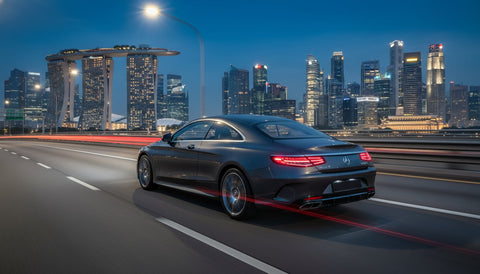
What if the S$106,000 you just spent on a Category B COE is actually the most strategic investment you'll make for your daily commute this decade? It's a common sentiment among Singaporean drivers who crave the precision of European engineering but worry about the potential for maintenance bills to spiral out of control. You've likely heard the stories of S$4,000 unexpected repairs or felt the confusion of calculating a PARF rebate when the OMV is over S$60,000. It's natural to feel some anxiety when the financial stakes are this high in 2026.
At Carz World Pte Ltd, we believe owning a continental car should be a seamless and pleasant experience rather than a source of financial stress. This guide will show you how to master the current COE landscape and identify high quality pre-owned models that offer the best reliability. We'll break down the latest 2026 tax regulations and provide a clear framework for choosing a vehicle that fits your lifestyle. By the end of this article, you'll have the professional insights needed to secure a luxury vehicle that delivers both performance and long-term value.
Key Takeaways
- Understand the unique prestige and engineering standards that define a continental car in the Singapore market.
- Compare top European marques like Mercedes-Benz and BMW to find the ideal balance between luxury, resale value, and driving performance.
- Debunk common myths about maintenance costs and discover the performance advantages European engineering offers over Japanese alternatives.
- Navigate complex local regulations including Category B COE, OMV, and PARF rebates to maximize your investment in a luxury vehicle.
- Learn how Carz World’s professional, non-pushy approach ensures a seamless and pleasant journey toward owning a high-quality pre-owned European vehicle.
What is a Continental Car? Defining the Singapore Standard
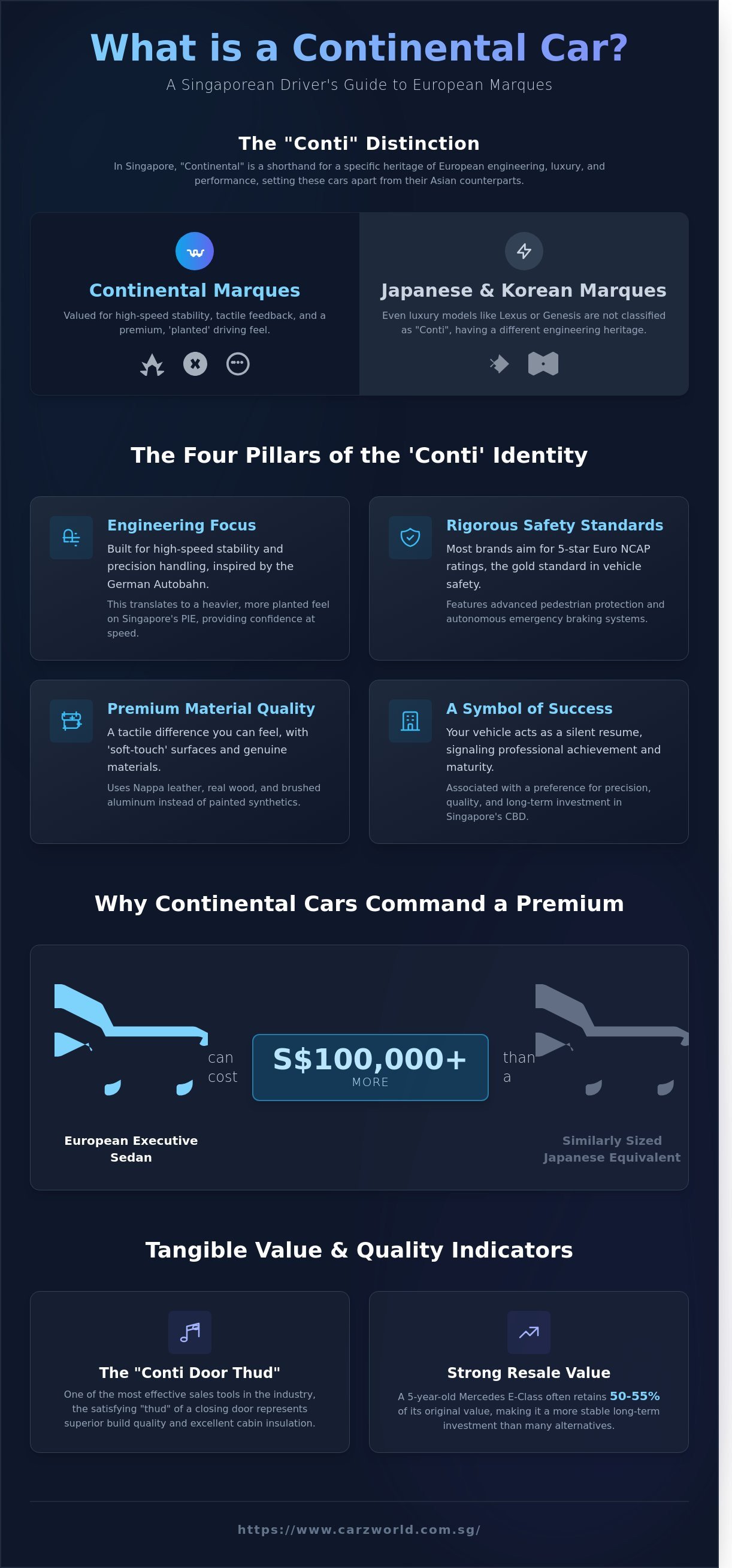
In the Singaporean automotive market, the term "Continental" carries a weight that transcends simple geography. While the word technically refers to the European mainland, local drivers use it as a shorthand for prestige, high-end engineering, and a specific driving feel. To understand What is a Continental Car?, one must look at the diverse map of European manufacturers that have shaped global driving standards for over a century. In our local context, this category primarily includes German, Italian, French, and Swedish brands like BMW, Mercedes-Benz, Audi, and Volvo.
The continental label creates a clear distinction in the showroom. It separates these European marques from Japanese and Korean manufacturers. Even though brands like Lexus or Genesis offer incredible luxury and reliability, they aren't classified as "Conti" cars. This distinction isn't about quality alone; it's about a specific heritage of high-speed stability and tactile feedback. A German sedan is often built to handle the unrestricted speeds of the Autobahn, which translates to a heavier, more planted feel on the Pan Island Expressway (PIE). This engineering focus on "heft" and high-speed safety is a core pillar of the Conti identity.
The Origins of the 'Continental' Label
The term took root during the post-colonial era in Southeast Asia. Historically, Singapore saw a clear split between British imports and those from "Continental" Europe. Drivers distinguished between cars made in the UK, such as Austin or Morris, and those from the mainland like Volkswagen or Mercedes-Benz. Over time, as the British car industry consolidated, the "Conti" label evolved to encompass all European luxury brands. Today, even British brands like Land Rover or Jaguar are often grouped into this category because they share the same European design philosophy and premium market positioning.
Why Continental Cars Command a Premium
Price gaps between European and Asian cars in Singapore are often substantial. A base model European executive sedan can cost S$100,000 more than a similarly sized Japanese equivalent. This premium is justified through advanced safety and material science. Most European brands aim for 5-star Euro NCAP ratings, which involve rigorous 2024 testing protocols for pedestrian protection and autonomous emergency braking. Inside the cabin, the difference is tactile. You'll find "soft-touch" plastics, Nappa leather, and real wood or metal inserts rather than painted synthetics.
Beyond the specs, there is a psychological element. In Singapore’s competitive business environment, your choice of vehicle serves as a silent resume. Driving a continental car to a meeting in the Central Business District signals a certain level of professional achievement. It suggests the driver values precision and long-term investment. At Carz World, we see this preference daily; customers often trade in reliable Asian hatchbacks for pre-owned European sedans to gain that specific blend of status and superior cabin insulation. The "thud" of a German car door closing remains one of the most effective sales tools in the industry, representing a level of build quality that many Singaporeans are willing to pay a premium for.
- Engineering focus: High-speed stability and precision handling.
- Safety standards: Heavy reliance on Euro NCAP crash test results.
- Material quality: Use of authentic materials like brushed aluminum and high-grade leather.
- Status symbol: Association with success and professional maturity in Singapore.
The Big Three and Beyond: Comparing Top Continental Brands
Mercedes-Benz remains the gold standard for luxury in Singapore. It's not just about the badge; it's about the perceived prestige and the tangible build quality. Locally, the brand enjoys some of the highest resale values in the automotive market. A five-year-old E-Class often retains between 50% and 55% of its original value, provided the mileage is reasonable and the service history is documented. This financial stability makes a continental car from Mercedes a preferred choice for professionals who view their vehicle as a mobile office and a status symbol.
BMW appeals to a different demographic. Their "Ultimate Driving Machine" philosophy focuses on rear-wheel-drive dynamics and precise steering. If you enjoy the sensation of driving rather than just being transported, a BMW usually wins. Audi occupies the space between these two. Their "Vorsprung durch Technik" motto translates to progress through technology. Audi models feature some of the most advanced cabin interfaces and lighting systems available. Volkswagen serves as the entry point to German engineering, offering a "People's Car" experience that feels more substantial than many Japanese or Korean counterparts. For those with higher budgets, Porsche represents the aspirational peak, blending daily usability with track-ready performance.
Mercedes vs. BMW: The Eternal Singapore Rivalry
The choice between these two often comes down to comfort versus engagement. Mercedes-Benz focuses on a "magic carpet" ride quality that isolates passengers from road imperfections. BMW prioritizes a firm, communicative chassis. When you look at The Real Cost of Ownership, you'll see that maintenance and depreciation are the two biggest factors. In the pre-owned market, Mercedes typically holds its value slightly better because the demand for used luxury sedans remains high. In 2026, the comparison between the Mercedes E-Class and the BMW 5 Series is the main event. The E-Class features a massive "Superscreen" dash, while the 5 Series offers a more driver-centric curved display and slightly more aggressive exterior styling.
The Rise of European EVs and Hybrids
European brands are currently leading the transition toward a "Green Plate" future in Singapore. Volvo and Audi have been particularly aggressive. Volvo has committed to becoming a fully electric car company by 2030, and their Recharge line is already a common sight on our roads. The Singapore government's EV Early Adoption Incentive (EEAI) provides a rebate of up to 45% of the Additional Registration Fee (ARF), capped at S$15,000 through December 2025. When you combine this with VES rebates of up to S$25,000, the price gap between internal combustion engines and electric motors narrows significantly.
You might find that a brand new Continental EV is more affordable than you think once you factor in the lower cost of "fueling" and reduced maintenance requirements. Electric motors have fewer moving parts than traditional engines, which means fewer trips to the workshop over the car's lifespan. If you're ready to explore these options, you can see our latest inventory to compare the latest hybrid and electric models side by side. Making the switch to a continental EV doesn't just benefit the environment; it provides a silent, torquey driving experience that suits Singapore's stop-start traffic perfectly.
Continental vs. Japanese Cars: The Real Cost of Ownership
For decades, Singaporean drivers viewed Japanese cars as the gold standard for reliability and European cars as luxury items prone to frequent repairs. This narrative has shifted. Modern European engineering has moved away from over-complication toward modular efficiency. While Japanese brands prioritize simplicity and longevity, continental manufacturers focus on precision and performance. The performance gap is most evident in high-speed stability and cornering. European vehicles often feature stiffer chassis and advanced suspension systems that provide a "planted" feel on the ECP or PIE that many mass-market Asian models can't replicate.
Turbocharging is another area where European brands lead. By using smaller engines with high-pressure turbos, they deliver significant torque while maintaining better fuel economy. This engineering choice directly impacts your wallet through the Vehicular Emissions Scheme (VES). Many European models qualify for A2 rebates of S$15,000 or neutral bands, whereas older engine designs in some Japanese models might attract surcharges. However, you must account for higher depreciation. A premium European sedan typically loses 15% to 20% of its value in the first year, a steeper drop than the 10% to 12% seen in popular Japanese commuter cars.
Understanding these financial nuances is vital before committing to a purchase. You can find a comprehensive guide to car ownership costs that details how COE, ARF, and OMV interact to determine your total expenditure in the Singapore market.
Maintenance and Servicing Realities
It's a fact that continental parts generally cost more. This isn't just a "luxury tax." It's due to complex logistics and the specialized diagnostic tools required to interface with European onboard computers. To avoid the "money pit" scenario, you shouldn't skip a single service interval. Preventive maintenance is the only way to keep long-term costs down. Fortunately, Singapore now has a thriving ecosystem of independent specialist workshops. These experts often provide the same level of care as authorized dealers but at 30% to 40% lower labor rates, making European car ownership much more accessible than it was 10 years ago.
Resale Value and the Second-Hand Market
The "5-year itch" is a common phenomenon in Singapore. Many owners sell their European vehicles just before the factory warranty expires to avoid potential out-of-pocket repair costs. This creates a massive opportunity for savvy buyers. You can find incredible value in the pre-owned Continental car market, where cars aged 3 to 4 years often retain 90% of their performance but cost 40% less than a brand-new model.
If you're on the selling side, the method you choose matters. While trade-ins are convenient, they rarely offer the best price. Car consignment is becoming the preferred route for European car owners. By allowing a professional agent to market your car while you continue to drive it, you can often secure a selling price that is S$5,000 to S$10,000 higher than a standard dealer buy-over price. This approach ensures the next owner appreciates the "high quality" and "well maintained" nature of your vehicle, reflecting its true market value.
Navigating the Purchase: COE, PARF, and OMV for European Cars
Buying a European vehicle in Singapore requires a clear understanding of the local tax structure. Most continental models feature engines larger than 1,600cc or produce more than 130bhp. This automatically places them in Category B, the 'Large Car' bracket. In June 2024, Cat B COE premiums hovered around S$100,000, making the Certificate of Entitlement a significant portion of your total investment. It's a cost that doesn't add to the car's performance but dictates your entry into the luxury market.
The Open Market Value (OMV) is the most critical figure after the COE. It represents the actual price paid for the car before taxes. Your Additional Registration Fee (ARF) is calculated as a percentage of this OMV. For a car with an OMV of S$60,000, the ARF follows a tiered system where the value above S$40,000 is taxed at 190% or higher. This high upfront cost eventually dictates your Preferential Additional Registration Fee (PARF) rebate, which you'll receive if you deregister the car before it turns 10 years old.
Determining the break-even point is essential for savvy buyers. A new car loses the most value the moment it leaves the showroom. By opting for a 3-year-old pre-owned model, you avoid that initial 30% depreciation hit. At this age, the car typically has 7 years of COE life remaining, and the previous owner has already absorbed the heaviest losses. It's often the most financially sound way to own a luxury vehicle without the steep "new car" premium.
Financing a high-value vehicle involves strict regulations from the Monetary Authority of Singapore. If the OMV exceeds S$20,000, the maximum loan amount is capped at 60% of the purchase price. You'll need a 40% down payment in cash or via trade-in. As of July 2024, interest rates for used car loans generally range between 2.28% and 2.78%. These rates are slightly higher than new car loans but can be offset by the lower total loan amount required for a pre-owned continental car.
The Impact of COE Prices in 2026
Market analysts expect COE supply to increase by 2026 as more vehicles from the 2016 peak cycle reach their 10-year limit. While this may stabilize premiums, demand for luxury brands remains aggressive. High Cat B prices often push buyers to seek value in high-quality used Continental cars rather than bidding on new registrations. Bidding during the first exercise of the month is often quieter, providing a better window to commit before prices potentially spike.
Exporting and Scrapping: The End-of-Life Strategy
When your car hits the 10-year mark, you don't just have to scrap it for metal. European models are highly prized in the export market due to their build quality and brand prestige. You can maximize your returns by combining the 50% PARF rebate with the "body value" offered by international buyers. Working with a dealer that manages worldwide car delivery ensures the export process is handled professionally, securing you the best possible price for your vehicle's second life overseas.
Ready to find a vehicle that fits your budget and lifestyle? Talk to our experienced consultants at Carz World today for a transparent breakdown of your next purchase.
Why Choose Carz World for Your Continental Journey?
Buying a premium European vehicle in Singapore is a significant investment. It requires a partner who understands the mechanical intricacies of these high-performance machines. Carz World focuses on a curated selection of high-quality European marques that meet the highest standards of luxury and reliability. We've spent the last 10 years perfecting a process that prioritizes vehicle health over sales volume. Every car on our lot is well-maintained and ready for the road. We don't use high-pressure tactics. Our team focuses on a professional, customer-centric approach that puts your needs first. This philosophy is why we've earned a consistent 4.9-star rating from over 300 satisfied clients. You'll see names like Ryan, Carson, and Adam appearing frequently in our testimonials because they take the time to listen. We want your continental car buying journey to be as seamless as the drive itself.
Managing the paperwork for a new vehicle can feel overwhelming. We simplify this by overseeing the entire lifecycle of your purchase. This includes securing competitive financing and arranging insurance that provides adequate coverage for luxury parts and repairs. The final handover is a celebration, not a chore. We also make it easy for those transitioning between vehicles. Whether you're buying or selling your current one, our internal valuation team uses 2024 market data to ensure you get a fair price. We've streamlined our comprehensive support to include:
- Low-interest financing options starting as low as 2.48%.
- Tailored insurance packages specifically for premium European makes.
- Full LTA documentation and ownership transfer management.
- Detailed vehicle history reports and 150-point inspection logs.
- A trade-in process that takes less than 60 minutes from appraisal to offer.
Expertise You Can Trust
Our consultants are specialists who understand the difference between specific European engineering standards. This technical knowledge allows us to offer a more personalized service. Our inspection process is rigorous; we check everything from the electronic control units to the suspension bushings. We've eliminated the "admin fee" culture that plagues many Singaporean dealerships. The price we quote is the price you pay. This transparency built our business and keeps our customers coming back year after year.
Your One-Stop Automotive Partner
We provide a full suite of services to keep your continental vehicle in top shape. Beyond sales, we facilitate smooth trade-ins and professional consignment for owners looking for a hassle-free exit. Our commitment to long-term relationships means we're always available for after-sales advice. We've seen a 40% increase in repeat customers since 2021, proving that our "client-first" model works. Talk to us today and let our team help you find the perfect vehicle for your lifestyle.
Take the Wheel of Your European Dream
Owning a prestige vehicle in Singapore involves balancing S$100,000+ COE costs against high OMV tiers and future PARF rebates. You've learned how 2026 market trends influence the total cost of ownership and why precision engineering justifies the premium. Making a savvy choice requires a clear understanding of both these upfront figures and long-term maintenance requirements. It's about finding that perfect intersection of performance and financial logic.
Our specialists, including Adam and Ryan, are here to make your transition seamless. Carz World is highly recommended for our professional, "not pushy" approach that puts your specific needs first. We provide transparent valuations and handle everything from local sales to worldwide car exports with absolute precision. You can trust our team to manage your trade-in without the stress of hidden fees or complicated paperwork.
Ready to elevate your daily commute? Discover our latest collection of premium continental cars at Carz World. We're excited to help you find a vehicle that matches your lifestyle and ambition. Your next great drive is just one conversation away.
Frequently Asked Questions
What is the difference between a Continental car and a Japanese car in Singapore?
Continental cars typically offer superior handling, advanced safety features, and better cabin insulation compared to Japanese models. While Japanese brands like Toyota focus on fuel economy and affordability, a continental vehicle prioritizes a premium driving experience and high-speed stability. According to 2023 registration data, European makes often include more robust materials and complex turbocharged engines as standard equipment for the Singapore market.
Are Continental cars really more expensive to maintain in the long run?
Maintenance for a continental car generally costs 20% to 30% more than a Japanese equivalent because of specialized parts and sophisticated electronic systems. A standard oil change and inspection at a specialist workshop might start at S$250, while major servicing for a BMW 5 Series can reach S$1,200. Regular preventive care is vital to avoid high repair bills as the vehicle ages beyond five years.
Which Continental car brand has the best resale value in Singapore?
Mercedes-Benz and BMW consistently maintain the strongest resale value among European brands in the local market. Marketplace data from 2023 indicates that a Mercedes-Benz C-Class retains roughly 55% of its value after five years of ownership. This high retention is driven by constant demand in the second-hand market and the brand's reputation for prestige and build quality among Singaporean drivers.
Can I use an independent workshop for my BMW or Mercedes-Benz?
You can use independent workshops once your factory warranty expires to save on labor costs. Specialized garages in industrial hubs like Sin Ming or Ubi often charge 40% less than authorized distributors for the same service. It's important to choose a workshop that uses genuine parts and diagnostic tools specifically designed for your continental model to ensure long-term reliability and performance.
What should I look for when buying a second-hand Continental car?
You should prioritize a full service history and conduct a professional pre-purchase inspection to check for oil leaks or transmission issues. An inspection costing between S$150 and S$250 can reveal hidden faults in the air suspension or electronic control units. Always verify the remaining COE duration and the PARF rebate amount to calculate the true depreciation of the vehicle before committing.
How does the OMV affect the price of a European luxury car?
The Open Market Value (OMV) is the foundation for calculating the Additional Registration Fee (ARF), which significantly increases the final retail price. For luxury cars with an OMV exceeding S$80,000, the ARF rate reaches 320% for the top tier as of the February 2023 tax changes. This means a higher OMV directly leads to a much higher purchase price for the consumer in Singapore.
Is it better to buy a brand new or a pre-owned Continental car in 2026?
Buying a pre-owned continental car is usually the smarter financial choice in 2026 due to the high initial depreciation. A three-year-old Audi or Volvo often costs 35% less than a brand-new model while still offering modern technology and safety features. With COE premiums remaining at elevated levels, choosing a well-maintained used car allows you to enjoy luxury without the heavy first-year price drop.
Why do many Continental cars fall under COE Category B?
Most European cars fall into Category B because their engine power exceeds 130bhp or their engine capacity is above 1,600cc. Many continental manufacturers use powerful turbocharged engines that naturally cross these LTA thresholds. This classification typically adds a premium of S$20,000 to S$40,000 to the car's price compared to Category A vehicles, reflecting their higher performance specifications.
In Same Category
- Used Car Market Outlook Singapore 2026: Trends, COE Impact, and Value Shifts
- Choosing the Right Van for Business in Singapore: A 2026 Comprehensive Guide
- Refinancing a Car Loan in Singapore: The Complete 2026 Strategy Guide
- COE for Commercial Vehicles: The Complete 2026 Guide for Singapore Businesses
- Electric Cars (EV) in Singapore: The Ultimate 2026 Buying Guide